Indian Sweet Pairing Calculator
Select a sweet to analyze its flavor profile and find the ultimate partner.
Gulab Jamun
The KingRosogolla
Light & TangyJalebi
Crispy SpiralMohanthal
Granular FudgeBarfi
Rich Milk SolidAdhirasam
Chewy JaggerySweet Name
Description goes here.
Loading...
Reasoning goes here.
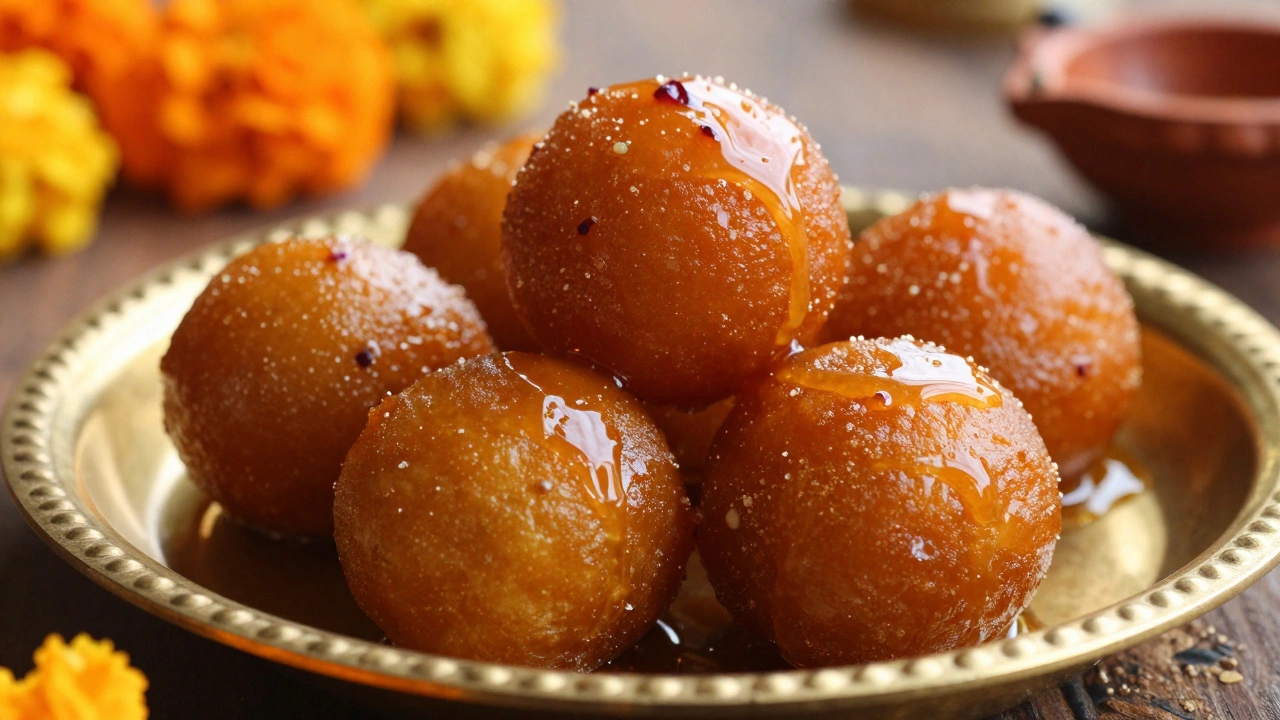
Walk into any Indian sweet shop a traditional store specializing in mithai and festive confections during a wedding or Diwali, and you will hear the same question asked by grandparents and children alike: "Who is the king here?" While taste is subjective, one dessert consistently wears the crown across most of the subcontinent. That title belongs to Gulab Jamun.
But why does this fried milk-solid ball soaked in rose-scented syrup hold such power? Is it just about sugar content, or is there something deeper in its texture, history, and cultural presence? Let’s break down why Gulab Jamun reigns supreme, who its main rivals are, and how you can make them at home without turning your kitchen into a disaster zone.
The Crown Jewel: Why Gulab Jamun Rules
Gulab Jamun deep-fried dough balls made from khoya (milk solids) and soaked in sugar syrup isn't just a snack; it is an institution. The name itself tells you everything. "Gulab" means rose, referring to the scent of the syrup, and "Jamun" refers to the fruit that resembles the dark brown color of the cooked dumplings.
Its dominance comes down to three factors: versatility, texture, and emotional connection. First, the texture. When done right, a Gulab Jamun should be spongy on the outside and melt-in-your-mouth soft on the inside. It shouldn't be hard like a stone, nor should it dissolve completely in the syrup. This balance is hard to achieve, which makes a good batch feel like a reward.
Second, it travels well. Unlike delicate puddings or layered cakes, these dense spheres survive transport in tiffin boxes from Delhi to Mumbai. They stay warm longer than other sweets, making them perfect for evening gatherings where tea is served hours after cooking.
Third, the cost-to-joy ratio is unbeatable. You can make a large batch with basic ingredients-milk powder, flour, baking soda, and sugar. For families hosting dozens of guests, this affordability allows generosity without breaking the bank. In many North Indian households, if there is no Gulab Jamun on the table, the celebration feels incomplete.
The Contenders: Who Else Fights for the Throne?
While Gulab Jamun holds the general title, different regions have their own champions. If you ask someone in West Bengal, they might argue that Rosogolla soft, white, spongy cheese balls soaked in light sugar syrup is the true king. Rosogolla is lighter, tangier due to the chhana (fresh cottage cheese) base, and lacks the heavy fried exterior. It represents a shift from deep-frying to boiling, offering a fresher profile that appeals to those who find Gulab Jamun too rich.
In Gujarat and Rajasthan, Mohanthal a fudge-like sweet made from gram flour, ghee, and sugar takes the spotlight. Made from besan (gram flour), it has a crumbly, granular texture that contrasts sharply with the smoothness of milk-based sweets. It is often eaten with tea rather than as a standalone dessert, giving it a unique social role.
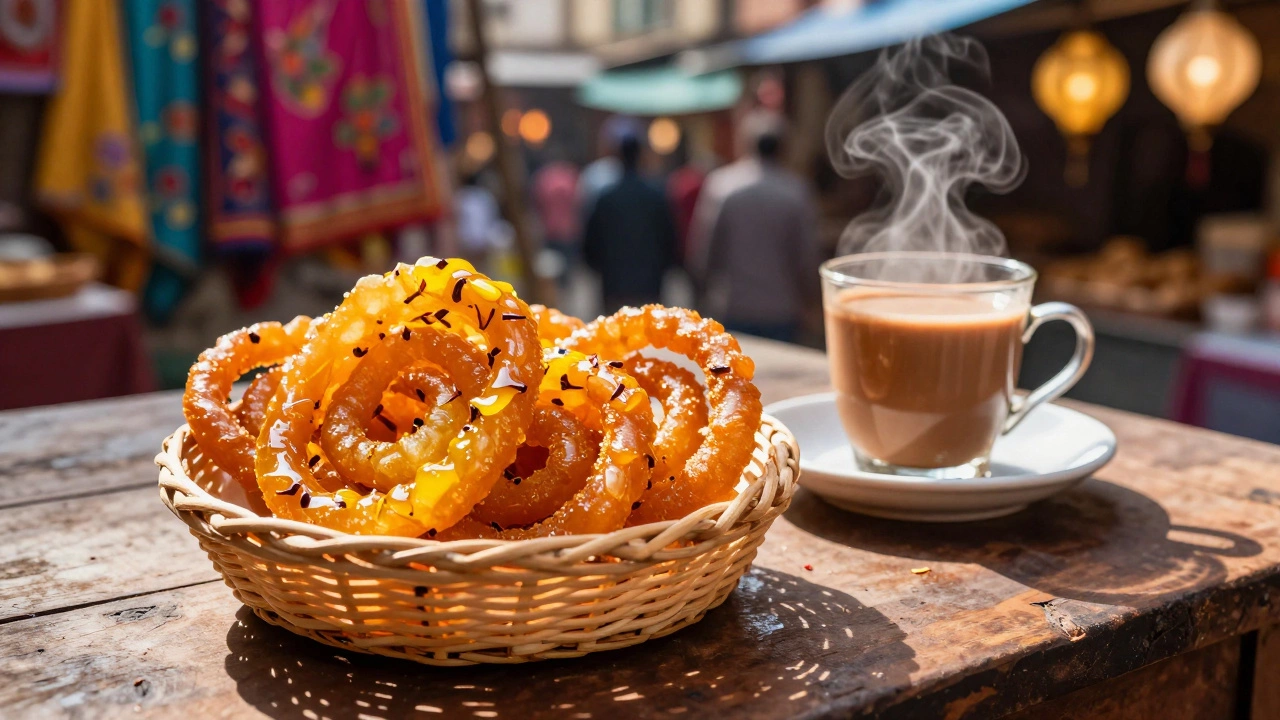
Then there is Jalebi crispy, spiral-shaped fried batter soaked in saffron-flavored syrup. Jalebi is the king of contrast. It is crispy on the outside and chewy on the inside. Unlike Gulab Jamun, which is uniform, Jalebi offers textural variety in every bite. It is also the ultimate street food companion, often paired with falooda or kachori for breakfast.
| Sweet Name | Main Ingredient | Cooking Method | Texture Profile | Best Paired With |
|---|---|---|---|---|
| Gulab Jamun | Khoya/Milk Powder | Deep Fried | Spongy, Soft | Chai, Ice Cream |
| Rosogolla | Chhana (Cottage Cheese) | Boiled | Spongy, Tangy | Plain, Milk |
| Jalebi | Maida (All-Purpose Flour) | Deep Fried | Crispy, Chewy | Falooda, Rabri |
| Rasgulla | Chhana | Boiled | Bouncy, Light | Cardamom Tea |
| Barfi | Milk Solids/Nuts | Reduced Milk | Firm, Fudgy | Black Coffee |
How to Make Perfect Gulab Jamun at Home
You don’t need a professional kitchen to make the king of sweets. However, you do need patience. The most common mistake beginners make is rushing the frying process. Here is how to get it right.
- Prepare the Dough: Mix 1 cup milk powder, 1/4 cup all-purpose flour, 1/2 teaspoon baking soda, and 2-3 tablespoons of milk. Knead gently until it forms a soft, non-sticky dough. Do not over-knead, or the jamuns will become hard.
- Shape Carefully: Divide the dough into small, equal-sized balls. Ensure there are no cracks on the surface. Any crack will cause the oil to seep in during frying, leading to uneven expansion and potential bursting.
- Heat the Syrup: While shaping, prepare the syrup. Boil 1 cup sugar with 1.5 cups water until dissolved. Add a few strands of saffron and a pinch of cardamom powder. Keep the syrup warm, not boiling hot, when you add the fried balls.
- Fry on Low Heat: This is crucial. Heat ghee or oil on low flame. Drop the balls in slowly. Fry them for 8-10 minutes, turning occasionally, until they turn deep golden brown. If the heat is high, they will burn on the outside while remaining raw inside.
- Soak Immediately: Remove the fried balls and drop them directly into the warm syrup. Let them soak for at least 2-3 hours before serving. This allows them to absorb the flavor and soften further.
Common Pitfalls and How to Avoid Them
Even experienced cooks face issues with Gulab Jamun. Here are the top problems and their fixes:
- Hard Jamuns: This usually happens if you use too much flour or knead the dough too vigorously. Use less flour and handle the dough lightly. Also, ensure the syrup is not too thick; a thin syrup penetrates better.
- Bursting During Frying: Cracks in the dough are the culprit. Take your time to smooth out each ball. If a ball looks imperfect, reshape it before frying.
- No Flavor Absorption: If the jamuns look dry after soaking, the syrup was likely too cold or too thick. Warm syrup expands the pores of the fried dough, allowing absorption. Thick syrup creates a barrier.
- Too Sweet: Balance the sweetness by adding a splash of lemon juice or extra cardamom to the syrup. Sometimes, a hint of rose water can mask excessive sweetness.
Regional Variations: Beyond the Standard Recipe
India's diversity means the "king" changes costume depending on where you are. In South India, you might encounter Adhirasam a sweet made from rice flour and jaggery, known for its chewy texture, which uses jaggery instead of refined sugar, offering a molasses-like depth. In Punjab, Gur Ghasi a rustic sweet made from wheat flour and jaggery is preferred for its earthy flavor and simplicity.
In Kashmir, Phirni a ground rice pudding set in earthen pots is served chilled, offering a cooling contrast to the region's spicy cuisine. These variations show that while Gulab Jamun is the national champion, local kings rule their specific territories with distinct flavors and techniques.
Serving Suggestions: Pairing the King
Gulab Jamun is rarely eaten alone. Its richness demands a partner. The classic pairing is masala chai. The bitterness of the tea cuts through the sugar, creating a balanced palate experience. Another popular combination is Gulab Jamun with vanilla ice cream, known as "Gulab Jamun Kulfi." The cold ice cream contrasts with the warm syrup, adding a creamy dimension.
For a more savory twist, some people enjoy a single piece with a strong black coffee. The acidity of the coffee highlights the caramel notes in the fried dough. Experiment with these pairings to find what works best for your taste buds.
Health Considerations: Enjoying in Moderation
Let’s be honest: Gulab Jamun is not a health food. It is high in calories, sugar, and saturated fats. A single medium-sized Gulab Jamun can contain around 100-120 calories. However, moderation is key. Enjoying one or two pieces during a festival or special occasion is part of the cultural experience. If you are watching your sugar intake, consider making a healthier version using dates and nuts for the syrup, or reducing the sugar content by half. But remember, the authentic experience involves indulgence.
Why Tradition Matters in Sweet Making
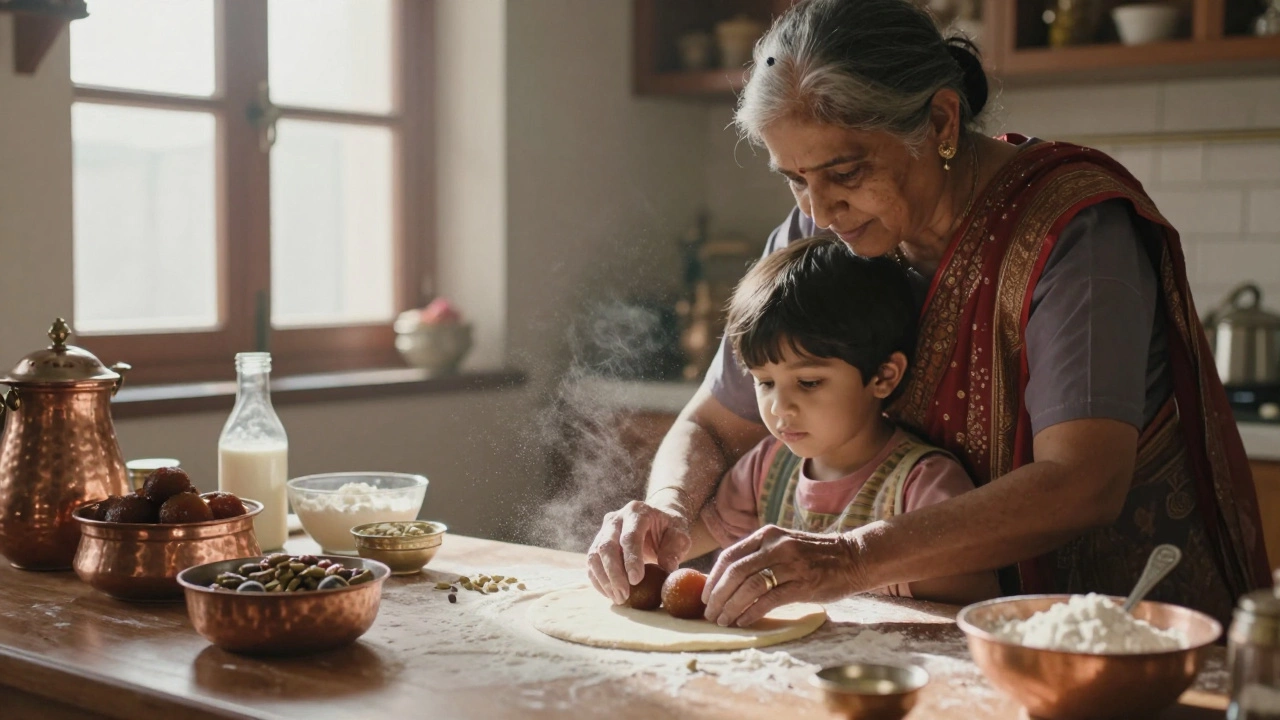
In India, sweets are not just food; they are symbols of love, respect, and celebration. Offering a plate of Gulab Jamun to a guest is a sign of hospitality. Making them at home connects generations, as recipes are passed down from mothers to daughters. The act of preparing the dough, frying the balls, and listening to the sizzle is a ritual that brings families together. This emotional weight adds to its status as the king of sweets. It is not just about taste; it is about memory and belonging.
What is the difference between Gulab Jamun and Rasgulla?
The main difference lies in the preparation method and ingredients. Gulab Jamun is made from khoya (reduced milk) or milk powder, shaped into balls, deep-fried, and then soaked in sugar syrup. Rasgulla, on the other hand, is made from chhana (fresh cottage cheese), boiled in sugar syrup, and is not fried. This gives Rasgulla a lighter, spongier texture compared to the denser, richer Gulab Jamun.
Can I make Gulab Jamun without frying?
Yes, you can make baked Gulab Jamun. Preheat your oven to 350°F (175°C). Place the shaped balls on a greased baking tray and bake for 15-20 minutes until golden brown. Then, soak them in warm sugar syrup. While the texture will be slightly different-less crispy and more cake-like-it is a healthier alternative with fewer calories.
How long can Gulab Jamun be stored?
Gulab Jamun can be stored in an airtight container at room temperature for up to 2 days. For longer storage, keep them in the refrigerator for up to a week. Before serving, let them come to room temperature or microwave them briefly to restore softness. Note that refrigeration may harden the syrup slightly.
Why do my Gulab Jamuns become hard after soaking?
Hardness usually results from over-kneading the dough, using too much flour, or frying at too high a temperature. Additionally, if the sugar syrup is too thick or cold, it won't penetrate the dough properly. Ensure the syrup is warm and of a one-string consistency (where two fingers dipped in syrup form a thin thread when pulled apart).
Is Gulab Jamun vegetarian?
Yes, traditional Gulab Jamun is strictly vegetarian. It is made from milk solids, flour, and sugar. However, always check labels if buying packaged versions, as some manufacturers might use additives derived from animal sources, though this is rare in standard Indian sweets.