Curry Flavor Balancer & Troubleshooter
How does your curry taste?
Select the primary issue you're experiencing to get a science-backed solution.
Quick Tip:
Remember: The "secret" is often a hit of acidity (lemon/vinegar) added at the very end!
Select a taste profile on the left to see how to fix your curry.
- Bloom your spices in hot oil before adding liquids.
- Brown your meat deeply to trigger the Maillard reaction.
- Use a mix of fresh and dried aromatics.
- Simmer low and slow to emulsify the fats and spices.
- Finish with a hit of acidity (lemon or vinegar).
The Magic of Blooming Spices
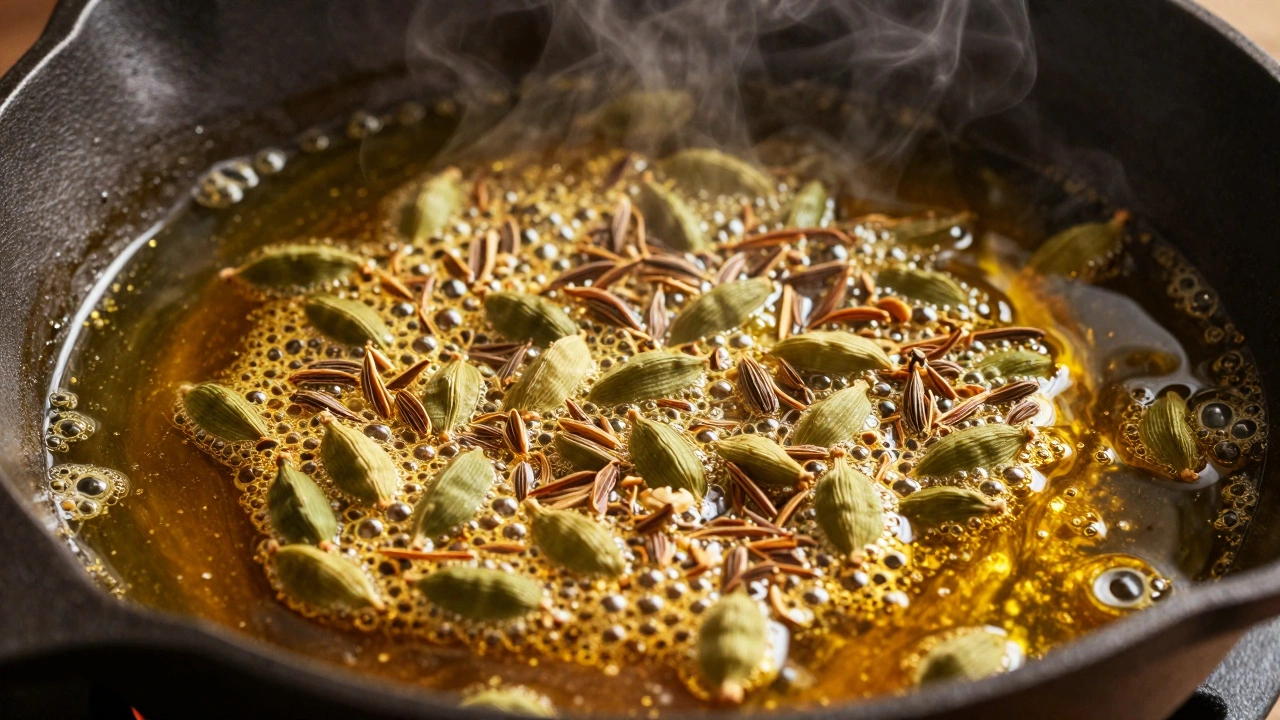
Most people treat spices like salt-something you just stir in at the end. But if you want a professional result, you have to change your approach. Spice Blooming is the process of frying spices in fat (oil or ghee) to release fat-soluble flavor compounds . When you drop Cumin or Cardamom into hot oil, the heat breaks down the cellular structure of the spice, releasing essential oils that would otherwise stay trapped. If you add powder spices directly to a watery sauce, they often taste raw or metallic. Instead, try adding whole spices to the pan first. You'll know they're ready when they start to sizzle and smell fragrant-usually just 30 to 60 seconds. If they turn black, you've gone too far and they'll taste bitter. The key is to time it perfectly: bloom the whole seeds, then add the powders just before the aromatics to prevent them from burning.Building the Base: The Holy Trinity of Aromatics
Your curry is only as good as its foundation. In a classic Chicken Curry Recipe, the base usually consists of Onions, Ginger, and Garlic. The mistake most home cooks make is rushing the onions. If you just sauté them until they're translucent, you're missing out on a huge amount of flavor. To get that deep, restaurant-style richness, you need to caramelize the onions. This means cooking them over medium heat for 15 to 20 minutes until they are a deep golden brown. This process creates natural sugars that balance the heat of the spices. Once the onions are dark, stir in a paste made from fresh ginger and garlic. This addition provides a pungent, sharp contrast to the sweetness of the onions, creating a complex flavor profile that anchors the entire dish.The Science of Searing Meat
If you're making a chicken curry, don't just boil the meat in the sauce. To get the most out of your protein, you need to utilize the Maillard Reaction, which is a chemical reaction between amino acids and reducing sugars that gives browned food its distinctive flavor . Sear your chicken pieces in high heat until they develop a brown crust. This isn't just about the meat itself; it's about the brown bits left in the pan, known as the "fond." When you later add your liquids, these caramelized particles dissolve back into the sauce, adding a layer of savory, "umami" depth that you simply cannot achieve by poaching. For the best results, use chicken thighs instead of breasts. Thighs have more fat and connective tissue, which prevents the meat from drying out during the long simmer.| Fat Type | Flavor Profile | Texture Impact | Best Use Case |
|---|---|---|---|
| Ghee | Nutty, buttery, rich | Velvety and thick | Traditional North Indian Curries |
| Vegetable Oil | Neutral | Lighter, cleaner | Daily home cooking |
| Coconut Oil | Slightly sweet, tropical | Creamy | South Indian or Thai styles |
| Butter | Creamy, salty | Heavy, luxurious | Finishing a Murgh Makhani |
Balancing the Five Tastes
A flat-tasting curry is usually a balance problem. You have the heat (from Chili) and the salt, but what's missing? To elevate your dish, you need to balance the five basic tastes: salty, sweet, sour, bitter, and umami.- Sour: This is the most overlooked element. A squeeze of lime juice, a splash of Tamarind, or a dollop of yogurt at the end cuts through the heaviness of the fats and "wakes up" the other spices.
- Sweet: A pinch of sugar or the natural sweetness from caramelized onions balances the bitterness of the spices.
- Bitter: This comes from the toasted spices and Turmeric. Too much makes the dish harsh; just enough adds complexity.
- Umami: Achieved through the seared meat and the slow reduction of the sauce.
The Importance of the Low and Slow Simmer
Many people make the mistake of boiling their curry on high heat to save time. This is a recipe for tough meat and separated oils. When you boil a curry, you're essentially forcing the water out and leaving the fats to float on top in an unattractive layer. Instead, bring the pot to a simmer and then drop the heat to low. A gentle bubble allows the flavors to meld and the sauce to thicken naturally as the water evaporates. This is also when the Emulsion occurs-the fat and the water-based sauce bind together to create that smooth, glossy texture seen in high-end restaurants. If you see oil separating, don't panic; just stir it back in or simmer it slightly longer to encourage it to bind.The Finishing Touch: Freshness and Garnish
Your cooking is done, but the presentation and the final olfactory hit are what make a dish memorable. A curry that has been simmering for two hours can lose some of its "bright" notes. You need to reintroduce them right before serving. Fresh Cilantro (coriander) isn't just for looks; its citrusy notes contrast the deep, earthy tones of the curry. A sprinkle of Garam Masala at the very end-rather than at the start-preserves the volatile aromatics of the cinnamon and cloves, giving the dish a fresh, spicy scent as it hits the table. Pair this with steamed Basmati Rice or a buttery Naan to provide a neutral base that lets the complex flavors of the curry shine.Why does my curry taste bitter?
Bitterness usually happens because the ground spices were burnt in the oil. Spices burn quickly; if the oil is too hot, they turn black and bitter in seconds. To fix this, add a small amount of sugar or a dollop of yogurt to neutralize the bitterness, and next time, add your powders after the onions have already been added to the pan to lower the temperature.
Can I use store-bought curry powder?
You can, but store-bought powders are often generic blends. For a better result, try mixing your own with cumin, coriander, turmeric, and chili powder. If you use a pre-made blend, still follow the "blooming" technique-fry the powder in oil for 30 seconds before adding liquids to unlock the flavor.
How do I make the sauce thicker without using cornstarch?
The best way to thicken a curry naturally is through the reduction of the sauce (simmering it longer) or by adding more caramelized onions. You can also blend a small portion of the cooked onions and tomatoes into a paste and stir it back in, or add a splash of heavy cream or coconut milk for a richer consistency.
What is the difference between Garam Masala and Curry Powder?
Curry powder is a general blend (often containing turmeric and coriander) used at the start of cooking. Garam Masala is a "warm" spice blend (containing cinnamon, cloves, and cardamom) that is typically added at the end of the process to preserve its aromatic qualities.
Does the type of chicken really matter?
Yes. Boneless, skinless chicken breasts tend to dry out and become stringy during the long simmering process. Chicken thighs are the gold standard for curry because the higher fat content keeps the meat juicy and tender, even after an hour on the stove.