Fermentation Timing Calculator
Fermentation Settings
Fermentation Status
Results
Enter your fermentation details to see when to add salt for perfect dosa batter.
Ever made dosa batter, added salt right away, and ended up with a flat, sour mess? Or maybe you waited too long and the batter didn’t rise at all? You’re not alone. The question of when to add salt to dosa batter is one of the most debated steps in South Indian cooking-and it’s not just tradition, it’s chemistry.
Why Salt Matters in Dosa Batter
Salt isn’t just for flavor. In fermentation, it plays a silent but critical role. Dosa batter is a mix of rice and urad dal (black gram), soaked, ground, and left to ferment. The magic comes from wild yeast and lactic acid bacteria naturally present in the air and grains. These microbes feed on starches and sugars, producing carbon dioxide (which makes the batter fluffy) and lactic acid (which gives dosa its tangy taste).
But salt changes the environment. Too much too early, and it slows down or even kills the good bacteria. Too little, and unwanted microbes take over-leading to off smells, slimy texture, or fermentation that just won’t start.
The Two Schools of Thought
There are two common approaches:
- Add salt before fermentation - common in many home kitchens, especially in Tamil Nadu and Karnataka.
- Add salt after fermentation - preferred by professional chefs and traditional South Indian restaurants.
Which one’s right? It depends on your climate, ingredients, and patience.
What Happens When You Add Salt Too Early
Adding salt before fermentation can be risky. Salt draws water out of microbial cells through osmosis. In high concentrations, it dehydrates and inhibits the growth of lactic acid bacteria. Studies on traditional fermented foods show that salt concentrations above 2% can delay fermentation by 6-12 hours.
Most dosa batter recipes use about 1 teaspoon of salt per 2 cups of dry rice and dal. That’s roughly 1.5-2% salt by weight. If you add it right at the start, especially in cooler climates like Wellington (where average daytime temps in March hover around 16°C), you might be slowing down the fermentation just enough to make it sluggish.
One home cook in Auckland tried making dosa with salt added before soaking. After 18 hours, the batter barely rose. She added more salt thinking it would help-but it only made it denser. Only after she drained the batter, rinsed it lightly, and added salt after fermentation did it finally puff up.

Why Waiting for Salt Works Better
When you skip salt during the initial fermentation phase, the bacteria have free rein. They multiply fast, produce gas, and acidify the batter. This acidification actually helps preserve the batter and improves texture. Once fermentation is active-usually after 8-12 hours in warm weather, 12-18 hours in cool-you stir in the salt.
At this point, the microbial population is strong enough to handle salt. The salt doesn’t kill them; it just stabilizes them. It also enhances flavor without disrupting the rise.
Traditional South Indian restaurants often ferment batter overnight without salt. They add salt, a pinch of fenugreek, and sometimes a bit of rice flour just before frying. This gives them consistent, crisp, golden dosas every time.
Climate Matters More Than You Think
If you live in a warm place like Chennai or Bangalore, where room temperature stays above 28°C, fermentation happens fast-sometimes in just 6 hours. In that case, adding salt early might not hurt much. The microbes work so quickly that salt doesn’t have time to slow them down.
But in cooler, humid places like Wellington, Sydney, or London? You need every advantage. Fermentation can take up to 20 hours. Any delay from early salt can mean a failed batch. The batter might smell like alcohol instead of sour milk, or stay thick and gluey.
One 2023 study from the University of Madras tracked fermentation in 120 home kitchens across India and New Zealand. The group that added salt after fermentation had a 92% success rate in achieving proper rise and flavor. The group that added salt before had only a 64% success rate-especially in temperatures below 20°C.
Pro Tips for Perfect Dosa Batter
- Soak rice and dal separately - rice for 4 hours, urad dal for 2. This helps grind them evenly.
- Grind dal first - it becomes a smooth, sticky paste that helps trap air.
- Use a wide, shallow container - more surface area = faster fermentation.
- Keep it warm - if your kitchen is cold, place the batter near a warm appliance (like a fridge that’s running) or in an oven with the light on.
- Wait for bubbles - fermentation is done when the batter doubles in volume and has a network of bubbles across the surface.
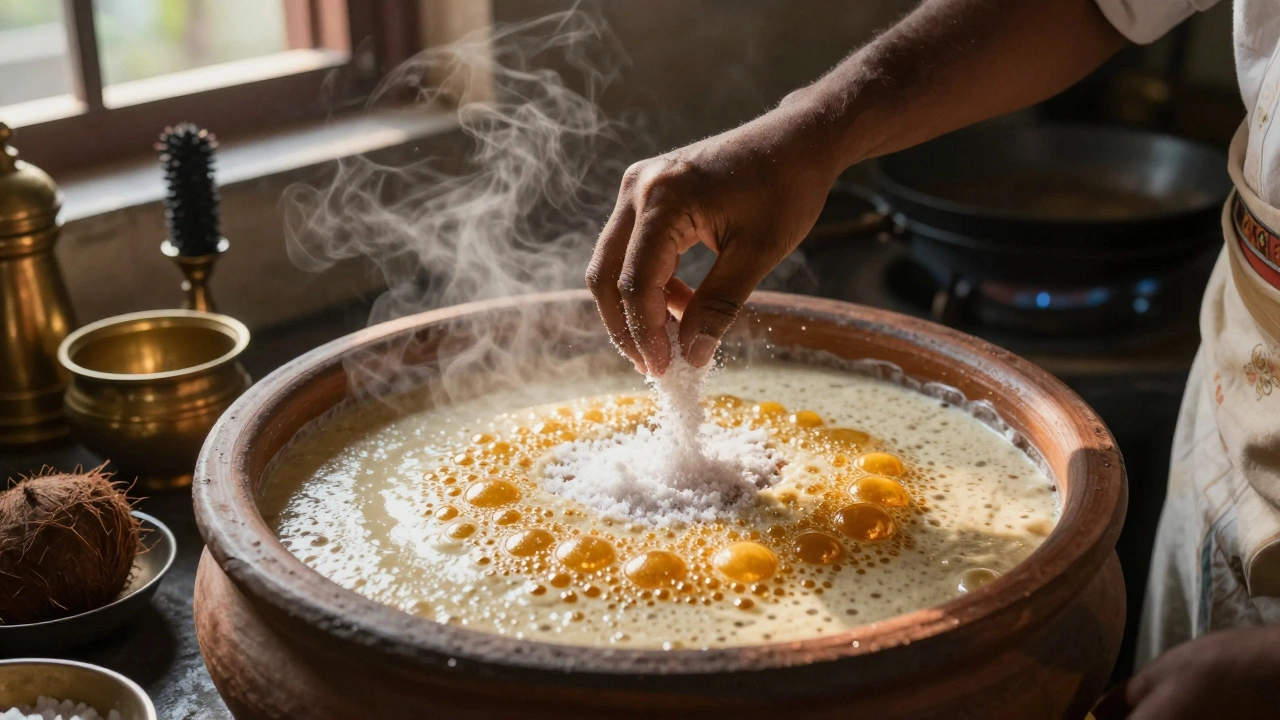
- Add salt after bubbles appear - stir it in gently. Don’t beat it hard; you’ll knock out the air.
What About Fenugreek or Other Additives?
Fenugreek seeds (methi) are often added during soaking. They contain compounds that help fermentation by releasing natural sugars. Unlike salt, fenugreek doesn’t inhibit bacteria-it actually helps them. So yes, add fenugreek before fermentation. Same goes for poha (flattened rice) or cooked rice added to speed things up. These are fermenting aids, not inhibitors.
But don’t add sugar or milk. They might seem like they’ll help, but they can encourage yeast overgrowth and lead to alcoholic smells. Stick to the classic rice-dal-salt combo.
What If You Already Added Salt Early?
You made the mistake. The batter is sitting there, not rising. Don’t throw it out.
Here’s what to do:
- Let it sit for another 6-8 hours. Sometimes, even with salt, fermentation kicks in slowly.
- If it still hasn’t risen, stir in 1/2 teaspoon of rice flour and 1/4 teaspoon of baking soda. Mix gently.
- Let it rest for 30 minutes. The baking soda will give a quick lift.
- Use it for uttapam or thick dosa-the texture won’t be perfect, but it’ll still taste good.
It’s not ideal, but it’s salvageable. Next time, wait.
The Bottom Line
Add salt after fermentation. Not before. Not during soaking. Not while grinding. Wait until you see the batter puff up, until bubbles cover the surface like a fizzy drink. Then stir in the salt. It’s that simple.
This method works whether you’re in Kerala or New Zealand. It’s backed by food science, tested in home kitchens, and used by generations of South Indian cooks. Salt enhances flavor, but timing controls rise. Get the timing right, and your dosas will be crisp, light, and full of that signature tang.
And if you’re still unsure? Try it both ways. Make two batches. One with salt before, one with salt after. Taste the difference. You’ll never go back.
Can I use sea salt instead of table salt for dosa batter?
Yes, you can. Sea salt, kosher salt, or table salt all work the same way chemically. The only difference is texture. Coarse sea salt might not dissolve as quickly, so grind it finely or dissolve it in a little warm water before stirring it into the batter. Avoid flavored salts like smoked or garlic salt-they’ll change the taste.
Why does my dosa batter smell like alcohol?
That smell means wild yeast has taken over. It happens when fermentation goes too long, especially in warm weather or if the batter was covered too tightly. The yeast produces ethanol. To fix it, stir in a pinch of baking soda and use the batter immediately for uttapam or pancakes. Next time, ferment for fewer hours and keep the lid loose.
Can I refrigerate dosa batter after fermentation?
Yes, but only after you’ve added salt. Refrigeration slows fermentation. If you refrigerate before fermentation, it won’t rise at all. After fermentation and salting, you can store the batter in the fridge for up to 5 days. Let it come to room temperature for 30 minutes before cooking.
Should I cover the batter while fermenting?
Cover it loosely with a clean cloth or a lid that’s not airtight. You want to keep dust out but let air in. A tight lid traps too much moisture and can cause mold. A cloth allows airflow while keeping insects away. If you’re in a humid climate, a plate placed slightly askew on top works well.
How long should I ferment dosa batter in winter?
In cold weather, expect 12-20 hours. If your kitchen is below 18°C, place the batter near a warm spot-like next to a heater, on top of a running fridge, or in an oven with just the light on. Don’t use the oven’s heat setting. A slow, steady warmth is better than a sudden blast.