Dal Water Ratio Calculator
Calculate the perfect water amount for your dal based on the type of dal you're using, whether you've soaked it, and what dish you're making. Get the right ratio every time for creamy, perfect dal.
Input Your Choices
Tip: For pressure cooking, add 0.25 cup of water to the final ratio.
Always cook dal with a lid on to prevent excessive evaporation.
Note: This calculator is based on 1 cup of dry dal. For soaked dal, the water amount is reduced by 0.5 cup.
When you’re making dal for the first time, the biggest question isn’t about spices or onions-it’s water. How much water do I need for 1 cup of dal? Too little, and you end up with burnt, crunchy lentils. Too much, and you’ve got a watery soup that won’t thicken no matter how long you simmer it. The answer isn’t a single number-it depends on the type of dal you’re using, whether you soaked it, and what texture you want.
Start with the basics: 1 cup of dal to 2.5 to 3 cups of water
For most common dals-like yellow moong, red masoor, or chana dal-use 2.5 to 3 cups of water for every 1 cup of dry lentils. This ratio gives you a thick, creamy dal that’s perfect with rice or roti. If you like it thinner, go up to 3.5 cups. If you’re making dal for a curry or want it to hold its shape, stick to 2.5.
Why not just use 3 cups every time? Because not all dals behave the same. Split red lentils (masoor dal) break down fast and absorb water quickly. Whole black urad dal? It takes longer and needs more liquid. The water amount isn’t just about cooking-it’s about texture control.
Soaking changes everything
If you soak your dal for 30 minutes to 2 hours before cooking, you can cut the water by about 0.5 cup. Soaking softens the outer skin, reduces cooking time, and makes the dal digestible. It also means less water evaporates during cooking because the lentils start hydrated.
For example: 1 cup of soaked chana dal only needs 2.25 cups of water instead of 3. If you skip soaking, stick to the full 3 cups. You’ll need to cook it longer, but you’ll still get good results.
Types of dal and their ideal water ratios
Not all dals are created equal. Here’s what works best for the most common kinds:
| Dal Type | 1 Cup Dry Dal Needs | Soaked? | Texture Outcome |
|---|---|---|---|
| Yellow Moong Dal (split) | 2.5 cups | No | Smooth, creamy, breaks down easily |
| Red Masoor Dal | 2.5 cups | No | Velvety, cooks in 15-20 minutes |
| Chana Dal (split Bengal gram) | 3 cups | Yes | Firm, holds shape, slightly nutty |
| Whole Urad Dal (black gram) | 3.5 cups | Yes | Soft, creamy, great for dal makhani |
| Toor Dal (pigeon pea) | 3 cups | No | Earthy, slightly grainy, traditional sambar base |
Notice how masoor and moong need less water? They’re smaller and have thinner skins. Chana dal and urad dal are denser and need more liquid to soften fully. If you’re making dal makhani with whole urad and kidney beans, you’ll want that extra 0.5 cup-otherwise, the beans stay hard in the middle.
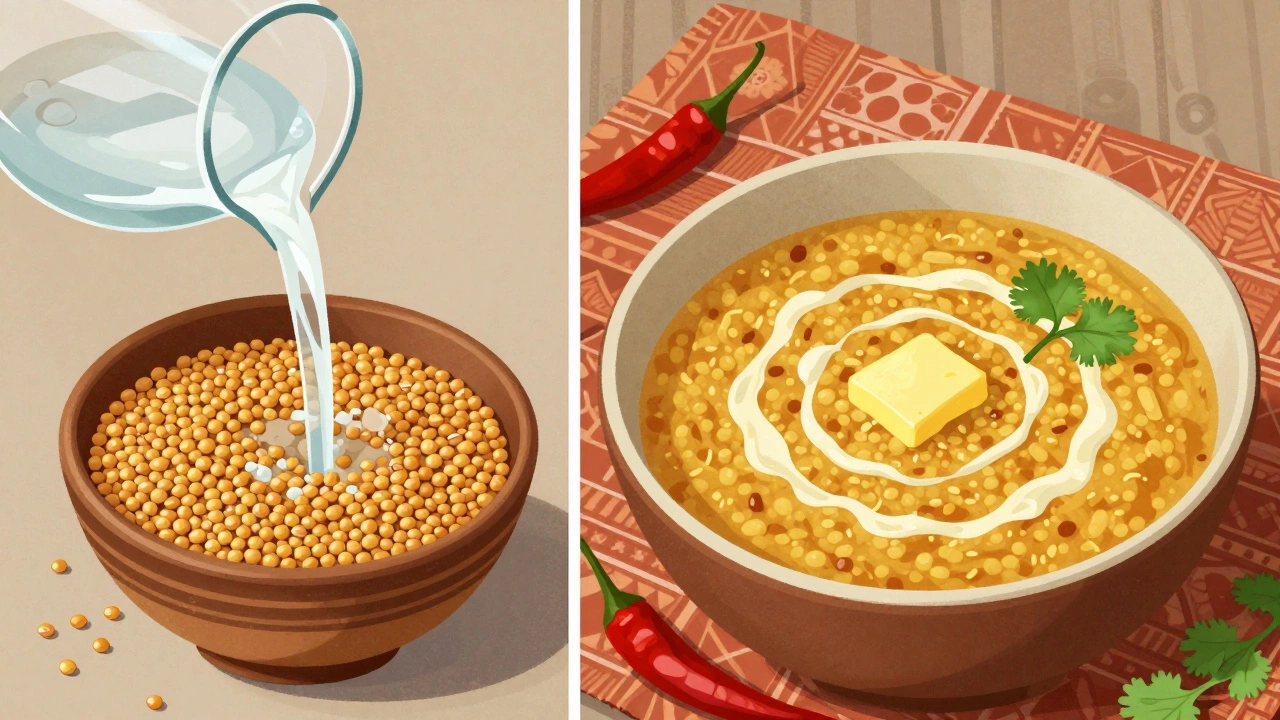
What about pressure cooking?
Pressure cooking cuts cooking time but doesn’t change the water ratio much. For 1 cup of dal, use 2.75 cups of water in a pressure cooker. Why not less? Because pressure cookers trap steam, so less evaporation happens. But you still need enough water to prevent scorching and to let the dal soften properly.
For yellow moong or masoor dal: 2.75 cups water, 1 whistle on high, then simmer for 5 minutes after pressure releases. For tougher dals like chana or urad: 3 cups water, 2 whistles, then let sit for 10 minutes before releasing pressure. Skipping the resting time? You’ll get undercooked lentils.
Why your dal turns out watery (and how to fix it)
You followed the ratio, but your dal still looks like soup? That’s usually not a water problem-it’s a cooking time or heat issue.
- You turned off the heat too early. Dal needs to simmer gently for 20-30 minutes after pressure release to thicken naturally.
- You didn’t mash it. Use the back of a spoon to press lentils against the side of the pot. That releases starch and thickens the dal.
- You added salt too early. Salt can toughen lentils. Add it in the last 5 minutes of cooking.
- You used hard water. Minerals in some tap water can slow down softening. If your water tastes metallic or leaves scale in your kettle, try filtered or bottled water for dal.
Pro tip: If your dal is too thin at the end, turn up the heat and simmer uncovered for 5-10 minutes. Stir often so it doesn’t stick. The water will evaporate, and the starch will thicken it naturally. No need to add flour or cornstarch.
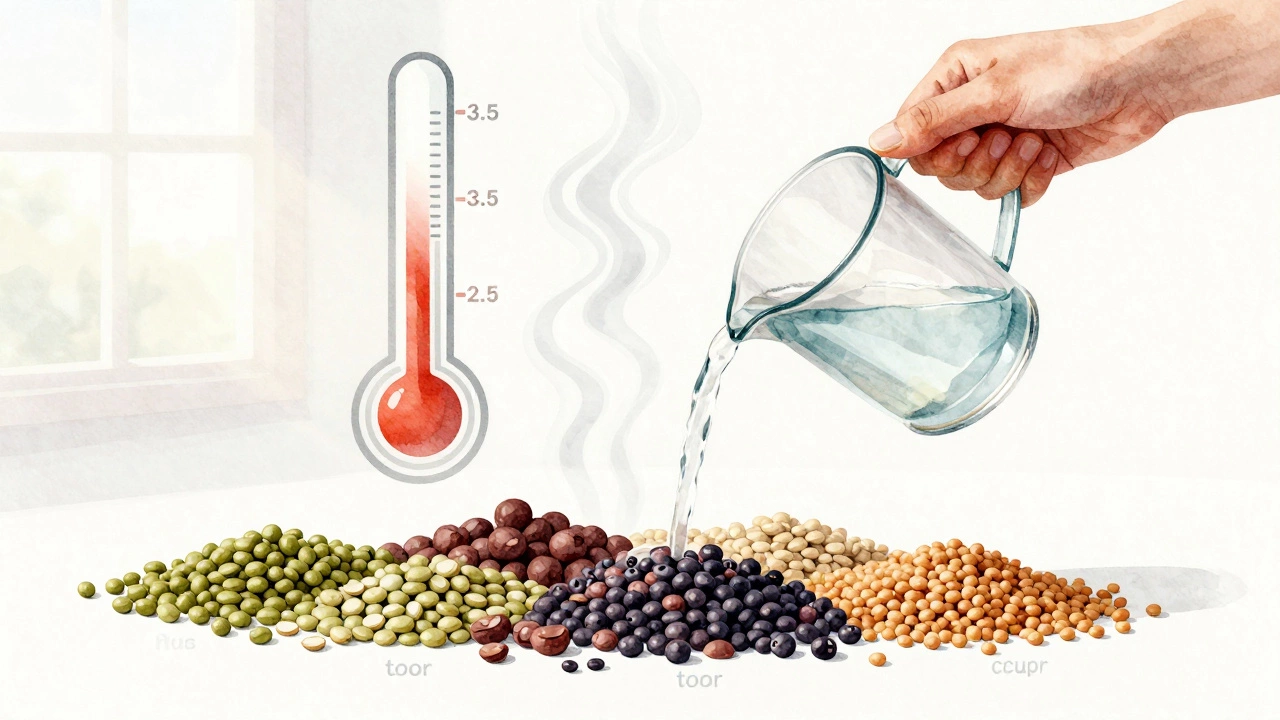
How to adjust for different dishes
Not all dals are meant to be the same. Here’s how to tweak the water based on what you’re making:
- Dal with rice: Go thicker-2.5 cups water. It should coat the back of a spoon.
- Dal for paratha stuffing: Use only 2 cups. You want it dense enough to hold shape without leaking.
- Dal for soups or khichdi: Add 3.5-4 cups. You want it loose, almost broth-like.
- Dal makhani: Use 3.5 cups for whole urad, plus cream or butter at the end. The extra water lets the lentils break down slowly and absorb the richness.
Think of water as your texture dial. More water = soup. Less water = paste. The right amount = comfort food.
Common mistakes and how to avoid them
- Measuring dal by volume after rinsing: Rinse your dal, then drain it well before measuring. Wet dal can weigh more and throw off your ratio.
- Using a pot that’s too small: Dal expands as it cooks. Use a pot that holds at least 4-5 cups total. A 2-quart pot is the minimum for 1 cup dry dal.
- Stirring too much: Stirring breaks lentils apart too early. Stir only once or twice during cooking. Let them soften naturally.
- Adding cold water mid-cook: That shocks the lentils and stops them from softening. If you need more water, use hot water.
One thing I’ve learned cooking dal in Wellington’s damp kitchens: humidity affects evaporation. If it’s raining and the air’s thick, your dal might take 5 extra minutes to thicken. Just keep it simmering. Patience beats shortcuts.
Final tip: Taste and adjust
The best way to know if you’ve got the right water amount? Taste. After 15 minutes of cooking, take a spoonful. If the lentils are still crunchy, add 1/4 cup hot water and cook longer. If they’re falling apart and the liquid is too thin, simmer uncovered. Your palate is your best tool.
There’s no magic number. But once you try 2.5 cups for moong, 3 for toor, and 3.5 for urad-plus the soak-and-simmer method-you’ll never guess again. Dal isn’t complicated. It just needs time, attention, and the right amount of water.
Can I use the same water ratio for all types of dal?
No. Different dals have different densities and skin thicknesses. Yellow moong and red masoor need less water (2.5 cups per cup of dal), while whole urad and chana dal need more (3 to 3.5 cups). Always match the ratio to the type of lentil you’re using.
Should I soak dal before cooking?
Soaking isn’t required, but it helps. Soaking for 30 minutes to 2 hours reduces cooking time by 10-15 minutes and makes the dal easier to digest. It also lets you use slightly less water-about 0.5 cup less per cup of dal.
Why does my dal taste bland even after adding spices?
If the lentils aren’t fully cooked, they won’t absorb flavors well. Make sure they’re soft before adding garam masala or turmeric. Also, don’t add salt until the last 5 minutes-it can toughen the dal. Temper your spices in oil first (tadka) and stir it in at the end for maximum aroma.
Can I make dal in a rice cooker?
Yes, but only if your rice cooker has a “porridge” or “soup” setting. Use 3 cups of water per cup of dal and stir halfway through. Most standard rice cookers won’t get hot enough to fully soften tougher dals like chana or urad. Stick to moong or masoor for best results.
What if I accidentally added too much water?
Don’t panic. Turn up the heat and simmer uncovered for 10-15 minutes, stirring occasionally. The excess water will evaporate, and the natural starch from the lentils will thicken the dal. You don’t need to add thickeners like flour or cornstarch-just time and patience.