When you’re choosing between tofu and paneer for your next meal, you’re not just picking an ingredient-you’re choosing a whole different way of eating. One comes from soybeans, the other from milk. One’s plant-based, the other’s dairy. One’s been a staple in Asian kitchens for centuries, the other in Indian homes for just as long. But which one is actually better for your body? Let’s cut through the noise and look at what’s inside each, side by side.
Calories and fat: What you’re really eating
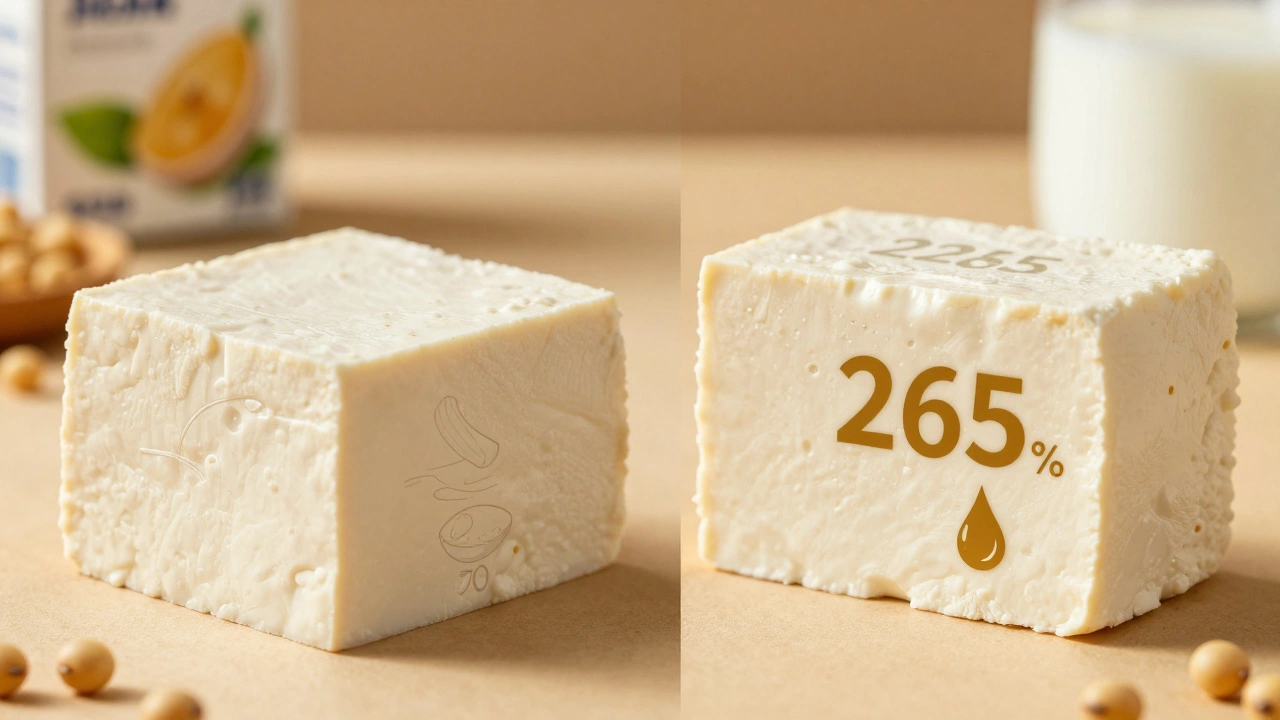
A 100-gram serving of firm tofu has about 70 calories and 4 grams of fat. Most of that fat is unsaturated-the kind your heart likes. Now compare that to paneer: the same amount has around 265 calories and 20 grams of fat. Almost all of it’s saturated fat, the kind that raises LDL cholesterol when eaten in excess. That’s not a small difference. That’s more than three times the calories and five times the fat. If you’re watching your weight or managing cholesterol, tofu wins outright.
But here’s the catch: paneer isn’t bad because it’s dairy. It’s bad because most of us eat way too much of it. A single portion of paneer tikka can easily hit 300 calories before you even add the rice. Tofu, on the other hand, soaks up flavors without adding bulk. You can use twice as much tofu in a stir-fry and still end up with fewer calories than a small cube of paneer.
Protein: Both are good, but differently
Both tofu and paneer deliver solid protein-about 8 grams per 100 grams. That’s comparable to an egg. But the quality of that protein isn’t the same. Paneer’s protein comes from casein and whey, both complete animal proteins. That means it has all nine essential amino acids your body can’t make on its own.
Tofu’s protein is also complete. Soy is one of the few plant foods that gives you all nine. That’s rare. Most plant proteins-like beans or lentils-are missing one or two. So if you’re vegetarian and rely on plants, tofu is one of the few that fully covers your protein needs without needing to combine foods.
Studies from the American Journal of Clinical Nutrition show that soy protein can help maintain muscle mass as well as animal protein does, especially when paired with regular strength training. So no, tofu won’t leave you weak. It just does it with less fat and fewer calories.
Sodium, calcium, and what’s hidden in your food
Paneer is naturally high in calcium-about 200 mg per 100 grams. That’s nearly 20% of your daily need. Tofu? It depends. Regular tofu has maybe 30 mg. But if it’s calcium-set tofu (the kind made with calcium sulfate), it can have up to 350 mg. That’s more than paneer. And it’s not a coincidence. Many brands fortify tofu specifically to compete with dairy.
Here’s where most people get fooled: store-bought paneer often has added salt. Homemade paneer? You control the salt. But if you buy it pre-packaged, you could be getting 200-300 mg of sodium per 100 grams. Tofu, especially if you rinse it before cooking, has almost no sodium unless it’s marinated or fried in salty sauces.
For bone health, both can work-but tofu gives you calcium without the extra fat and sodium. And if you’re lactose intolerant, paneer isn’t an option anyway. Even though it’s low in lactose, it still contains traces. Tofu? Zero lactose. Zero dairy. Zero issues.
Phytonutrients and hormones: The hidden advantage of tofu
Tofu contains isoflavones-plant compounds that act like weak estrogens in the body. For decades, people worried this would mess with hormones. But research has shown the opposite. A 2021 meta-analysis in the journal Nutrients found that soy isoflavones may actually reduce the risk of breast cancer in women and help ease menopause symptoms. They also improve blood vessel function and lower blood pressure.
Paneer has none of that. It’s pure protein and fat. No antioxidants. No anti-inflammatory compounds. No phytonutrients. It’s nutritionally simple. Tofu is complex. And that complexity is what makes it more than just a meat substitute-it’s a functional food.
How they behave in cooking: Practical differences
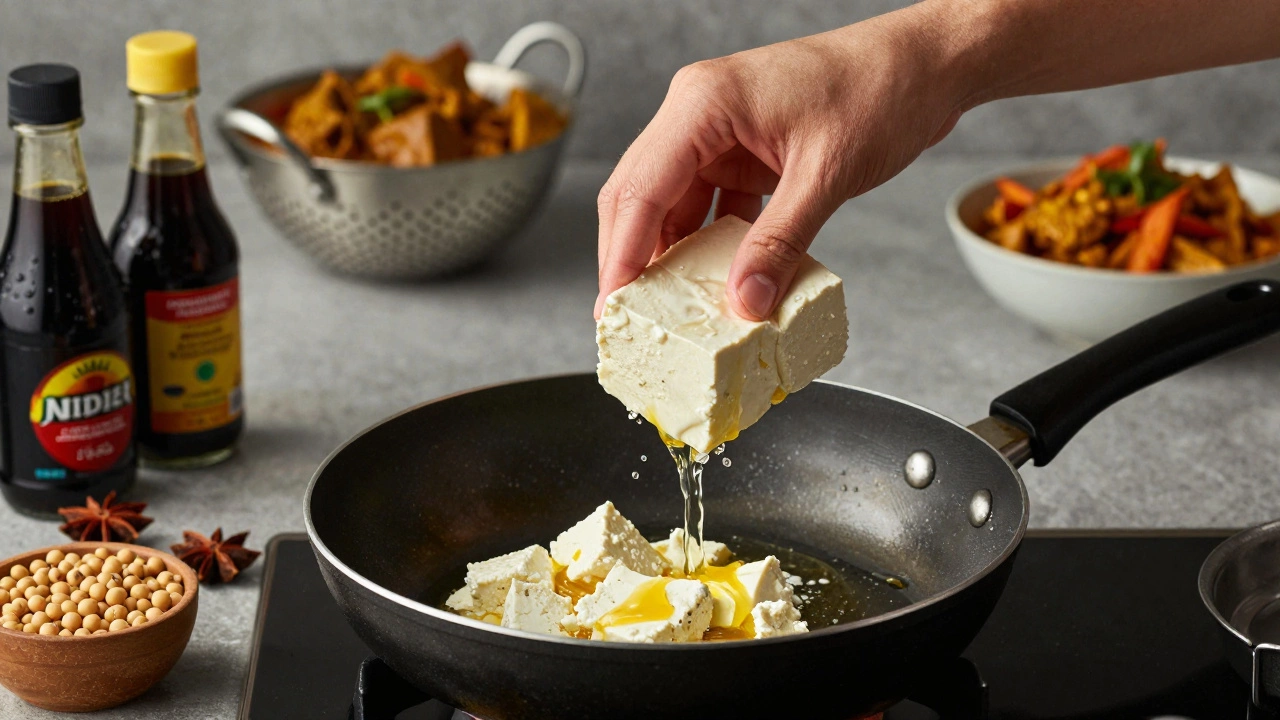
Paneer holds its shape. It’s dense. It browns nicely. It’s perfect for grilling, frying, or tossing into curries. Tofu? It’s fragile. It crumbles. It needs pressing to remove water. But that’s also its strength. Tofu absorbs marinades like a sponge. A block of tofu soaked in soy, garlic, and ginger overnight will taste like it’s been slow-cooked for hours. Paneer? It just tastes like cheese.
If you’re making a stir-fry, tofu lets you use less oil because it doesn’t need frying to be tasty. Paneer often gets deep-fried or cooked in butter-heavy sauces. That’s why tofu-based dishes often end up lower in calories overall-even if you think you’re eating the same thing.
Who should choose what?
Choose tofu if:
- You want fewer calories and less saturated fat
- You’re managing cholesterol or blood pressure
- You’re vegan or lactose intolerant
- You want phytonutrients that support long-term health
- You’re cooking on a budget-soybeans are cheaper than milk
Choose paneer if:
- You love the texture and flavor of fresh cheese
- You need a quick, high-protein snack without prep
- You’re making traditional Indian dishes like palak paneer or paneer butter masala
- You’re not worried about fat intake and enjoy dairy
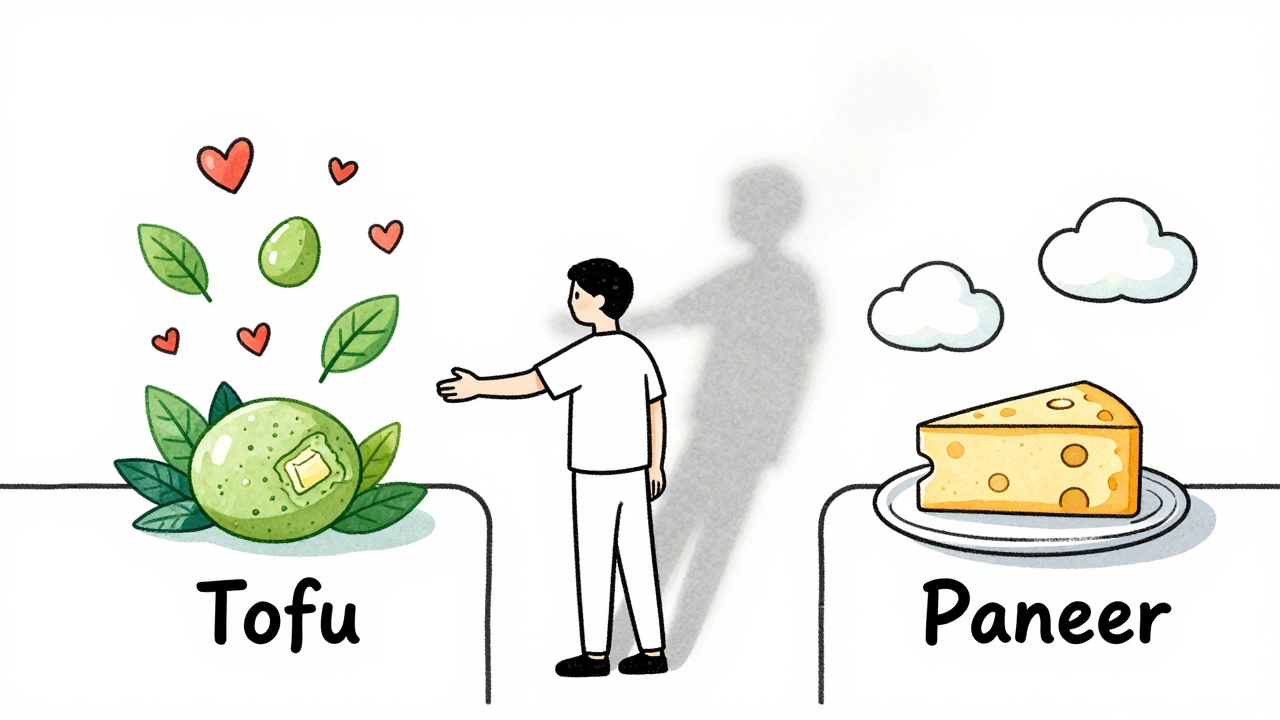
There’s no winner here in a moral sense. Both are fine in moderation. But if your goal is long-term health, tofu is the smarter default. Paneer is a treat. Tofu is a tool.
Real-world tip: Make your own tofu (yes, it’s easy)
You don’t need to buy tofu. You can make it at home with soybeans, water, and nigari (magnesium chloride) or lemon juice. It takes three hours, but you’ll end up with fresher, cheaper tofu with no additives. Skip the pre-packaged stuff. Buy dried soybeans in bulk. Soak them overnight. Blend. Boil. Strain. Add coagulant. Press. Done. You’ll save money and know exactly what’s in it.
Same goes for paneer. Making it at home takes 20 minutes. Boil milk, add vinegar or lemon juice, strain. But even homemade paneer still has 20 grams of fat per 100 grams. Tofu? You can make it with 4 grams.
Bottom line: Tofu is the healthier choice-for most people
Paneer tastes good. It’s comforting. It’s part of culture. But nutritionally, tofu beats it on nearly every metric: fewer calories, less fat, no cholesterol, more nutrients, and better for your heart. It’s not about giving up flavor. It’s about upgrading your ingredients. Swap paneer for tofu in your next curry. You won’t miss it. Your body will thank you.
Is tofu better for weight loss than paneer?
Yes. Tofu has about one-third the calories and one-fifth the fat of paneer per 100 grams. You can eat twice as much tofu for the same calorie count, making it far more filling without the extra fat. It’s one of the best plant-based proteins for losing or maintaining weight.
Does tofu cause hormonal problems in men?
No. Despite myths, studies show soy isoflavones in tofu do not lower testosterone or cause breast growth in men. A 2010 review in Fertility and Sterility analyzed 15 studies and found no effect on hormone levels. You can eat tofu daily without worry.
Can I substitute tofu for paneer in Indian recipes?
Absolutely. Press firm tofu to remove water, cube it, and pan-fry it lightly before adding to curries. It absorbs spices just as well as paneer. Many Indian households now use tofu in palak tofu or tofu tikka masala with great results. The texture is different, but the flavor works.
Is paneer good for building muscle?
Yes, it’s a good source of complete protein and can help with muscle repair. But it’s also high in saturated fat and calories. Tofu gives you the same protein with far less fat. If you’re building muscle and watching your fat intake, tofu is the cleaner option.
Which is better for diabetics: tofu or paneer?
Tofu. It has almost no carbs and a very low glycemic load. Paneer has minimal carbs too, but its high fat content can slow digestion and lead to blood sugar spikes later. Tofu won’t disrupt your glucose levels and offers heart-protective benefits that diabetics need.
If you’re trying to eat cleaner, start by swapping paneer for tofu in just one dish a week. Notice how your body feels. You might find you don’t miss the heaviness at all.