Indian Sweet Explorer
India has no official national sweet due to its vast culinary diversity. Click on a region below to explore its most famous dessert contender.
Explore India's Sweet Heritage
Select a region above to reveal its signature sweet and learn about its cultural significance.
You might think there’s a clear-cut answer when you ask, "What is the national sweet dish of India?" After all, every country seems to have one: France has macarons, Japan has mochi, and the US has apple pie. But here’s the twist that catches most people off guard: India does not officially have a designated national sweet. Unlike the national anthem or the flag, no government decree has crowned a single dessert as the supreme ruler of the subcontinent’s culinary landscape.
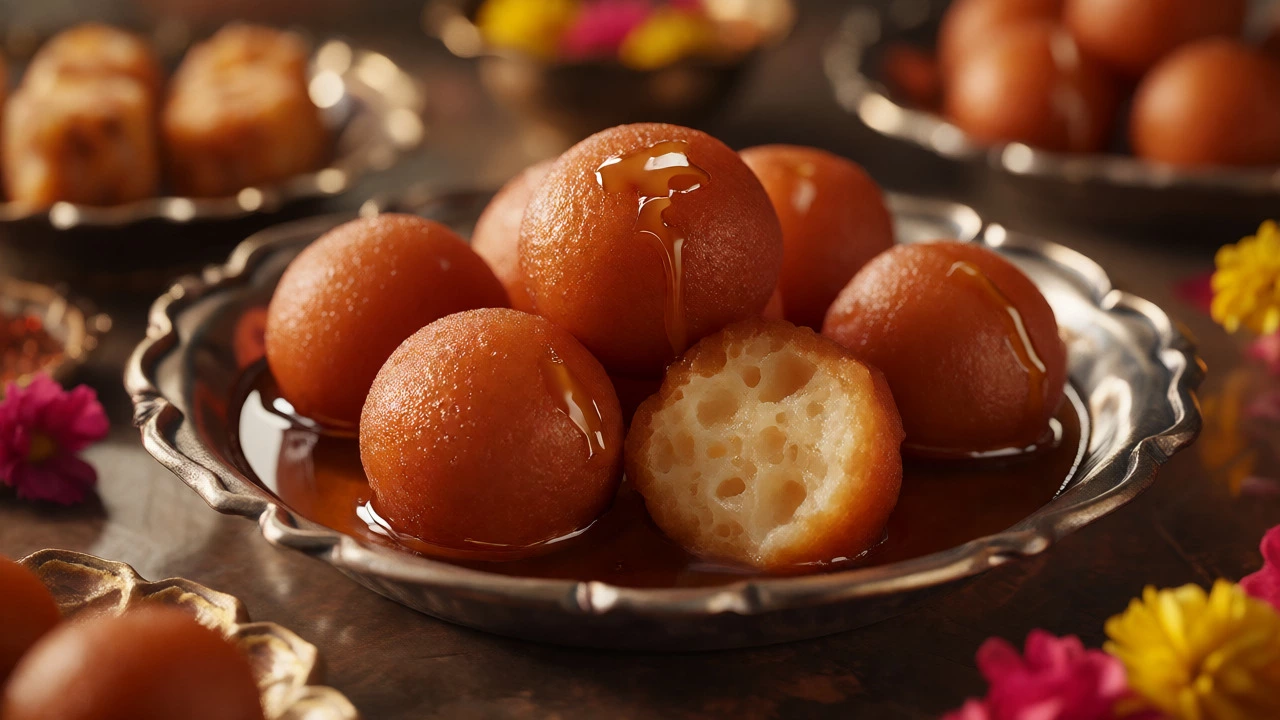
This lack of an official title doesn’t mean the debate is dead. In fact, it’s fiercer than ever. If you walk into a wedding in Punjab, a festival in West Bengal, or a street corner in Mumbai, you’ll see different contenders claiming the throne. However, if you had to pick the one sweet that comes closest to representing the entire nation-crossing regional, religious, and linguistic barriers-it would be Gulab Jamun. This deep-fried milk solid dumpling soaked in rose-scented syrup is the undisputed king of Indian celebrations.
Why There Is No Official Winner
India is a continent disguised as a country. With 28 states and 8 union territories, each region has its own culinary identity so strong that declaring one sweet as "national" feels like trying to pick a favorite child among fifty siblings. The Ministry of Culture has never issued a notification naming a national sweet, likely because doing so would spark political outrage faster than a tax hike on petrol.
Think about it. Would a Tamilian accept a Punjabi sweet as their national representative? Would a Bengali agree that a Gujarati delicacy defines their culture? Probably not. The diversity of ingredients alone makes unification impossible. North Indian sweets rely heavily on dairy products like khoya (reduced milk solids) and ghee. South Indian sweets often use coconut, jaggery, and rice flour. East Indian sweets lean towards chhana (fresh cheese) and sugar syrups. West Indian sweets might feature dry fruits and semolina. To pick one is to erase the others.
The Strongest Contender: Gulab Jamun
Despite the lack of official status, Gulab Jamun holds the unofficial crown for good reason. It is ubiquitous. You find it at Diwali feasts, Eid gatherings, Christmas dinners, and even casual Sunday lunches. Its name gives away its soul: "Gulab" means rose, and "Jamun" refers to the dark purple berry-like fruit it resembles in size and shape.
The magic lies in its texture. A perfect Gulab Jamun should be crisp on the outside but melt-in-your-mouth soft inside. It’s made from Khoya, which is milk boiled down until it becomes a dense paste, mixed with flour, baking soda, and cardamom, then fried in ghee until golden brown. These balls are then submerged in a warm sugar syrup infused with rose water and saffron. The contrast between the hot, oily exterior and the cool, sticky interior creates a sensory experience that few other foods can match.
Why has it won the popularity contest? Accessibility. While some Indian sweets require complex techniques or rare ingredients, Gulab Jamun is forgiving. You can buy pre-made mixes at any supermarket, or make it from scratch with basic pantry staples. It travels well, lasts for days if stored properly, and appeals to both children and adults. When you serve Gulab Jamun, you’re speaking a language everyone understands.
Regional Champions That Could Have Been
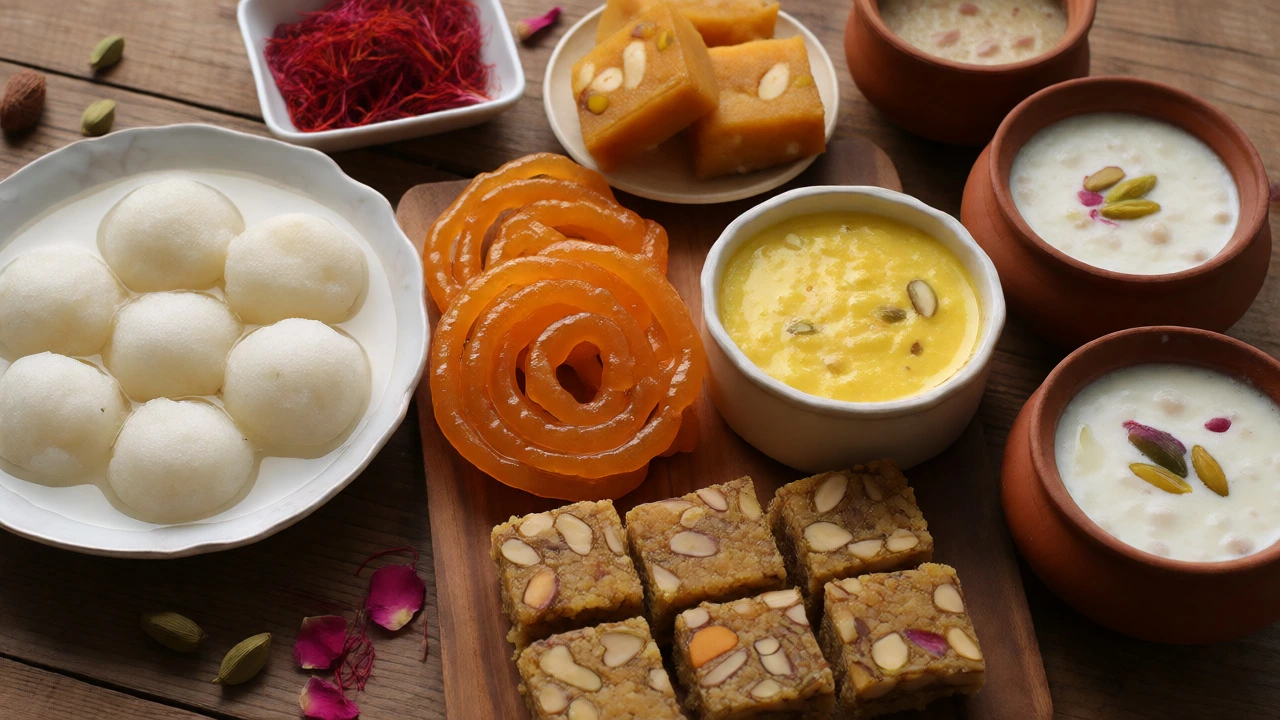
If we were to hold a referendum by state, the results would look very different depending on where you cast your vote. Let’s break down the regional heavyweights that constantly challenge Gulab Jamun’s dominance.
| Region | Dish Name | Key Ingredients | Cultural Significance |
|---|---|---|---|
| West Bengal & East | Rasgulla | Chhana (cottage cheese), sugar syrup | Symbol of hospitality; central to Durga Puja offerings |
| South India | Payasam | Rice, vermicelli, milk, jaggery, cardamom | Mandatory offering in temples and weddings across Kerala and Tamil Nadu |
| Gujarat & Rajasthan | Mohanthal | Besan (gram flour), ghee, nuts, saffron | Festival staple for Diwali and Holi; known for rich, nutty flavor |
| Punjab & North | Jalebi | Fermented batter, sugar syrup, saffron | Breakfast favorite; often paired with rabri (condensed milk) |
| Karnataka | Dharwad Peda | Khoya, sugar, pistachios | GI-tagged specialty; represents Karnataka’s dairy heritage |
Take Rasgulla, for instance. In Kolkata, this spongy ball of chhana soaked in light syrup isn’t just a dessert; it’s an emotion. The rivalry between Odisha and West Bengal over who invented Rasgulla was so intense that it led to a Geographical Indication (GI) tag dispute. Both regions now hold GI tags, proving that even within one sweet, there’s no single owner.
Down south, Payasam rules. Whether it’s made with vermicelli, rice, or lentils, this creamy pudding is served at every auspicious occasion. You wouldn’t dare end a wedding feast in Kerala without Payasam. It’s considered sacred, often offered to deities before being distributed to guests. Its simplicity masks a depth of flavor derived from slow-cooking milk and jaggery.
What Makes a Sweet "National"?
If we were to define criteria for a national sweet, what would they be? Historically, national dishes tend to share three traits: widespread availability, cultural symbolism, and historical longevity. Gulab Jamun checks all these boxes, but so do others.
Widespread availability means you can find it anywhere. From high-end restaurants in Delhi to roadside stalls in Varanasi, Gulab Jamun is present. Cultural symbolism involves its role in rituals. Sweets are integral to Hindu ceremonies, Muslim festivals, and Christian celebrations. No matter the faith, sharing mithai (sweets) signifies goodwill and prosperity. Historical longevity matters too. Many Indian sweets date back centuries, mentioned in ancient texts or colonial records. Gulab Jamun’s origins are debated, with some tracing it to Persian influences during the Mughal era, while others claim indigenous roots.
However, popularity doesn’t equal officialdom. Just because ice cream is popular in America doesn’t make it the national food. Similarly, Gulab Jamun’s fame doesn’t grant it legal status. The absence of an official designation actually protects the diversity of Indian cuisine. It allows every region to maintain pride in its local specialties without feeling overshadowed by a "winner."
How to Enjoy the Best of Both Worlds
Since there’s no single winner, why limit yourself? The beauty of Indian sweets is their variety. Instead of searching for the definitive national sweet, explore the spectrum. Start with the classics. Try making Gulab Jamun at home using store-bought khoya mix for convenience. Pair it with vanilla ice cream for a modern twist, a trend that started in upscale Indian restaurants and spread globally.
Next, branch out. Visit a Bengali sweet shop and order a Rosogolla or Mishti Doi (sweet yogurt). Head to a South Indian restaurant and ask for Ada Pradhaman (rice payasam with coconut milk). Explore the dry sweets like Barfi, which come in flavors ranging from plain milk to pistachio and rose. Each bite offers a glimpse into a different part of India.
Consider the occasion when choosing your sweet. For festive gifting, boxed assortments of Kaju Katli (cashew fudge) and Soan Papdi are safe bets. They last long and look impressive. For personal indulgence, go fresh. Hot Jalebis eaten straight from the kadhai (wok) with a side of Rabri are unbeatable. Fresh Rasgullas served chilled provide a refreshing contrast to spicy meals.
The Future of Indian Sweets
The conversation around national sweets is evolving. Health-conscious consumers are demanding lighter options. Traditional mithai is often heavy on sugar and fat. Enter innovative chefs who are reimagining classics. Imagine Gulab Jamun made with steamed instead of fried dough, or Rasgullas sweetened with dates instead of refined sugar. These adaptations keep the spirit alive while addressing modern dietary needs.
Globalization is also playing a role. Indian sweets are gaining international recognition. Stores in London, New York, and Singapore stock premium mithai. This exposure reinforces the idea that Indian sweets are a collective brand rather than a single product. When foreigners talk about "Indian dessert," they rarely specify one item. They refer to the array, the colors, the fragrances.
So, next time someone asks you what the national sweet of India is, don’t give them a wrong answer by picking one. Tell them the truth: India’s sweetness is plural. It’s a mosaic of flavors, textures, and traditions. And honestly, that’s far more delicious than any single definition could be.
Is Gulab Jamun the official national sweet of India?
No, there is no officially declared national sweet dish of India. However, Gulab Jamun is widely considered the most popular and representative sweet due to its presence across all regions and occasions.
Why does India not have a national sweet?
India's vast cultural and culinary diversity makes it difficult to choose a single sweet. Each region has strong local favorites, and declaring one as national could alienate other communities.
What is the most famous sweet in North India?
Gulab Jamun and Jalebi are the most famous sweets in North India. Gulab Jamun is preferred for dinner parties and festivals, while Jalebi is a popular breakfast item.
Which sweet is famous in South India?
Payasam (or kheer) is the most famous sweet in South India. It is a mandatory offering in temples and a staple at weddings, typically made with rice, vermicelli, or lentils cooked in milk.
Are Indian sweets healthy?
Traditional Indian sweets are generally high in sugar and fats (like ghee), making them calorie-dense. However, they provide energy and contain nutrients from ingredients like milk, nuts, and dates. Moderation is key.