
People often mix up tikka and tandoori sauce because both are used in Indian grilled chicken dishes and both look red. But they’re not the same. One is a marinade for skewered pieces, the other is a sauce for whole or large cuts. Confusing them can ruin your dish-too much yogurt in tandoori? Your chicken turns rubbery. Too little spice in tikka? It tastes bland. Let’s clear this up once and for all.
Tikka Sauce: The Marinade for Skewered Chicken
Tikka sauce isn’t really a sauce at all-it’s a thick marinade. It’s made to coat bite-sized pieces of chicken, usually boneless thighs or breast, before they’re threaded onto skewers and grilled. The base is plain yogurt, which tenderizes the meat and helps spices stick. You’ll find cumin, coriander, garam masala, garlic, ginger, and a touch of paprika or Kashmiri red chili powder for color. Some recipes add a splash of lemon juice or a teaspoon of sugar to balance the tang.
The key to good tikka is time. Let the chicken sit in the marinade for at least four hours, preferably overnight. The yogurt breaks down proteins just enough so the meat stays juicy when it hits the grill. You don’t need a tandoor oven. A hot grill, broiler, or even a cast-iron skillet works fine. The result? Charred edges, smoky flavor, and meat that pulls apart easily.
Chicken tikka is often served as an appetizer or snack, sometimes with a side of mint chutney or onion rings. It’s the star of British-Indian pub menus, but it started as a home-cooked dish in Punjab and parts of northern India.
Tandoori Sauce: The Bold, Spicy Coating for Whole Chicken
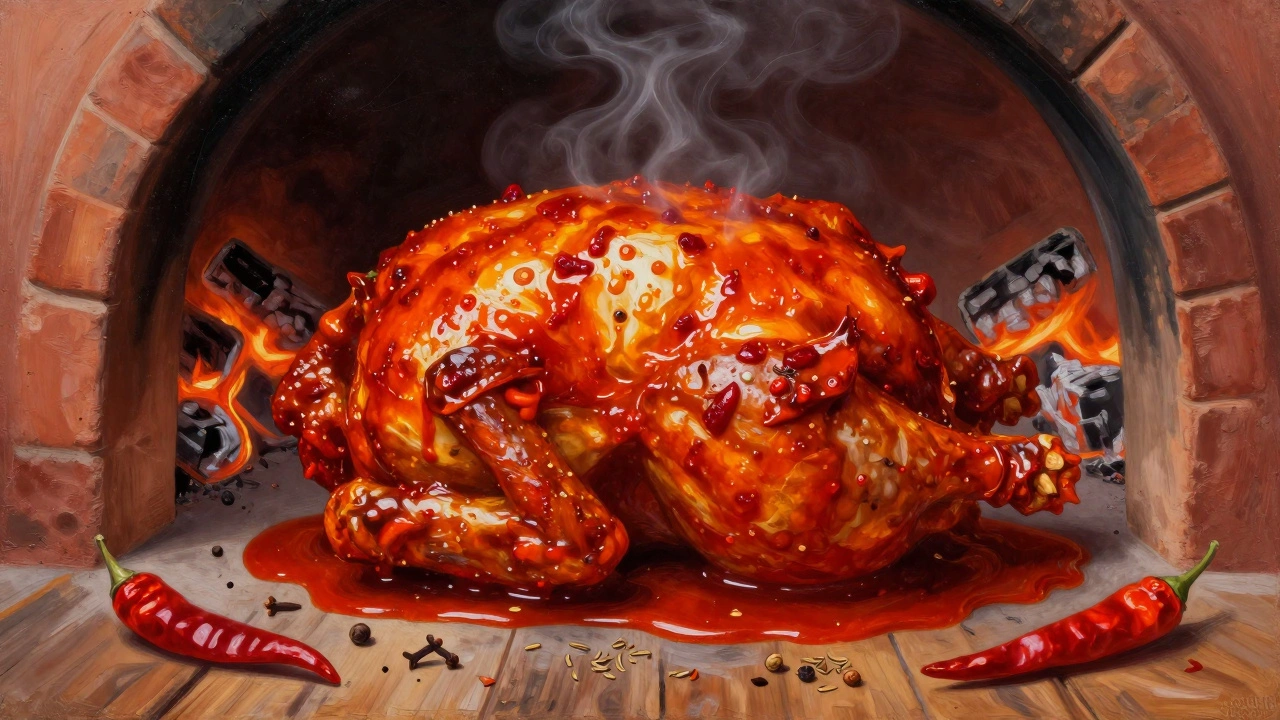
Tandoori sauce is thicker, more intense, and designed for larger cuts-usually a whole chicken or big pieces like drumsticks and thighs. The base is also yogurt, but it’s loaded with more spices and often includes tomato puree or crushed tomatoes. That’s what gives it the deep red-orange color you see in restaurants. The spice blend includes cumin, coriander, garam masala, garlic, ginger, and a lot more Kashmiri chili powder-sometimes even a pinch of food-grade red dye to make it pop.
What sets tandoori apart is the smoky flavor. Traditionally, the chicken is cooked in a tandoor-a clay oven heated with charcoal. The high heat chars the outside while keeping the inside moist. If you don’t have a tandoor, you can mimic it with a grill or oven set to broil. The key is to baste the chicken with melted butter or ghee halfway through cooking. That’s what gives tandoori its glossy finish and rich mouthfeel.
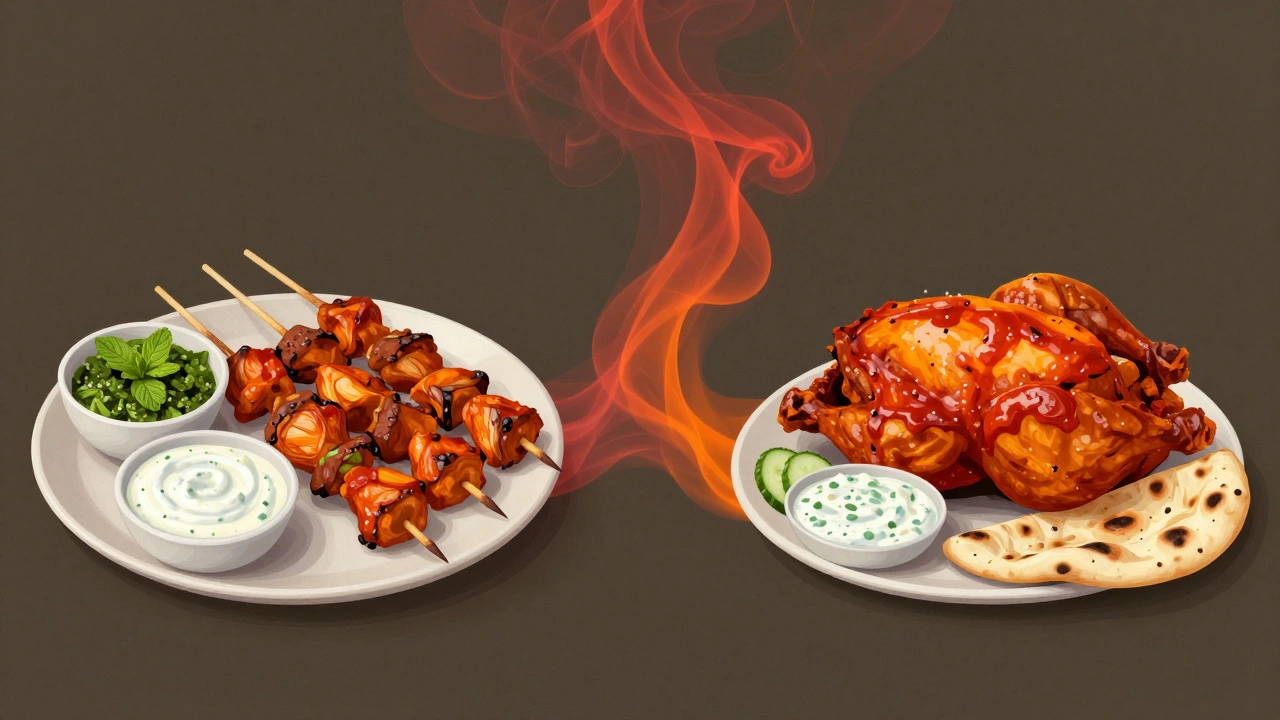
Tandoori chicken is usually served as a main dish, often with naan, cucumber raita, and a side of basmati rice. It’s not just spicy-it’s layered. You taste the tang of yogurt, the earthiness of cumin, the warmth of cloves, and the slow burn of chili, all wrapped in smoke.
Side-by-Side Comparison
| Feature | Tikka Sauce | Tandoori Sauce |
|---|---|---|
| Primary Use | Marinade for bite-sized chicken pieces | Coating for whole chicken or large cuts |
| Texture | Thick, paste-like | Thicker, often includes tomato puree |
| Color | Light to medium red | Deep red-orange, often brighter |
| Key Spice | Ground cumin, coriander | Kashmiri chili powder, more heat |
| Added Fat | Usually none | Often includes ghee or butter |
| Cooking Method | Grilled on skewers | Roasted in tandoor or oven |
| Serving Style | Appetizer, snack | Main course |
Why the Confusion?
Many restaurants, especially outside India, use the words interchangeably. You’ll see "tandoori chicken tikka" on menus, which is technically redundant. Tikka refers to the pieces; tandoori refers to the cooking style. But here’s the real problem: some places use the same marinade for both. That’s a shortcut. It works, but it’s not authentic.
Authentic tikka doesn’t have tomato. Authentic tandoori does. That’s the simplest way to tell them apart. If your marinade looks like tomato soup with yogurt, it’s tandoori. If it’s just yogurt, spices, and garlic, it’s tikka.
Even in India, regional variations exist. In Delhi, tandoori chicken is often more colorful and buttery. In Lucknow, tikka is smoked with charcoal for extra depth. In the UK, chicken tikka masala-the most popular Indian dish in Britain-started as a British invention using leftover tandoori chicken, blended into a creamy tomato sauce. That’s a whole other dish, but it shows how the names get tangled.
What Happens If You Swap Them?
If you use tikka marinade on a whole chicken, you’ll get under-seasoned meat. The spices won’t penetrate deeply enough, and without tomato, you’ll miss the richness that balances the heat. The chicken might taste fine, but it won’t have that signature tandoori punch.
If you use tandoori sauce for skewered chicken, you’ll get a soggy mess. The tomato puree makes the marinade too wet. It won’t cling to the meat the same way, and when grilled, it can burn and turn bitter. The texture suffers. The color might look right, but the flavor won’t.
One exception: if you’re making chicken tikka masala, you start with grilled tikka pieces, then simmer them in a tomato-based sauce. That sauce is not tandoori sauce-it’s a gravy. Don’t confuse the two.
Quick Tip: How to Make Both at Home
For tikka: Mix 1 cup plain yogurt, 2 tbsp lemon juice, 1 tbsp grated ginger, 3 minced garlic cloves, 1 tsp cumin, 1 tsp coriander, 1 tsp garam masala, 1 tsp paprika, and salt. Coat chicken pieces. Marinate overnight. Grill until charred.
For tandoori: Mix 1 cup plain yogurt, 1/2 cup tomato puree, 2 tbsp lemon juice, 1 tbsp grated ginger, 4 minced garlic cloves, 2 tsp Kashmiri chili powder, 1 tsp cumin, 1 tsp coriander, 1/2 tsp garam masala, 1/2 tsp ground cloves, 1 tbsp melted ghee, and salt. Coat whole chicken or large pieces. Marinate 8+ hours. Roast at 450°F (230°C) for 30-40 minutes, basting halfway.
Common Mistakes to Avoid
- Using low-fat yogurt-it won’t tenderize properly
- Skipping the marinating time-spices need hours to work
- Overcooking the chicken-tikka dries out fast
- Adding too much chili powder-Kashmiri chili is for color, not heat
- Forgetting the fat-butter or ghee makes tandoori chicken shine
What to Serve With Each
Tikka goes best with fresh herbs, a squeeze of lemon, and mint-cilantro chutney. Serve it on skewers with sliced onions and a wedge of lime. It’s perfect for parties.
Tandoori chicken needs something cool to balance the heat. Cucumber raita (yogurt with grated cucumber, cumin, and salt) is classic. A side of basmati rice or warm naan rounds out the meal. Don’t skip the raita-it’s not just a side, it’s part of the experience.
Can I use tandoori sauce for tikka chicken?
You can, but it’s not ideal. Tandoori sauce has tomato puree, which makes it too wet for skewers. It won’t cling well and can burn on the grill. Stick with a yogurt-based tikka marinade without tomato for best results.
Is tikka sauce the same as tikka masala sauce?
No. Tikka sauce is the raw marinade used before grilling. Tikka masala sauce is a creamy, spiced tomato gravy made after the chicken is cooked. One is for prep, the other is for finishing.
Why is tandoori chicken so red?
The red color comes mostly from Kashmiri chili powder, which is mild but deeply pigmented. Some restaurants add a touch of food coloring to make it look more vibrant. At home, you don’t need dye-just use enough chili powder and tomato puree.
Can I make these sauces without yogurt?
Yogurt is essential for both. It tenderizes the meat and carries the spices. You can substitute with buttermilk or coconut yogurt for dairy-free versions, but skip it entirely and your chicken will be tough and flavorless.
Which one is spicier: tikka or tandoori?
Tandoori is usually spicier because it uses more Kashmiri chili powder and sometimes includes cayenne. Tikka is milder, focused on balanced flavor rather than heat. But both can be adjusted to your taste.
Final Thought: It’s About Intent
Think of tikka as the snack, the finger food, the thing you eat while chatting. Tandoori is the centerpiece, the dish you serve when you want to impress. One is quick, the other is ritual. Master both, and you’re not just making chicken-you’re cooking with tradition.