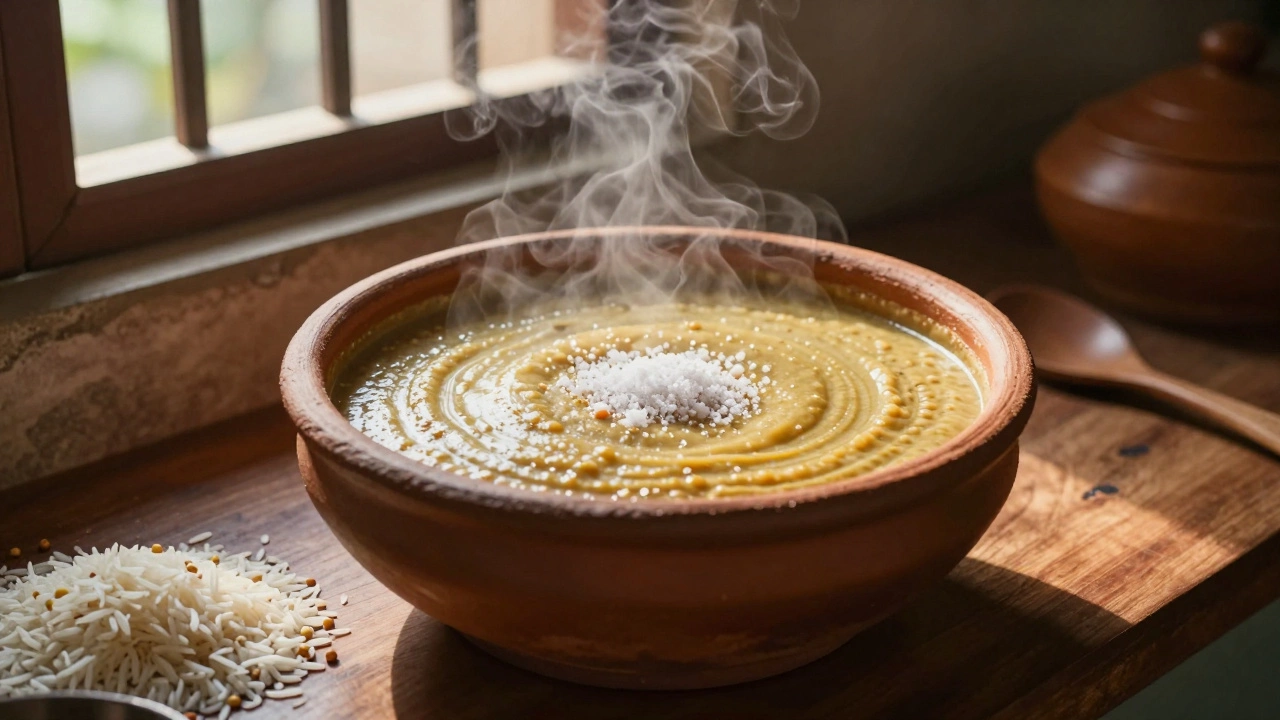
Dosa Salt Calculator
Ever mixed up a batch of dosa batter, stared at the bowl, and wondered - salt or no salt? It’s one of those quiet debates in Indian kitchens that never makes it to cookbooks, but everyone has an opinion. Some swear by adding salt before fermentation. Others insist it kills the yeast. The truth? It’s not magic. It’s chemistry.
What Happens When You Add Salt to Dosa Batter
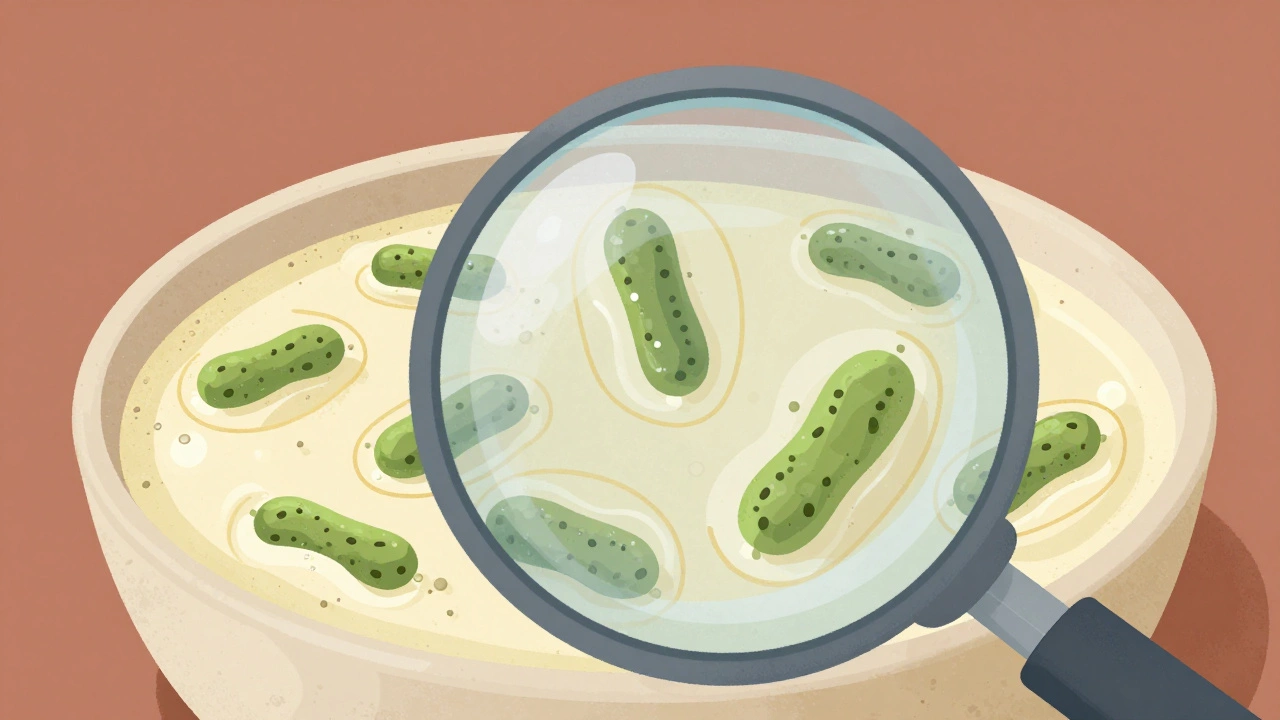
Dosa batter isn’t just rice and urad dal. It’s a living culture. The fermentation you see - the bubbles, the sour smell, the rise - is caused by wild lactic acid bacteria and yeast naturally present in the environment. These microbes feast on starches and sugars, producing carbon dioxide (which makes the batter fluffy) and lactic acid (which gives dosa its tang).
Now, salt. Sodium chloride. It’s a preservative. In high doses, it kills microbes. But in low doses? It actually helps.
Studies from the Central Food Technological Research Institute (CFTRI) in Mysore show that adding salt at 0.5% to 1% of the batter weight improves fermentation speed and flavor development. That’s about half a teaspoon per cup of dry ingredients. Enough to support good bacteria without suppressing them.
Here’s the catch: salt doesn’t kill fermentation. Poor temperature does. If your kitchen is cold - below 25°C - your batter will crawl. Salt won’t fix that. But if you’re in a warm, humid climate (like Chennai or Coimbatore), salt helps the good bugs outcompete the bad ones.
When Salt Helps - And When It Hurts
Let’s break it down.
- Add salt before fermentation: This is the traditional method across Tamil Nadu, Andhra, and Karnataka. Salt is mixed in with the rice and dal before soaking. It creates a slightly salty environment that favors lactic acid bacteria over spoilage organisms. Result? Cleaner fermentation, less off-flavors, and better rise.
- Add salt after fermentation: Some home cooks delay salt until after the batter has doubled. They fear salt will slow down the rise. But by then, the microbes are already active. Adding salt later won’t hurt - but you’ll miss out on flavor integration. Salt needs time to dissolve and distribute evenly. If you add it last, you get uneven seasoning. One bite salty, one bite bland.
- Add too much salt: More than 1.5% salt (about 1 teaspoon per cup of dry mix) starts to inhibit yeast activity. Your batter might not rise as much. The dosa will still cook, but it’ll be dense, chewy, and lack that airy crispness.
A 2023 field study by home cooks in Coimbatore tracked 120 batches. Those using 0.75% salt before soaking had a 92% success rate in achieving full fermentation in 8-10 hours. Those who added salt after fermentation had an 81% success rate. And those who added salt after soaking but before grinding? Only 67%.
The Right Way to Add Salt - Step by Step
Here’s the method used by South Indian grandmothers who’ve made thousands of dosas - and never had a flat one.
- Wash 2 cups of idli rice and ¾ cup of whole urad dal separately. Soak them together in 4 cups of water for 4-6 hours.
- Drain the water. Add ½ teaspoon of fine sea salt (not iodized) to the soaked rice and dal. Mix gently.
- Grind the dal first into a smooth paste, then add the rice in batches. Use just enough water to make a thin, flowing batter - not too thick, not too runny.
- Pour into a clean, wide-mouthed vessel. Cover loosely with a cloth. Let sit in a warm spot (28-32°C) for 8-12 hours.
- Before pouring, give the batter a gentle stir. Don’t beat it. Just mix to redistribute the bubbles.
Why sea salt? Because it’s less processed. Iodized table salt contains anti-caking agents like sodium ferrocyanide. These can interfere with microbial activity. Fine sea salt dissolves faster and doesn’t leave grit.
What About Salt in Store-Bought Batter?
If you’re using packaged dosa batter (yes, it exists - even in Wellington), check the label. Most commercial brands add salt before fermentation. Why? Because they need consistent results. They can’t wait for your kitchen’s humidity to cooperate.
But here’s the twist: if you buy pre-salted batter and add more salt, you risk over-salting. Taste it before you cook. If it’s already salty, skip the extra pinch.
Common Myths - Busted
- Myth: Salt kills fermentation.
Truth: Salt slows it down if you dump in a tablespoon. But at normal levels? It helps. - Myth: Fermentation needs sugar, not salt.
Truth: Sugar feeds yeast. Salt balances acidity. They do different jobs. You need both. - Myth: You can’t make dosa without salt.
Truth: You can. But it’ll taste flat. Like bread without salt. It’s edible. It’s not delicious.
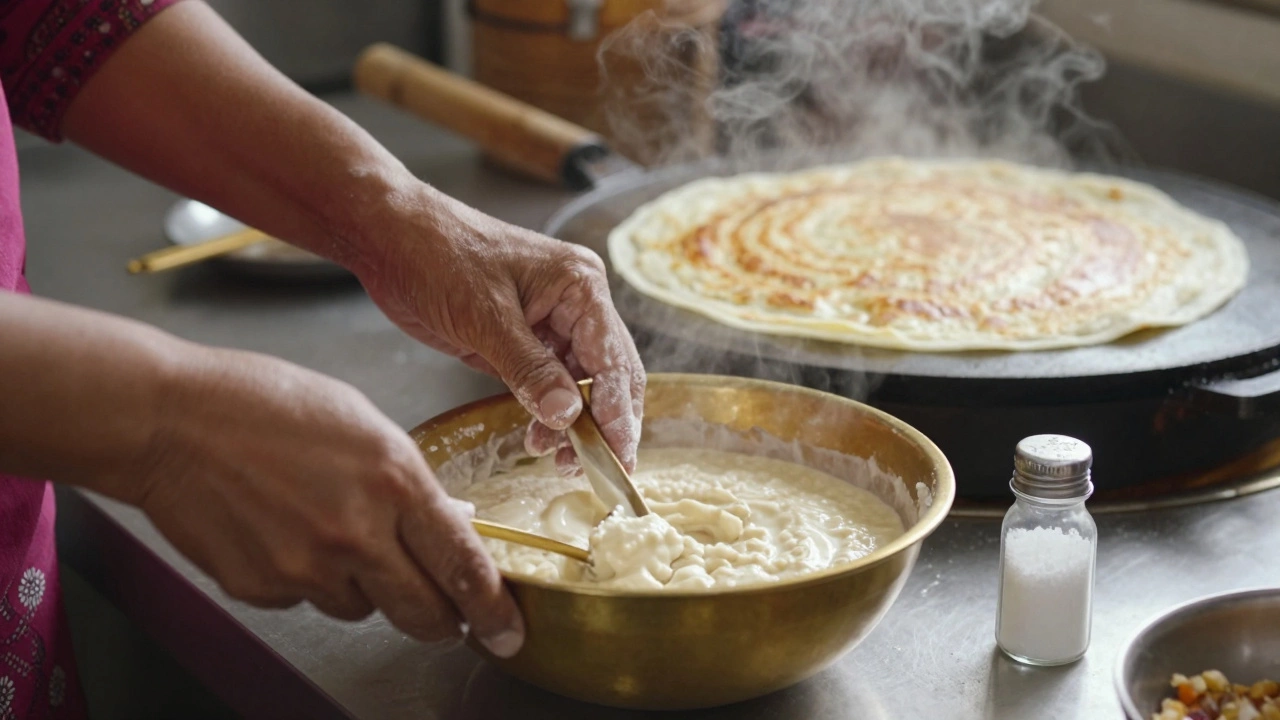
Pro Tip: Temperature Matters More Than Salt
If your batter doesn’t rise, blame the cold, not the salt. In Wellington in winter? Your kitchen might be 18°C. That’s too low. Fermentation stalls below 22°C.
Solution? Place your batter near a warm appliance - like a running oven (turned off) or on top of a water heater. Wrap the bowl in a towel. Use a heating pad on low, under the bowl. Even a warm water bath (not hot) works. Salt won’t help if the microbes are sleeping.
Final Answer: Yes - But Do It Right
Yes, you should add salt to dosa batter. But not too much. Not too late. And not with iodized table salt.
Use fine sea salt. Add it right after soaking, before grinding. Keep the batter warm. Wait patiently. Your dosas will be crisp on the outside, soft inside, and full of that deep, fermented tang that makes them unforgettable.
And if you forget? Don’t panic. You can still cook the batter. Just season the pan with a pinch of salt while spreading. It’s not ideal - but it’s not the end of the world. The real magic? It’s in the fermentation. Salt just makes it better.