Gulab Jamun Quality Checker
Not all Gulab Jamuns are created equal. Use this checker to evaluate if your sweet meets the "Royal Standard" as described in the article.
Tip from the Article: The ideal consistency is one-string syrup. If you can pull two fingers apart and create a single sticky thread, your chashni is perfect!
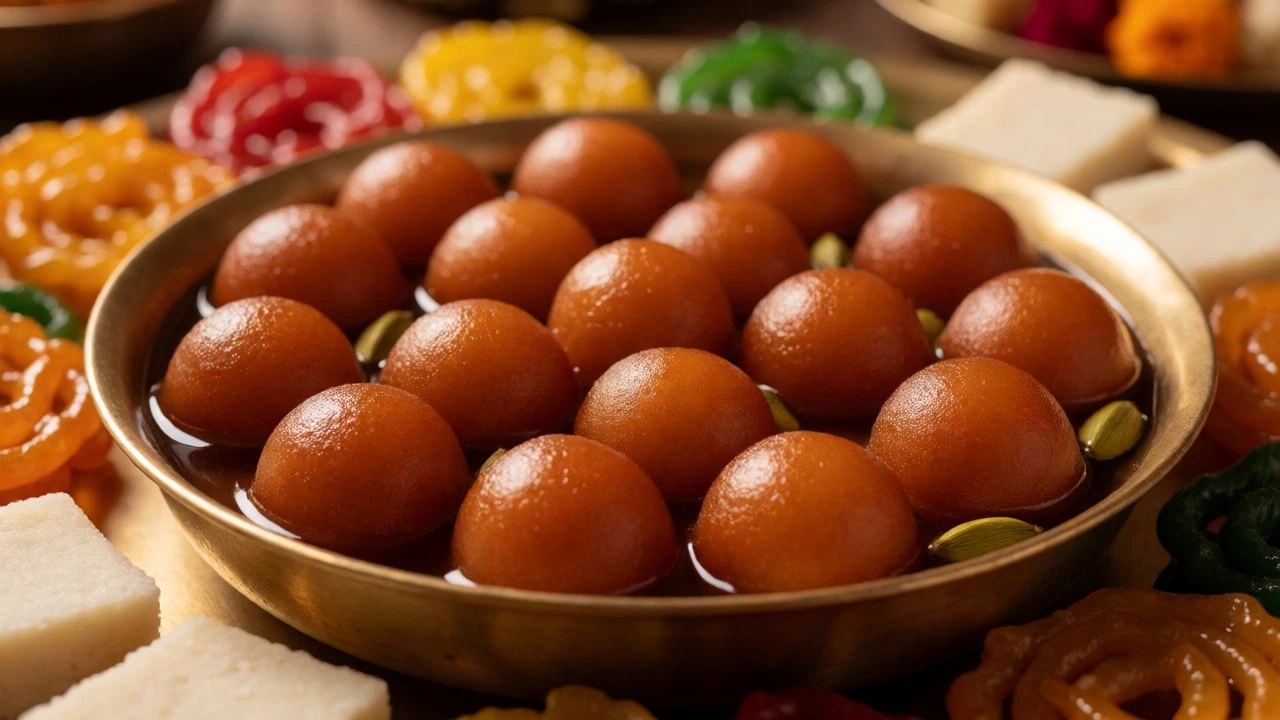
You walk into a wedding hall in Delhi, a Diwali gathering in Mumbai, or even a casual dinner party in London. What’s the first thing you see on the sweet platter? It’s not the colorful Gulab Jamun that sits proudly in the center, glistening with syrup. It’s not just any sweet; it is arguably the undisputed dessert queen of India, commanding respect and appetite across every state, caste, and community. While Jalebi screams for attention with its orange swirls and Barfi offers dense richness, nothing matches the universal appeal, comfort, and iconic status of this golden-brown sphere.
The Case for the Crown
Why does one specific sweet hold the throne? It comes down to accessibility and emotion. Unlike regional specialties like Kerala’s Payasam or Bengal’s Rasgulla, which have strong local identities, Gulab Jamun has transcended geography. It is the default "goodbye" sweet at almost every Indian celebration. If you ask ten people from different parts of India what their favorite dessert is, five will say Gulab Jamun. The other five might hesitate, but they’ll likely admit they ate three plates of it last week.
This dominance isn't accidental. It stems from a perfect balance of texture and flavor. The exterior provides a slight resistance, while the interior melts in your mouth. The sweetness is balanced by the aromatic cardamom and saffron in the syrup. It’s comforting without being cloying. This psychological comfort food aspect is why it remains the top choice for home cooks and professional chefs alike.
Decoding the Ingredients
To understand why it’s the queen, you need to look under the hood. Traditional Khoya (or Mawa) is the star ingredient. Khoya is essentially milk solids obtained by evaporating water from full-fat milk. This process concentrates the proteins and fats, creating a dense, creamy base that holds its shape when fried.
Many modern recipes use milk powder as a shortcut, but purists argue that only genuine khoya delivers the authentic taste. The difference is palpable. Milk powder versions tend to be lighter and airier, while khoya-based jamuns are denser and richer. When you bite into a well-made khoya jamun, you taste the caramelized dairy notes that no powder can fully replicate.
The syrup, known as chashni, is equally critical. It’s not just sugar and water. A proper chashni includes green cardamom pods, sometimes saffron strands, and occasionally rose water. The ratio matters too. Too thin, and the jamun becomes soggy. Too thick, and it crystallizes on the surface. The ideal consistency is one-string syrup, where pulling two fingers apart creates a single sticky thread.
Regional Variations and Rivals
While Gulab Jamun wears the crown, it has challengers. Let’s look at the contenders in a direct comparison to see why the Queen stays on the throne.
| Dessert | Base Ingredient | Texture Profile | Preparation Time | Universal Appeal |
|---|---|---|---|---|
| Gulab Jamun | Khoya/Milk Solids | Soft, melt-in-mouth, slightly crisp shell | Moderate (45-60 mins) | Extremely High |
| Rasgulla | Chhena (Cottage Cheese) | Spongy, airy, light | Long (Requires boiling) | High (Strong East Indian bias) |
| Jalebi | Maida (Refined Flour) | Crispy, crunchy, wet | Short (Frying intensive) | Medium (Best eaten hot) |
| Barfi | Milk Solids/Nuts | Dense, fudge-like | Variable | Medium (Often considered dry) |
Rasgulla, the Bengali icon, is often cited as the rival. It is lighter and less sweet, appealing to those who dislike heavy dairy. However, Rasgulla requires precise temperature control during boiling to prevent collapsing. One mistake, and you get flat discs instead of spheres. Gulab Jamun is more forgiving. You can fry them at home with basic equipment, and they rarely fail if the oil temperature is correct.
Jalebi is another popular street food favorite. Its vibrant color and crunch make it visually stunning. But here’s the catch: Jalebi must be eaten immediately. Once it cools, it loses its crunch and becomes rubbery. Gulab Jamun improves with time. In fact, letting them soak in syrup for several hours enhances the flavor absorption. This convenience factor makes it superior for hosting events where timing is unpredictable.
The Science of Perfection
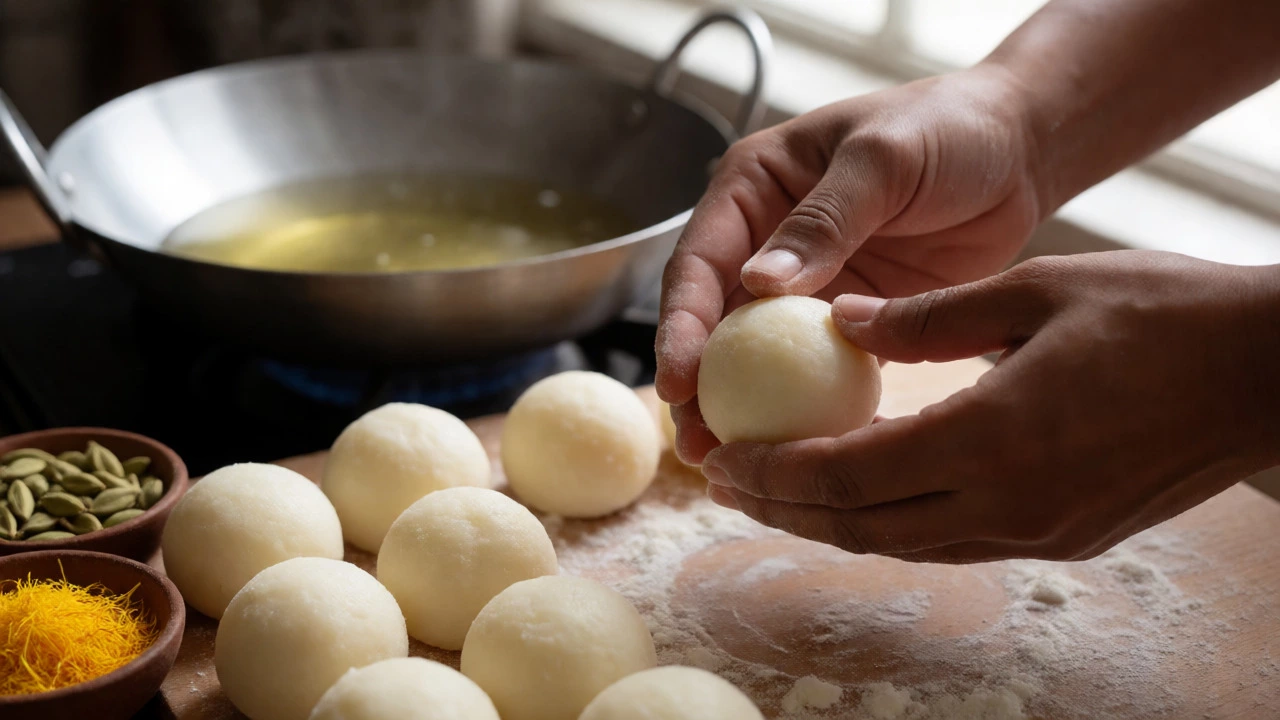
Making the perfect Gulab Jamun is part art, part science. The biggest pitfall is over-kneading the dough. Khoya contains moisture. If you work it too much, the gluten develops, making the jamun tough rather than tender. You want a crumbly, cohesive mixture that holds together when pressed but doesn’t stick to your hands excessively.
Frying temperature is the second critical variable. Oil that is too hot burns the outside before the inside cooks. Oil that is too cool causes the jamun to absorb excess grease, becoming heavy and oily. The sweet spot is medium heat, around 300°F to 320°F (150°C to 160°C). You should drop a small piece of dough in; if it sizzles gently and rises slowly, the oil is ready.
Another pro tip involves the syrup temperature. Never put hot jamuns into cold syrup. The thermal shock can cause them to crack. Similarly, never put cold jamuns into hot syrup, as they won’t absorb properly. Both should be warm, ideally within 10 degrees of each other. This ensures even soaking and structural integrity.
Cultural Significance Beyond Taste
Gulab Jamun isn’t just food; it’s a social lubricant. In many Indian households, serving Gulab Jamun signals hospitality and abundance. It is expensive to make because khoya costs significantly more than regular milk. Offering it says, "I value you enough to spend extra money and effort." This cultural weight reinforces its status as the queen.
During festivals like Diwali and Eid, production spikes massively. Dairy farms report higher demand for milk specifically for khoya production. This economic impact highlights its importance. It drives supply chains, supports local dairies, and sustains countless small-scale sweet shops. No other single sweet has such a widespread economic footprint across the subcontinent.
Modern Twists on a Classic
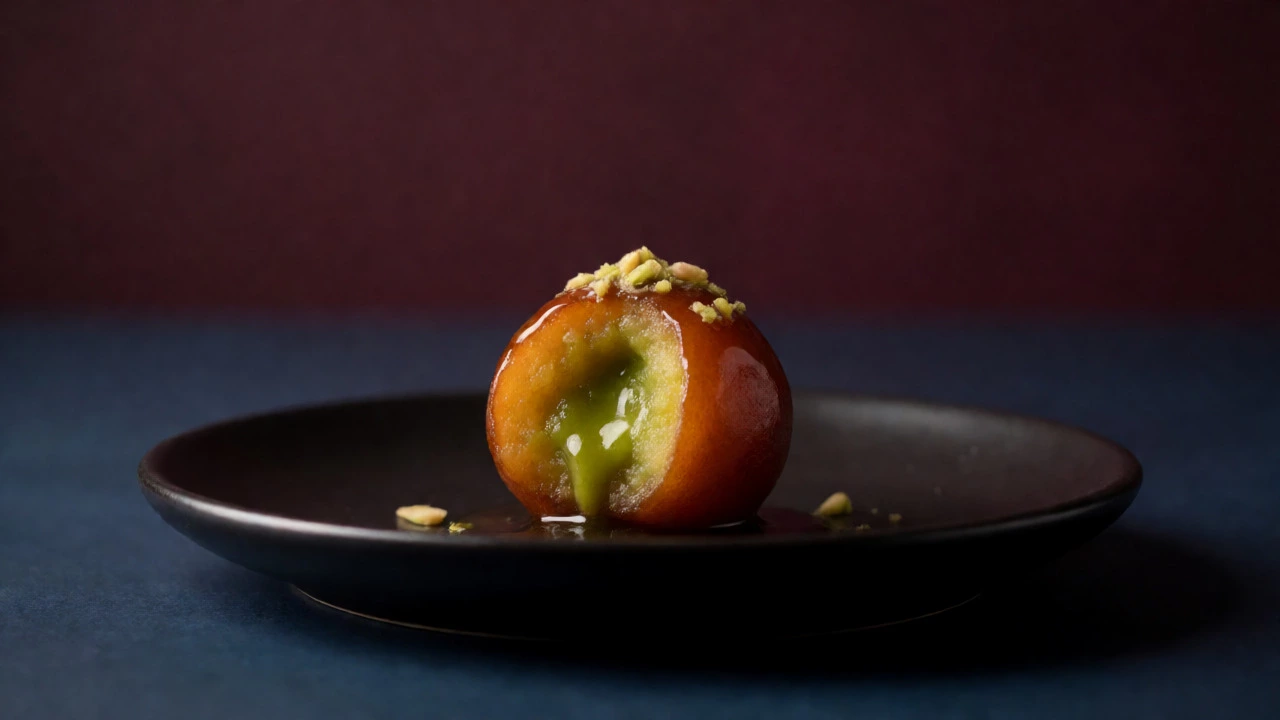
Even queens evolve. Today, you’ll find Gulab Jamun stuffed with pistachio cream, chocolate, or even mango pulp. These variations cater to younger palates seeking novelty. Some health-conscious cooks use low-fat milk solids or steamed versions instead of frying. While traditionalists scoff, these adaptations keep the brand relevant.
However, the core identity remains unchanged. It’s still about the joy of biting into something warm, sweet, and familiar. Whether you’re in New Zealand, watching the rain fall outside, or in Punjab, celebrating a harvest festival, the emotional connection to this sweet is constant. That universality is the true source of its power.
How to Identify the Best
Not all Gulab Jamuns are created equal. How do you spot the royal standard? Look for a uniform golden-brown color. Dark spots indicate uneven frying. Pale areas mean undercooking. The surface should be smooth, not cracked. Cracks suggest the dough was too dry or the oil was too hot.
When you pick one up, it should feel heavy for its size, indicating density. If it feels hollow, it’s likely made with excessive baking soda or poor khoya quality. Finally, the smell should be rich with cardamom and fried milk, not burnt oil. Trust your senses; they don’t lie.
Is Gulab Jamun always made with khoya?
Traditionally, yes. Khoya (dried milk solids) is the authentic base. However, many home cooks use milk powder mixed with flour and ghee as a substitute. While convenient, milk powder versions lack the rich, caramelized depth of flavor found in khoya-based jamuns.
Why did my Gulab Jamun break while frying?
Breaking usually happens due to two reasons: the dough was too dry, causing cracks, or the oil temperature was too high, causing rapid expansion and splitting. Ensure your dough has enough moisture to bind smoothly and maintain a consistent medium heat while frying.
Can I store Gulab Jamun without syrup?
Yes, but they will harden quickly. Unsoaked jamuns are best eaten fresh or stored in an airtight container for a day. To revive them, gently reheat them in warm syrup for a few minutes to restore softness and moisture.
What is the shelf life of homemade Gulab Jamun?
Stored in their syrup in the refrigerator, homemade Gulab Jamun lasts for 3 to 4 days. The sugar acts as a preservative, keeping them moist. Always bring them to room temperature before serving for the best texture and flavor release.
Is Gulab Jamun healthier than Western desserts?
It depends on your definition of healthy. It is calorie-dense due to milk solids, ghee, and sugar. Compared to cakes with artificial additives, it uses natural ingredients. However, portion control is key, as a single jamun can contain 150-200 calories.