Paneer vs Cheese: What’s the Real Difference and Which One Works in Indian Cooking?
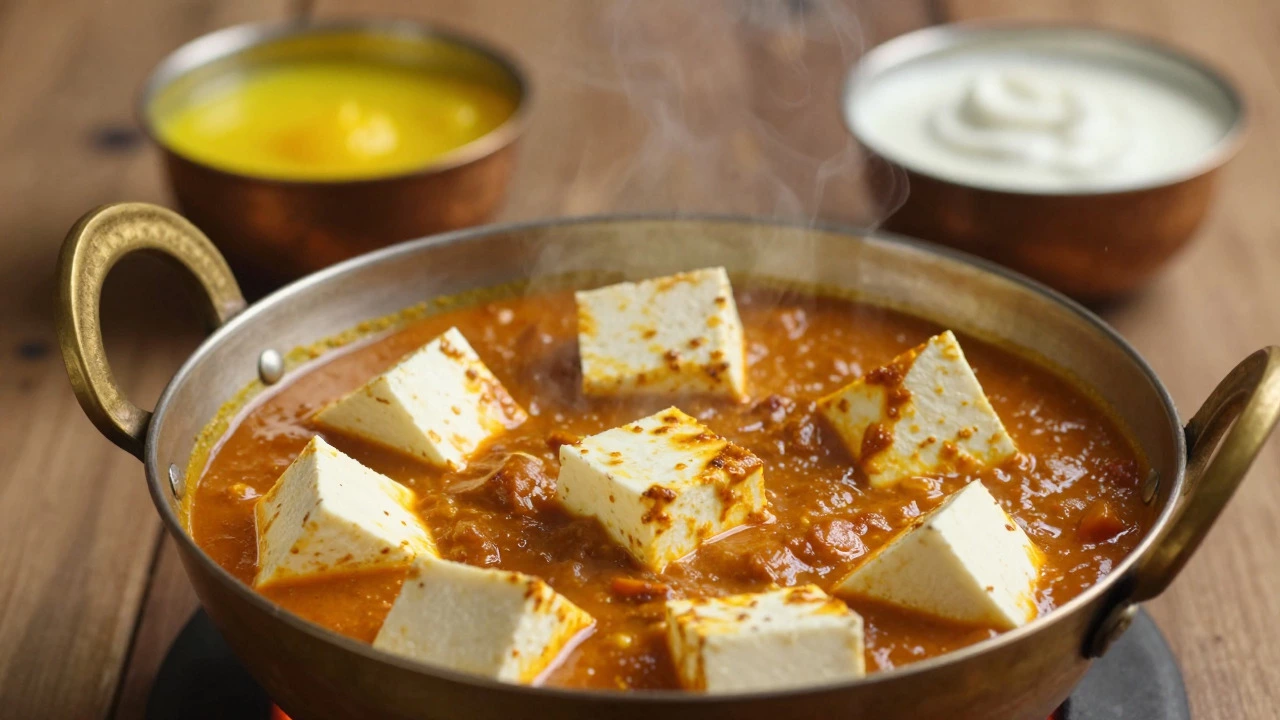
When you hear paneer, a fresh, non-melting Indian cheese made by curdling milk with lemon juice or vinegar. Also known as Indian cottage cheese, it’s the backbone of dishes like palak paneer and paneer tikka—firm enough to grill, fry, or simmer without falling apart. But if you’ve ever tried swapping it with regular cheese in a curry, you know it turns into a gooey mess. That’s because cheese, a broad category of dairy products made by fermenting milk with bacteria and rennet, then aging it is designed to melt. Most cheeses—cheddar, mozzarella, even cream cheese—break down under heat. Paneer doesn’t. It’s not aged. It’s not fermented. It’s just milk, acid, and pressure. That’s why it’s perfect for Indian cooking: it holds its shape, so you get those satisfying cubes in your curry, not a puddle of melted goo.
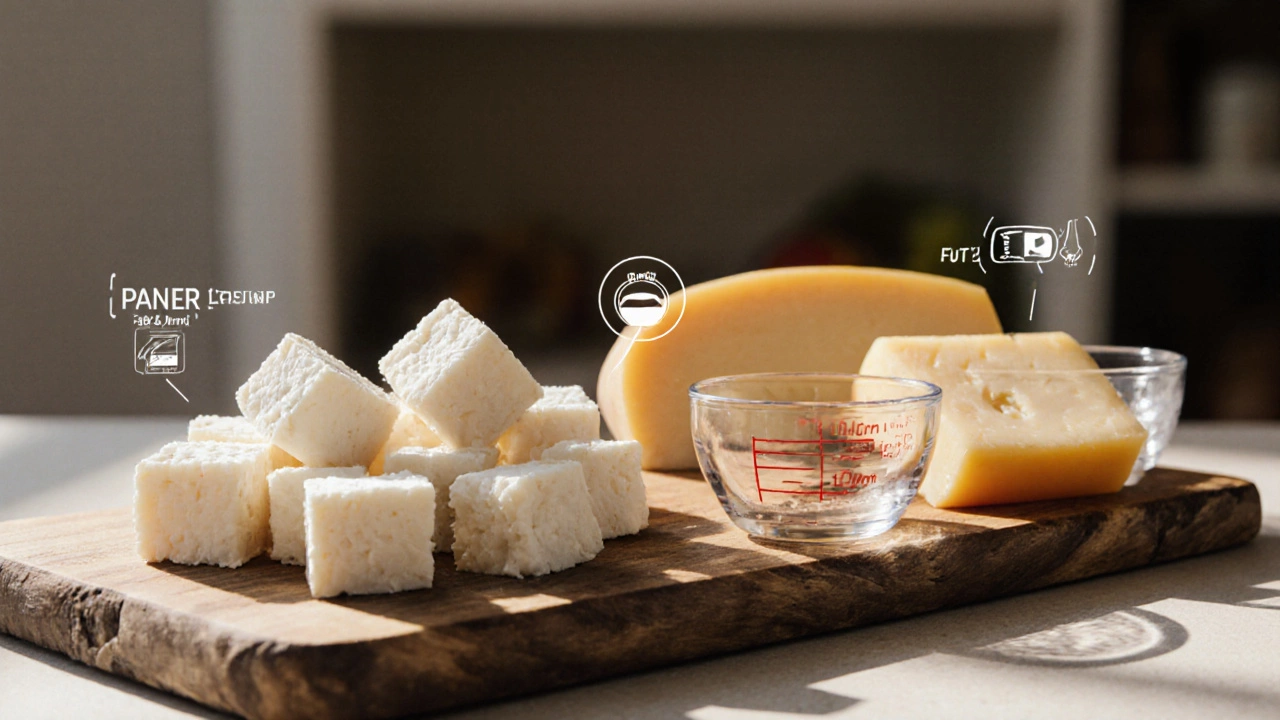
The confusion starts when people say "paneer is Indian cheese." It’s not wrong—it’s just incomplete. halloumi, a brined cheese from Cyprus that also resists melting is the closest thing to paneer in Western supermarkets. Same firm texture. Same ability to fry without disintegrating. But halloumi is salty, while paneer is mild. Then there’s queso blanco, a Latin American fresh cheese that’s also made with acid and holds up in stews. It’s a decent stand-in, but lacks paneer’s subtle milky sweetness. Most store-bought cheeses? They’ll melt, separate, or turn rubbery. That’s why recipes like paneer butter masala or paneer bhurji don’t work with cheddar. The science is simple: paneer’s proteins are bound tightly by acid, not enzymes. Cheese’s proteins are broken down over time by cultures and enzymes, making them melt-friendly.
So if you’re out of paneer and need a quick fix, skip the shredded cheese. Try frying up halloumi cubes, or look for queso blanco in the Latin aisle. Even tofu can work in a pinch if you press it well and marinate it. But don’t expect cheese to behave like paneer—it’s not designed to. And if you’re making biryani or curry, that difference matters. You want texture. You want bite. You don’t want your protein turning into sauce. That’s why the best Indian recipes stick to paneer. Not because it’s traditional. Because it works. The posts below will show you exactly how to use paneer, what substitutes actually hold up, and why some "cheese swaps" ruin your dish before you even add the spices.
Why is Cheese Not Popular in India? A Cultural and Economic Analysis
Explore the cultural, economic, and climatic reasons why cheese is less common in Indian diets compared to paneer and ghee. Understand the historical roots and modern trends shaping dairy consumption in India.
Paneer vs Cheese: Which Is the Healthier Choice?
A detailed comparison of paneer and cheese, covering nutrition, health impacts, lactose content, processing, and practical tips to help you choose the healthier option.