Dosa Fermentation Calculator
Fix Rubbery Dosa Batter
Calculate ideal fermentation time based on your kitchen temperature. The right temperature is critical for perfect dosa batter.
Estimated Fermentation Time
Enter temperature to see results
Pro Tip:
Add 1-2 tbsp water if batter is too thick, and always add salt after fermentation.
Nothing kills the joy of a crispy, golden dosa faster than a rubbery, chewy one. You’ve soaked your rice and urad dal, ground it to a smooth paste, left it to ferment overnight, and yet-when you pour it onto the hot tawa-it spreads too slowly, sticks, and turns into a chewy pancake instead of a light, airy crisp. If this sounds familiar, you’re not alone. Many home cooks struggle with this, and the fix is rarely about the recipe-it’s about the details you’re missing.
Why Does Dosa Batter Turn Rubbery?
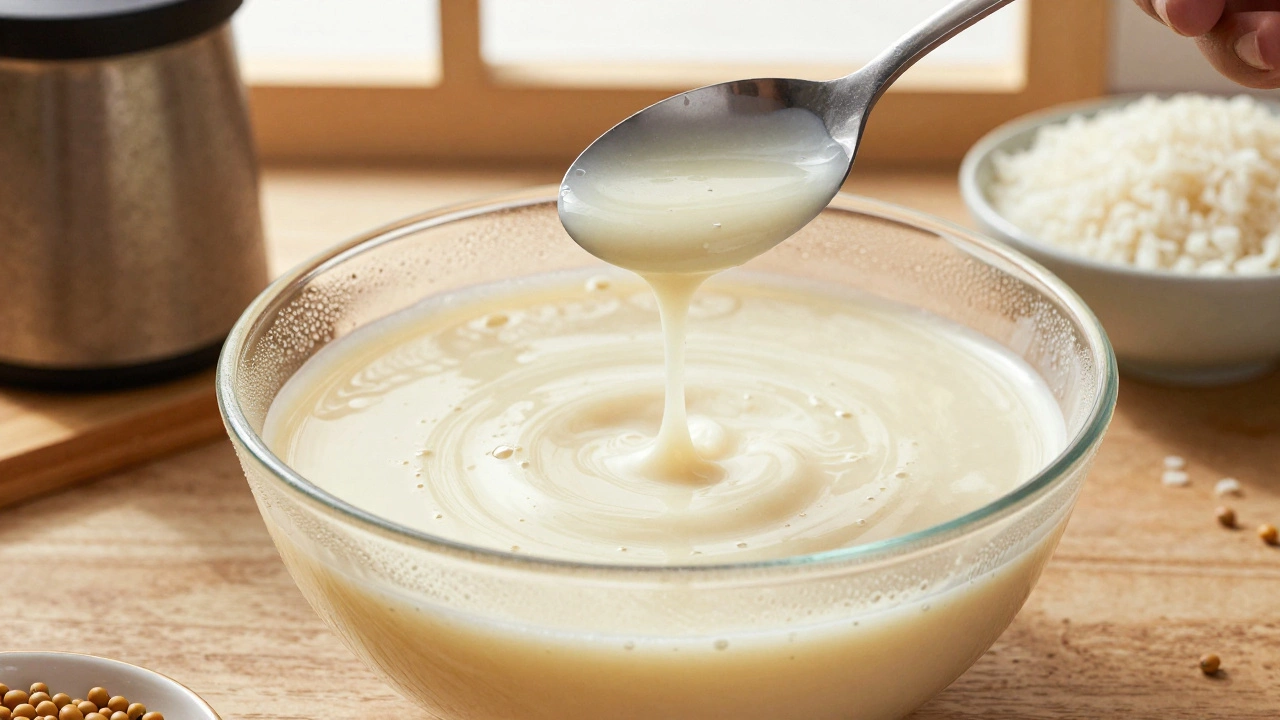
A rubbery dosa batter usually means one of three things: it’s under-fermented, too thick, or the rice and lentils weren’t ground properly. The batter should be airy, slightly bubbly, and pour like thick cream. If it’s gloopy, dense, or clings to the spoon like glue, you’re heading for trouble.
The science is simple: fermentation produces gas bubbles that make the batter light. If those bubbles don’t form, the dosa becomes dense and chewy. And if the batter is too thick, it won’t spread thin enough to crisp up. Even a few extra tablespoons of water can make the difference between a perfect dosa and a rubbery mess.
Check Your Fermentation
Fermentation is the heart of dosa batter. It’s not just about leaving it out overnight-it’s about temperature, time, and signs you can actually see.
- Your batter should double in volume. If it only rises a little, it’s under-fermented.
- Look for bubbles. Small, uniform bubbles across the surface mean active yeast and lactic acid bacteria are doing their job.
- Smell it. A slightly sour, yeasty aroma is good. A rotten or overly alcoholic smell? Something went wrong.
In cooler climates-like Wellington in winter-fermentation can take 12 to 18 hours. If your kitchen is below 22°C, the batter won’t ferment properly. Try this trick: place the batter in a closed oven with the light on. The gentle warmth from the bulb creates a perfect fermentation zone. Or wrap the bowl in a thick towel and place it near a radiator.
Don’t rush it. If you’re using a pressure cooker or microwave to speed things up, you’re more likely to get a rubbery result. Natural fermentation builds flavor and texture. No shortcuts here.
Is Your Batter Too Thick?
This is the most common mistake. Most recipes say “add water gradually,” but people stop too soon. You want the batter to be thinner than pancake batter-closer to the consistency of heavy cream.
Try this test: scoop a spoonful and let it drip. If it falls slowly in a thick stream, it’s too thick. If it flows in a steady, smooth ribbon, you’re good. If you’re unsure, add 2 to 4 tablespoons of water, mix gently, and wait 15 minutes. The batter will absorb the water and loosen up.
Here’s the kicker: the batter thickens as it ferments. So if you think it’s perfect right after grinding, it’ll be even thicker after 12 hours. Always aim for a slightly runnier batter than you think you need.
Grinding Matters More Than You Think
The texture of your batter starts at the grinder. If you grind the rice and dal too coarsely, you get lumpy, uneven batter that won’t ferment properly. If you grind it too fine, you risk releasing too much starch, which makes the batter sticky and dense.
Here’s the standard ratio: 3 parts raw rice to 1 part dried urad dal. Soak them separately for 4 to 6 hours. The rice should be soft enough to crush between your fingers. The dal should be swollen and pale.
Grind the dal first with just enough water to make a smooth, fluffy paste. It should look like whipped cream. Then grind the rice separately with slightly more water-enough to make a fine slurry. Mix them together, then add the remaining water gradually until the batter flows.
Pro tip: Use a wet grinder if you can. Blade grinders heat up the batter, killing the natural yeasts. Wet grinders keep the temperature low and produce a smoother, more aerated batter.
What About the Salt?
Many people add salt before fermentation. That’s a mistake. Salt slows down fermentation. Add it after the batter has doubled in size, just before you’re ready to cook.
If you add salt too early, your batter might not rise at all-or rise unevenly. You’ll end up with patches of airiness and dense, rubbery spots. Always wait until after fermentation to season.
Resting the Batter Before Cooking
Even after fermentation, don’t rush to the tawa. Let the batter rest for 20 to 30 minutes after mixing. This lets the starches hydrate fully and gives you a smoother, more consistent pour.
Stir the batter gently-don’t beat it. You want to keep those bubbles intact. If you’ve added water, stir it in slowly. Then, if the batter still feels thick, add another tablespoon. Test it on the tawa with a small ladleful. If it spreads easily and crisps up in under a minute, you’re ready.
Common Mistakes That Lead to Rubberiness
- Using old rice or dal-fresh ingredients ferment better.
- Adding too much fenugreek-just a 1/4 teaspoon is enough. Too much makes the batter sticky.
- Storing batter in the fridge before fermentation-cold kills the yeast.
- Using tap water with chlorine-chlorine kills natural bacteria. Use filtered or boiled-and-cooled water.
- Not cleaning the grinder properly-leftover batter from previous batches can harbor bad bacteria.
Quick Fixes for Rubber Dosa Batter
If you’ve already made the batter and it’s too thick:
- Add 1 to 2 tablespoons of water and stir gently.
- Let it sit for 30 minutes. The starch will absorb the water.
- Test with a small ladleful. If it still doesn’t spread, add another tablespoon.
- If it’s not fermented, leave it out for another 6 hours in a warm spot.
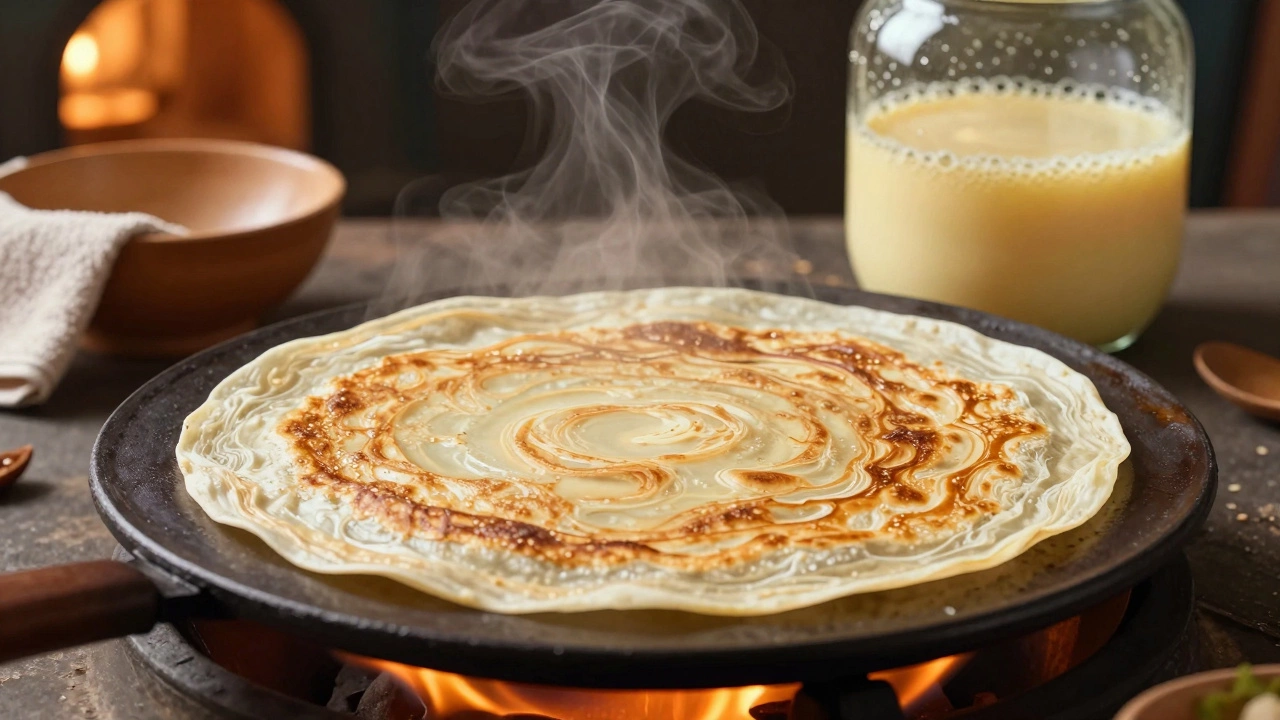
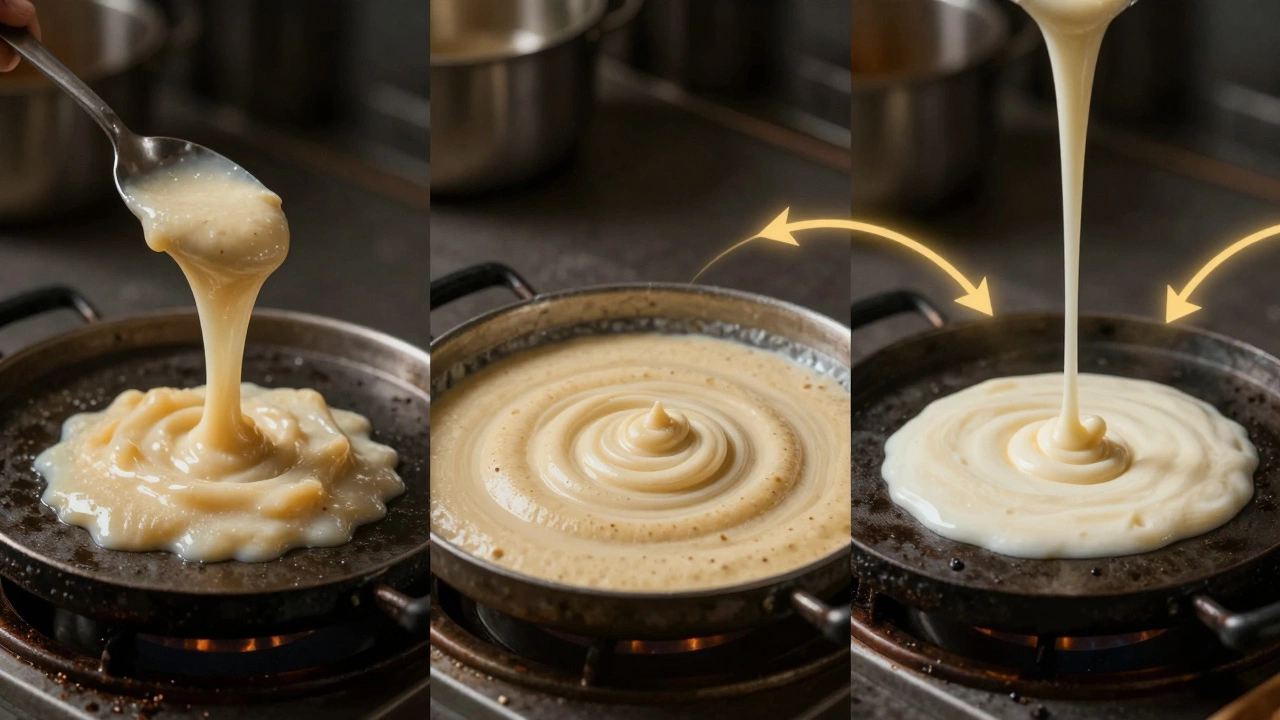
If it’s fermented but still rubbery after cooking, your tawa might be too cool. Heat it until a drop of water sizzles and evaporates instantly. Then grease lightly with oil. Pour the batter from a height so it spreads naturally. Don’t push it with a spoon.
Pro Tip: Keep a Fermentation Journal
Every time you make dosa batter, note down:
- Room temperature
- Soaking time
- Grinding time and water used
- Fermentation time
- Final consistency
- Result: crispy or rubbery?
After 3 or 4 tries, you’ll start seeing patterns. Maybe your kitchen is too cold in January. Maybe your rice brand absorbs more water. This isn’t magic-it’s chemistry. And once you understand it, you’ll never get a rubbery dosa again.
Why is my dosa batter not fermenting?
The most common reasons are low temperature, old ingredients, or chlorine in the water. Fermentation needs warmth (24-30°C), fresh rice and urad dal, and non-chlorinated water. Try placing the batter in a warm spot, like near a heater or in an oven with the light on. If it still doesn’t rise after 24 hours, the yeast culture may be dead-start fresh.
Can I use a blender instead of a wet grinder?
Yes, but it’s not ideal. Blenders generate heat, which can kill natural bacteria needed for fermentation. If you must use a blender, grind in short bursts, let the batter cool between batches, and add ice cubes while grinding to keep it cool. Still, a wet grinder gives smoother, more consistent results.
How long should I soak the rice and dal?
Soak rice for 4 to 6 hours, and urad dal for the same time. The rice should be soft enough to crush between your fingers. The dal should swell and turn pale. Don’t soak longer than 8 hours-it can start to ferment prematurely and spoil.
Can I refrigerate dosa batter after fermentation?
Yes, once fully fermented, you can store the batter in the fridge for up to 5 days. It will slow down further fermentation and keep it fresh. Bring it to room temperature for 30 minutes before cooking, and stir gently to release excess gas.
Why does my dosa stick to the tawa?
Sticking usually means the tawa isn’t hot enough, or there’s not enough oil. Heat the tawa until water sizzles and vanishes instantly. Lightly grease it with oil or ghee before each dosa. Don’t pour batter on a cold or damp surface. Also, if your batter is under-fermented or too thick, it won’t spread and will stick.