Tandoori Chicken Color Calculator
Get Authentic Red Color
Ever wonder why restaurant tandoori chicken has that stunning red hue while your home version turns out pale? It’s not magic-it’s about the right ingredients and techniques. The vibrant red color isn’t just for show; it’s a hallmark of authentic tandoori chicken, signaling the perfect balance of spices and cooking method. Get it right, and your dish will look as good as it tastes.
Why the Color Matters
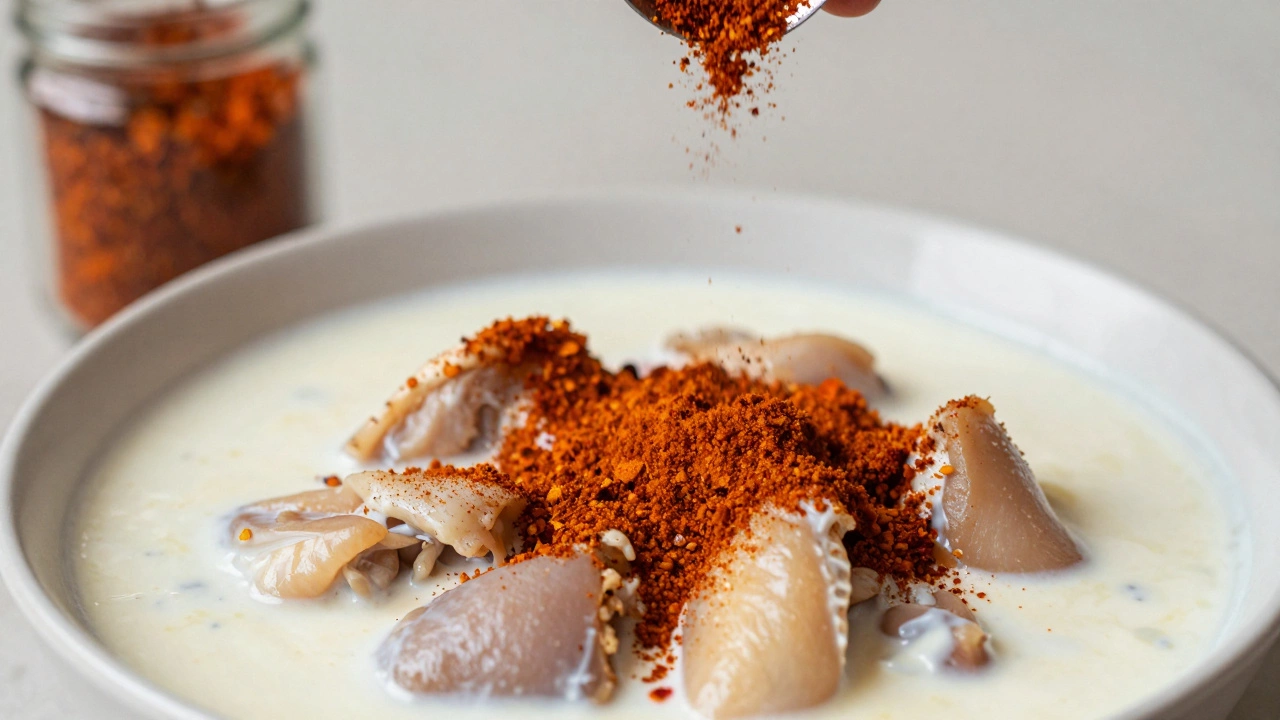
That bright red color in tandoori chicken isn’t arbitrary. In Indian cuisine, the visual appeal is part of the experience. A pale chicken might look underseasoned or unappetizing, even if the flavor is spot on. But here’s the thing: the color comes primarily from Kashmiri red chili powderA mild, vibrant red chili powder used in Indian cuisine for color without excessive heat., not artificial dyes. This specific spice gives the dish its signature hue without overwhelming heat. Regular chili powder or cayenne? They’ll make it too spicy and often turn the chicken brown instead of red.
The Secret Ingredient: Kashmiri Red Chili Powder
So why does Kashmiri red chili powder work so well? Unlike other chili powders, it’s prized for its intense red color and mild heat-typically around 1,000 to 2,000 Scoville units. Compare that to cayenne pepper (30,000 to 50,000 Scoville units), and you’ll see why using the wrong chili can ruin your dish. Kashmiri chilies are sun-dried in Kashmir, India, and ground into powder that’s mostly used for color. If you can’t find Kashmiri powder, paprikaA sweet or smoked pepper powder that adds color but minimal heat. is a common substitute, but it lacks the same vibrancy. For a deeper red, you can mix paprika with a pinch of cayenne, but remember: too much cayenne will make it spicy and darker.
Common Mistakes That Fade the Color
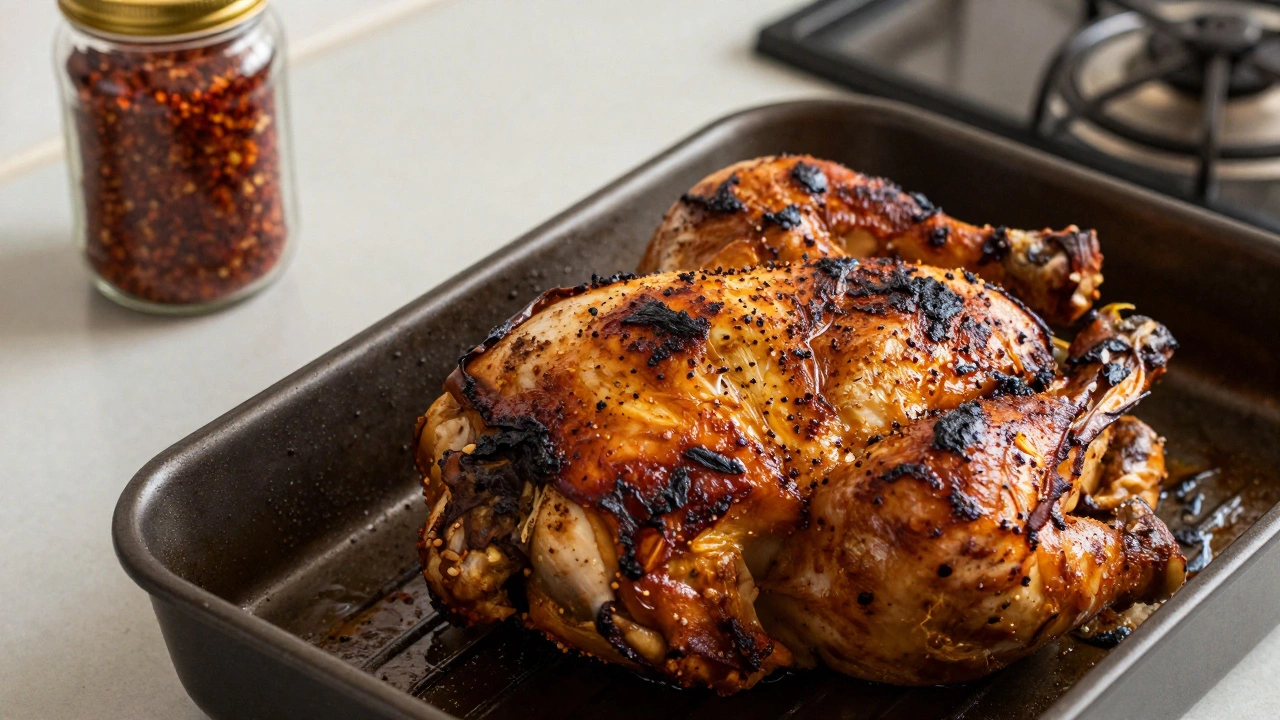
- Using too much regular chili powder: This often has a darker red hue and high heat, leading to a burnt, brownish color when cooked.
- Not marinating long enough: Yogurt needs at least 4 hours to penetrate the chicken and help the spices adhere. Short marinating time means the color won’t stick.
- Overcooking or high heat: Cooking at too high a temperature burns the spices, turning the red into brown. Tandoor ovens cook at high heat but evenly; home ovens often need lower settings.
- Skipping yogurt: Yogurt isn’t just for flavor-it acts as a binder for the spices and helps the color stay vibrant.
Natural Alternatives and When to Use Them
Some home cooks try to boost color with beetroot juice or pomegranate seeds, but these alter the flavor profile. Traditional tandoori chicken relies solely on Kashmiri chili powder for color. If you absolutely can’t find it, try a mix of 1 part paprika and 1/4 part cayenne. But for authentic results, stick to Kashmiri-no shortcuts. Artificial food coloring is another option, but it’s not traditional and can leave a strange aftertaste. Stick to natural spices for the best flavor and color.
Step-by-Step Marinade Guide
- Combine yogurtA fermented dairy product that tenderizes the chicken and helps spices adhere. (1 cup), Kashmiri red chili powder (2 tablespoons), and spices (1 teaspoon garam masala, 1 teaspoon turmeric, 1 teaspoon cumin, 1 teaspoon coriander).
- Add minced garlic (2 cloves), ginger (1 tablespoon), lemon juice (1 tablespoon), and salt (1 teaspoon).
- Marinate chicken pieces for at least 4 hours, preferably overnight, in the fridge.
- Preheat oven to 400°F (200°C) or use a grill on medium-high heat.
- Roast or grill for 20-25 minutes until chicken is cooked through and slightly charred.
Why Tandoor Ovens Make a Difference
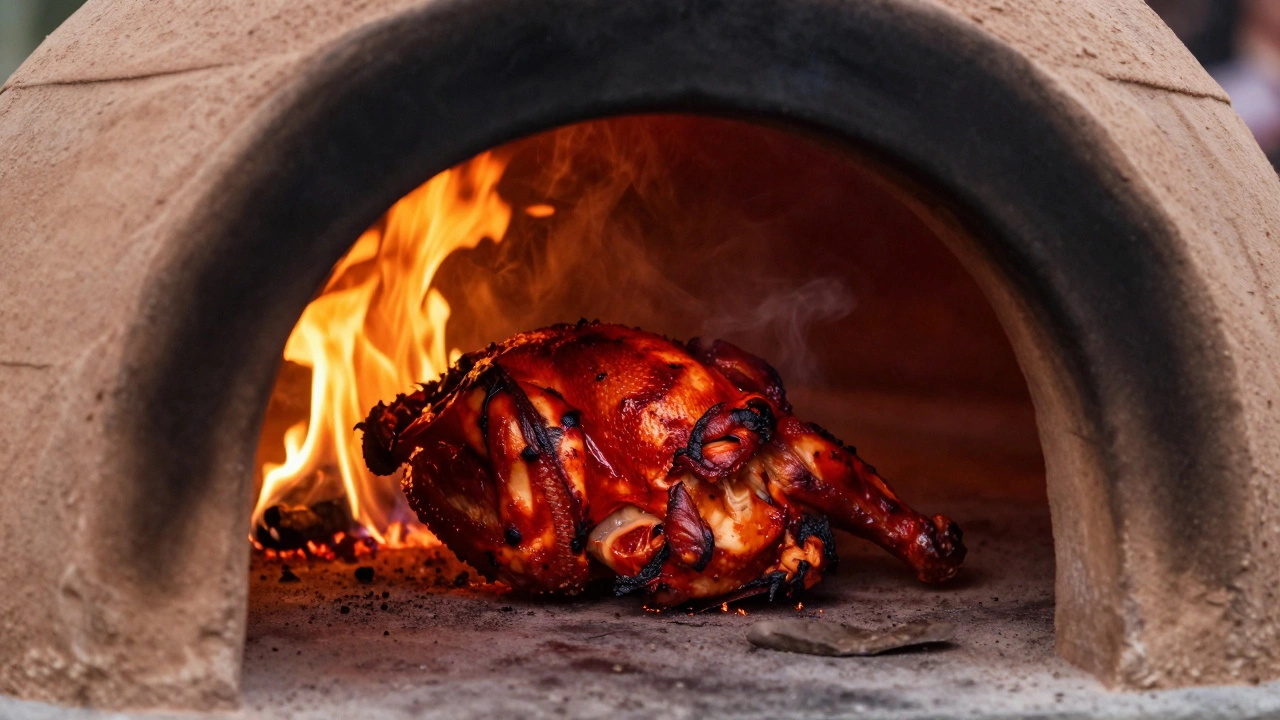
tandoorA cylindrical clay oven used in South Asian cooking for high-heat baking and grilling. ovens cook at 480°F (250°C) or higher, which quickly seals in moisture while caramelizing the spices. Home ovens can’t replicate this exactly, but placing a baking sheet on the lowest rack to catch drips and using the broiler for the last few minutes helps mimic the char. Never skip the preheating step-cold oven = pale chicken.
Real-World Fixes for Common Problems
Let’s say you made tandoori chicken and it’s still too pale. First, check your chili powder: is it labeled "Kashmiri"? If not, swap it out. Second, did you marinate overnight? If not, next time let it sit longer. Third, did you use full-fat yogurt? Skim yogurt won’t bind spices as well. For a quick fix, brush the chicken with a mix of 1 tablespoon yogurt and 1/2 teaspoon Kashmiri powder before serving. It’s not perfect, but it’ll boost the color.
FAQ
Can I use red food coloring for tandoori chicken?
Yes, but it’s not recommended. Artificial food coloring doesn’t blend with the spices and can leave a chemical aftertaste. Traditional tandoori chicken relies on Kashmiri chili powder for natural color. If you absolutely must use coloring, mix 1/4 teaspoon red food coloring with the marinade, but expect flavor changes. Always prioritize natural ingredients for authenticity.
What if I can’t find Kashmiri chili powder?
Substitute with sweet paprika (not smoked) mixed with a pinch of cayenne. Use 1 tablespoon paprika and 1/4 teaspoon cayenne for every 2 tablespoons of Kashmiri powder needed. This combo mimics the color without excessive heat. Avoid hot paprika or chili powder-they’ll turn your chicken brown and overly spicy.
Why does my chicken turn brown instead of red?
Three common reasons: cooking at too high heat (burns the spices), using regular chili powder instead of Kashmiri, or not marinating long enough. To fix this, reduce oven temperature to 375°F (190°C), use only Kashmiri powder, and marinate for at least 8 hours. Also, avoid adding acidic ingredients like vinegar before cooking-they can break down the color.
Does yogurt really affect the color?
Absolutely. Yogurt acts as a binding agent for the spices and helps them stick to the chicken. It also tenderizes the meat and creates a slight acid reaction that enhances the red hue. Use full-fat yogurt-low-fat versions won’t coat the chicken properly. If you skip yogurt, the spices will fall off during cooking, leaving pale spots.
How long should I marinate tandoori chicken?
Minimum 4 hours, but overnight (8-12 hours) is best. The longer the chicken marinates, the deeper the color and flavor penetration. Short marinating times (under 2 hours) result in uneven coloring and weak flavor. Always refrigerate during marination-room temperature speeds up spoilage.