Dosa Batter Prep Planner
Your Preparation Plan:
-
Enter your details and click "Plan My Batter" to see the scientific recommendations.
Quick Takeaways
- Yes, soaking urad dal overnight (6-8 hours) is the gold standard for fermentation.
- Hydrated lentils grind smoother, creating a creamy batter.
- Proper soaking activates enzymes that help the batter rise.
- Shortcuts like hot water soaking can work in a pinch but affect the final texture.
The Science Behind the Soak
Before we get into the "how," let's look at what's actually happening in your bowl. Urad Dal is a type of black lentil common in Indian cuisine, specifically used for its mucilaginous properties when ground. Known as Split Black Gram, it contains a high amount of protein and complex carbohydrates that need to be broken down before they can be fermented.
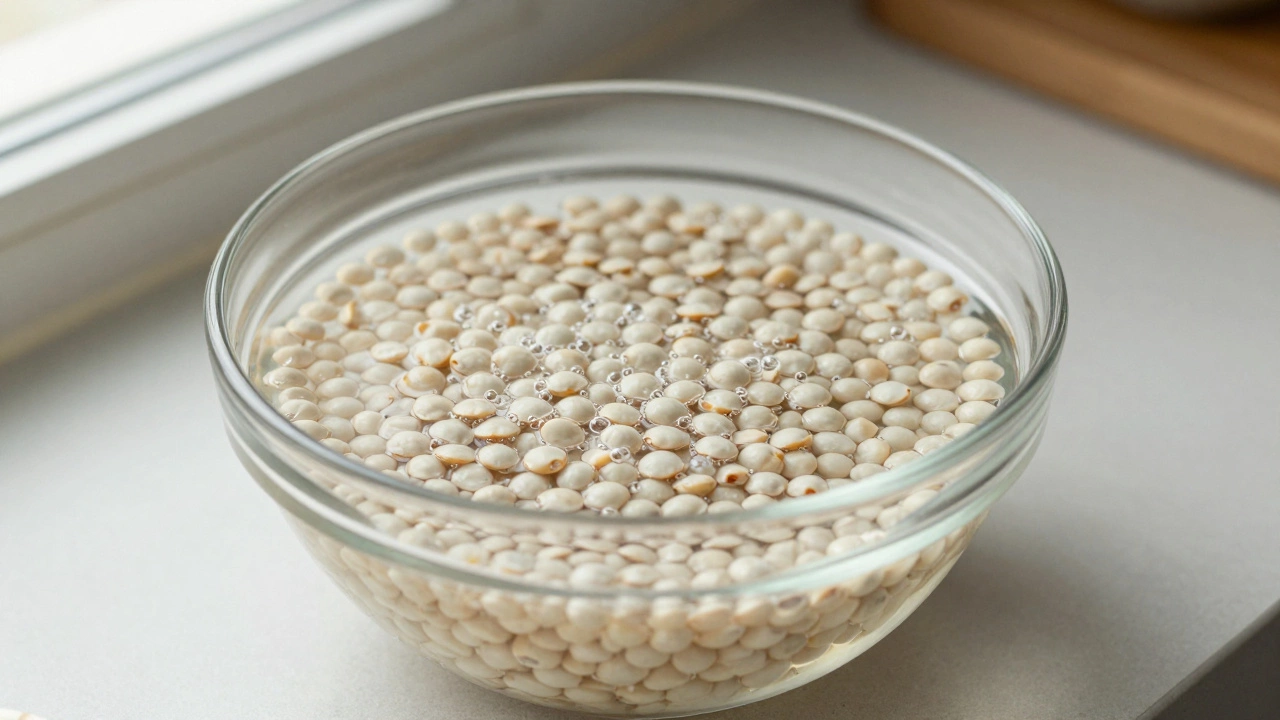
When you soak urad dal overnight, you're doing more than just making the bean soft. You are initiating a process where water penetrates the tough outer hull, hydrating the starch granules. This hydration is what allows your blender or grinder to create a smooth, paste-like consistency. If the lentils are under-soaked, the grinder creates "grit"-tiny un-pulverized pieces of dal that ruin the mouthfeel of your dosa.
More importantly, soaking triggers the activation of natural enzymes. These enzymes start breaking down complex sugars into simpler ones, which act as food for the wild yeast and lactic acid bacteria in the air. Without this head start, your fermentation process will be sluggish, and you might find your batter hasn't risen even after 12 hours on the counter.
Why Overnight is Better Than a Quick Soak
I've tried the "quick soak" method-where you use warm water for 2-3 hours-and while it works if you're desperate, it's not the same. A true overnight soak (usually 6 to 8 hours) ensures the core of the lentil is fully saturated. In a professional Dosa Batter Recipe, the ratio of hydration to solids determines how the batter spreads on the griddle.
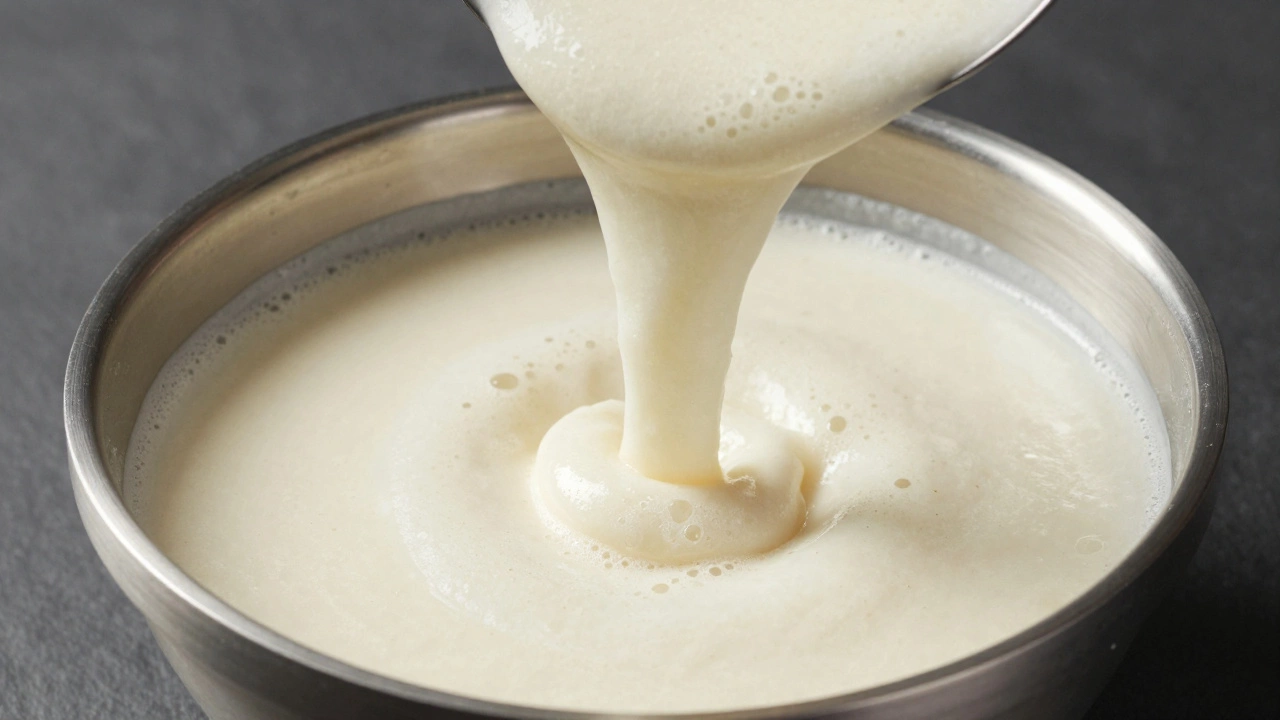
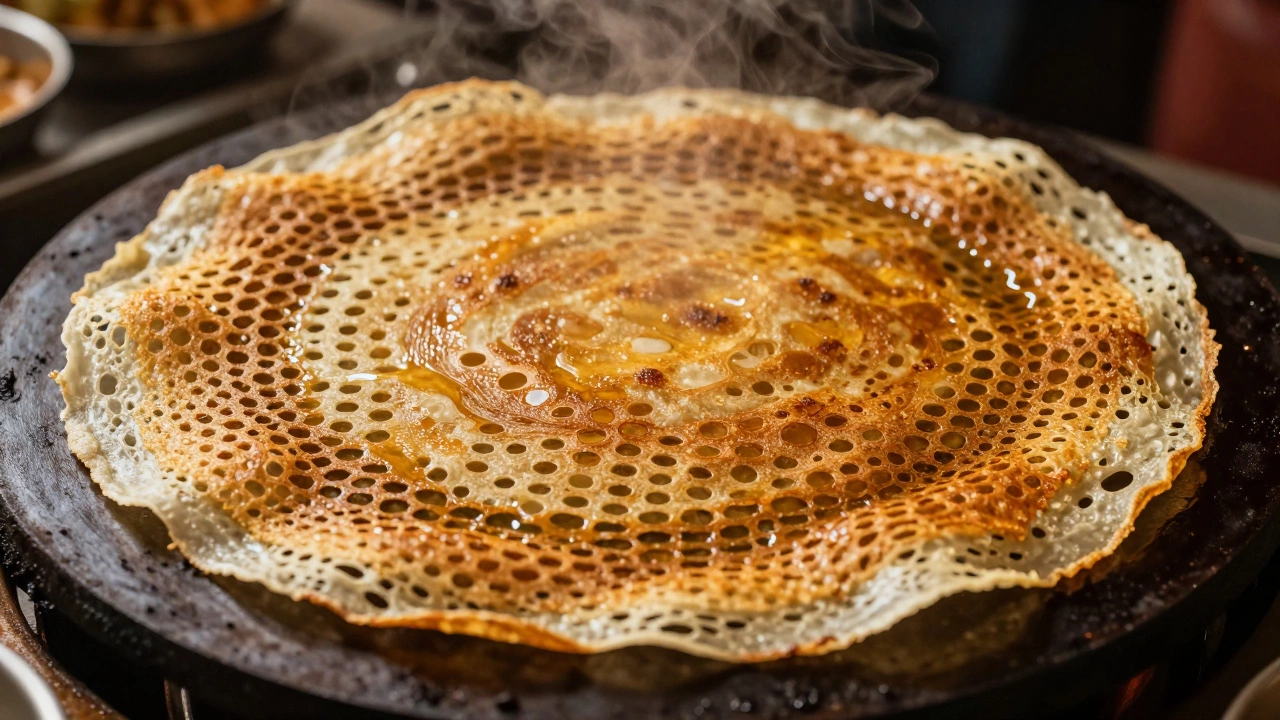
Consider the texture difference. A properly soaked urad dal creates a "frothy" batter. When you grind it, the proteins (specifically the globulins) create a stable foam. This foam traps carbon dioxide during fermentation, which is exactly why a dosa feels light and airy. If you rush the soak, you get less foam, meaning your dosa will be heavier and less likely to develop those characteristic tiny holes (the "honeycomb" effect) on the surface.
| Method | Time | Texture Result | Fermentation Speed |
|---|---|---|---|
| Overnight Cold Soak | 6-12 Hours | Ultra-smooth, creamy | Fast & Vigorous |
| Warm Water Soak | 2-4 Hours | Slightly grainy | Moderate |
| No Soak (Instant) | 0 Hours | Coarse/Sandy | Very Slow/Poor |
Step-by-Step: The Perfect Soaking Process
If you want to stop guessing and start getting consistent results, follow this routine. It takes the guesswork out of the equation.
- Rinse Thoroughly: Put your urad dal in a colander and rinse it under cold water 3-4 times. You'll see a lot of white foam; keep rinsing until the water runs clear. This removes excess starch and dust that can cause a "sour" or off-flavor in the batter.
- Water Ratio: Use a large bowl. The dal will expand significantly as it absorbs water. Use at least 3 parts water to 1 part dal. If the water level is too low, the lentils on top won't hydrate evenly.
- Temperature Control: Use room temperature water. While warm water speeds things up, cold soaking preserves more of the natural nutrients and allows for a slower, more stable hydration process.
- The Finger Test: After 6-8 hours, take a grain of dal and press it between your thumb and index finger. It should mash effortlessly without any hard center. If it resists, give it another hour.
- Drain and Grind: Drain the soaking water. While some people keep a bit of it for grinding, using fresh water ensures you have total control over the final thickness of your batter.
Common Pitfalls and How to Fix Them
Even with an overnight soak, things can go wrong. Maybe the weather is too cold, or you used a different variety of lentil. Here is how to handle the most common issues.
First, the "Winter Struggle." In colder climates, fermentation slows down. If you've soaked your dal overnight but the batter won't rise, it's not the soak's fault-it's the ambient temperature. Try placing your batter in a turned-off oven with the light on, or wrap the container in a thick towel to trap the heat.
Second, the "Over-soaking" myth. Can you soak urad dal for too long? If you leave it for 24 hours or more at room temperature, it might start to ferment prematurely in the bowl. This can lead to a slightly sour taste before you've even ground it. If you need to soak for longer than 12 hours, put the bowl in the refrigerator to slow down the enzyme activity.
Lastly, the "Watery Batter" problem. If you don't drain the dal properly before grinding, you'll end up with a batter that is too thin to hold its shape on the tawa. Remember, you can always add water during the grinding process, but you can't take it out once it's in.
Beyond the Dal: The Role of Rice
You can't talk about urad dal without mentioning its partner: Parboiled Rice (or Idli Rice). A short-grain rice that is partially boiled in the husk, making it ideal for fermentation.
Just as the dal needs time, the rice needs a soak. Most people soak them separately. Why? Because they have different absorption rates. Urad dal is denser and takes longer to hydrate than rice. If you soak them together, the rice might become over-saturated and mushy by the time the dal is ready. By soaking them in separate bowls overnight, you ensure that both components are perfectly primed for the grinder.
Pro Tips for the Best Dosa Batter
- Add Fenugreek: Add a teaspoon of Methi Seeds (Fenugreek) to the urad dal soak. These seeds contain compounds that help the batter ferment better and give the dosas a beautiful golden-brown color.
- Use a Heavy Stone Grinder: If you have access to a traditional wet grinder, use it. The slow friction generates less heat than a high-speed blender, which preserves the air bubbles and results in a fluffier dosa.
- Salt Timing: Some people add salt before fermentation, and others after. If you live in a very hot area, add salt *after* fermentation. Salt can sometimes inhibit the yeast if the temperature is already extremely high, slowing down the rise.
- Consistency Check: Your final batter should be "dropping consistency." When you lift a spoon, the batter should fall in thick ribbons, not as a thin stream.
Can I use hot water to soak urad dal if I'm in a hurry?
Yes, you can use hot water to reduce the soaking time to about 2-4 hours. However, be aware that the texture won't be as creamy and the fermentation may be less predictable. For the best quality, stick to the overnight cold soak.
Does the type of water matter for soaking?
Filtered water is generally better. Water with very high chlorine levels can sometimes interfere with the natural wild yeast needed for fermentation, which might result in a batter that doesn't rise as well.
What happens if I don't soak the dal at all?
If you don't soak the dal, your grinder will struggle to break down the hard legumes. You will get a coarse, sandy batter that doesn't ferment properly, and your dosas will be thick and heavy rather than light and crispy.
Can I soak urad dal and rice together in the same bowl?
It is possible, but not recommended. Urad dal and rice have different densities and absorption rates. Soaking them separately ensures both are perfectly hydrated without the rice becoming too mushy.
How do I know if my soaked dal is gone bad?
If the soaking water becomes excessively slimy or develops a strong, foul smell (different from the mild nutty smell of dal), or if you see bubbles forming excessively before grinding, the dal may have spoiled. Discard it and start over.
Next Steps and Troubleshooting
If you've followed the overnight soak and your batter still isn't behaving, check these three things:
- Check your grinder: If the batter is too coarse, grind it for another 2-3 minutes. A smooth batter is essential for the "crispy" factor.
- Adjust the temperature: If it's winter, move your batter to a warmer spot. A warm oven (off) or near a heater works wonders.
- Check the dal age: Very old urad dal (stored for years) takes much longer to hydrate. If your dal is old, you might need to soak it for 12+ hours or use the warm water method to jumpstart it.