Indian Street Food Identifier Quiz
Can you identify the snack based on its description? Learn the local terms to order like a pro!
Question Loading...
You are standing on a busy corner in Mumbai or Delhi. The air smells of frying oil and spices. A vendor hands you a hot, crispy item wrapped in newspaper. You eat it, love it, but have no idea what to call it. This happens to almost every traveler visiting India. The country does not have one single "Indian snack." It has hundreds. Each region has its own name for similar foods. Knowing these names helps you order confidently and understand the culture behind the bite.
Most people ask, "What is the Indian snack called?" expecting a simple answer like "samosa." But that is just one piece of a massive puzzle. To truly enjoy Indian street food, you need to know the local terms. This guide breaks down the most common snacks by category and region. You will learn what they are made of, where they come from, and how to spot them on the menu.
The Heavy Hitters: Samosa and Pakora
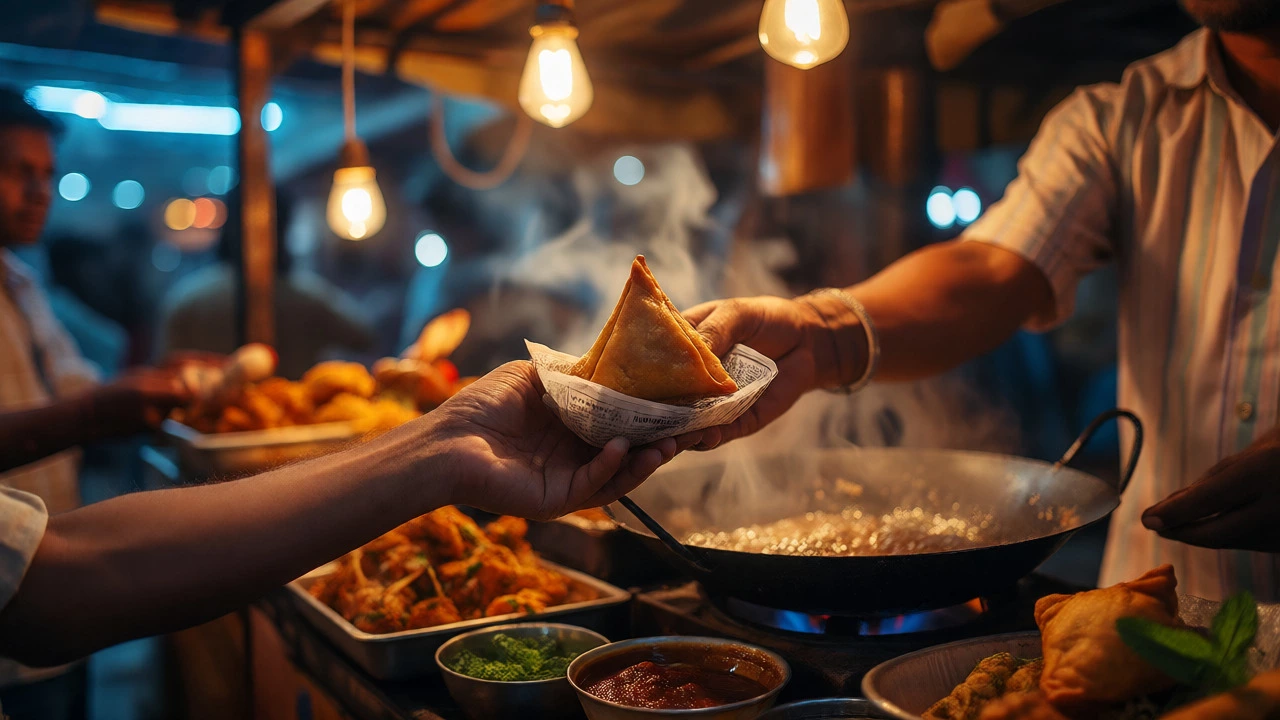
If there is one snack that defines Indian tea-time, it is the Samosa. This triangular pastry is filled with spiced potatoes, peas, and sometimes minced meat. It is deep-fried until golden brown. You find samosas everywhere, from high-end hotels to roadside carts. They are usually served with tamarind chutney or mint sauce. The key identifier is the shape and the flaky crust.
Close relatives of the samosa are Pakoras (also called Bhajias). These are fritters made by dipping vegetables into a spiced chickpea flour batter and frying them. Unlike samosas, pakoras do not have a dough wrapper. You see onion pakoras, potato pakoras, and even paneer pakoras. During rainy seasons in cities like Mumbai, pakoras become the go-to comfort food. If you hear someone say, "Let's get some bhaji," they mean pakoras.
Bread-Based Snacks: Vada Pav and Dabeli
Mumbai gave the world the Vada Pav. Often called the "Indian Burger," it consists of a spicy potato dumpling (vada) sandwiched between two slices of bread (pav). It is cheap, fast, and incredibly filling. The secret lies in the garlic chutney and dry coconut chutney spread inside. Do not confuse this with a regular burger. The texture is soft and starchy, not meaty.
In Gujarat, the equivalent is Dabeli. While it looks similar to Vada Pav, the taste profile is totally different. Dabeli uses a sweet-spicy mixture of mashed potatoes, pomegranate seeds, peanuts, and raisins. The bun is toasted with butter. If you prefer sweet over spicy, look for Dabeli signs. Both are sold at railway stations and bus stops across Western India.
Puffed Rice Delights: Bhel Puri and Sev Puri
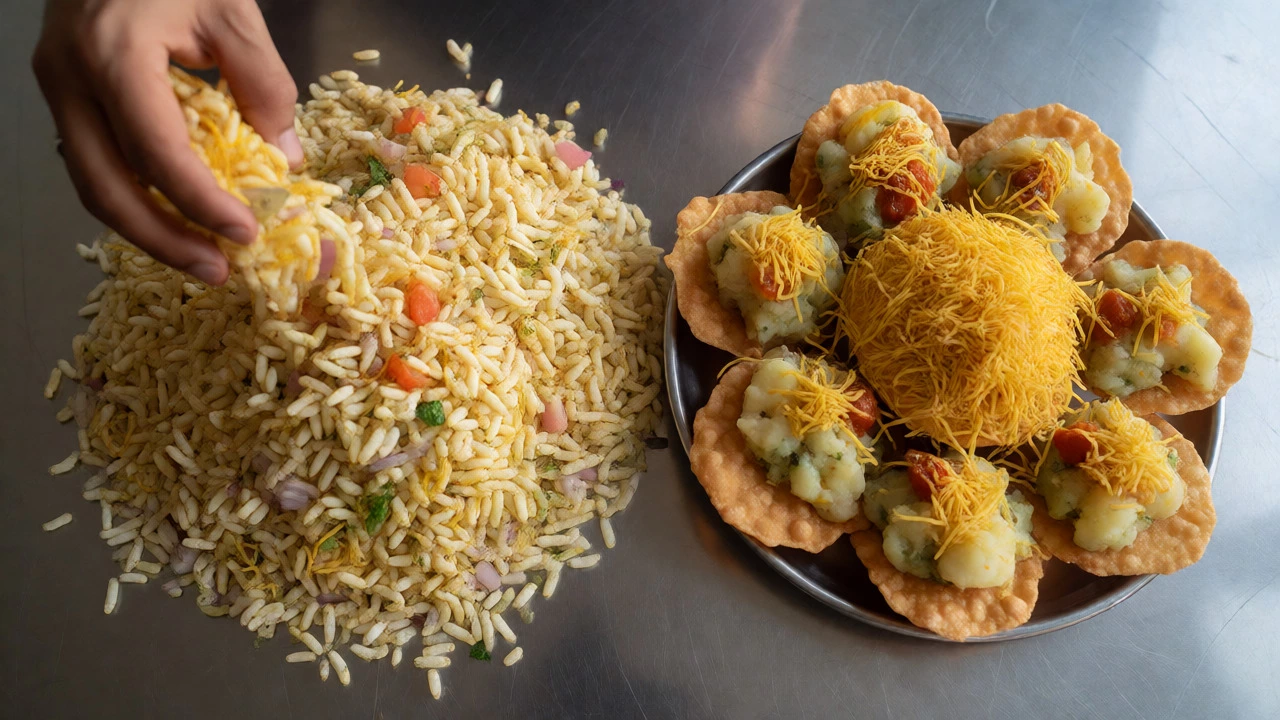
Not all snacks are fried. Bhel Puri is a light, crunchy salad made from puffed rice, sev (crispy noodles), chopped onions, tomatoes, and cilantro. It is tossed with tangy tamarind water and green chutney right before serving. The name "Bhel" comes from the sound the puffed rice makes when mixed. It is refreshing and low-calorie compared to fried options.
A heavier cousin is Sev Puri. Instead of puffed rice, it starts with flat crisp wafers (papdi). These are topped with boiled potatoes, onions, chutneys, and a generous pile of sev. The crunch is louder here. If you want something that requires chewing effort and delivers strong flavors, pick Sev Puri. If you want something airy, stick to Bhel Puri.
Fried Dough and Sweet Treats
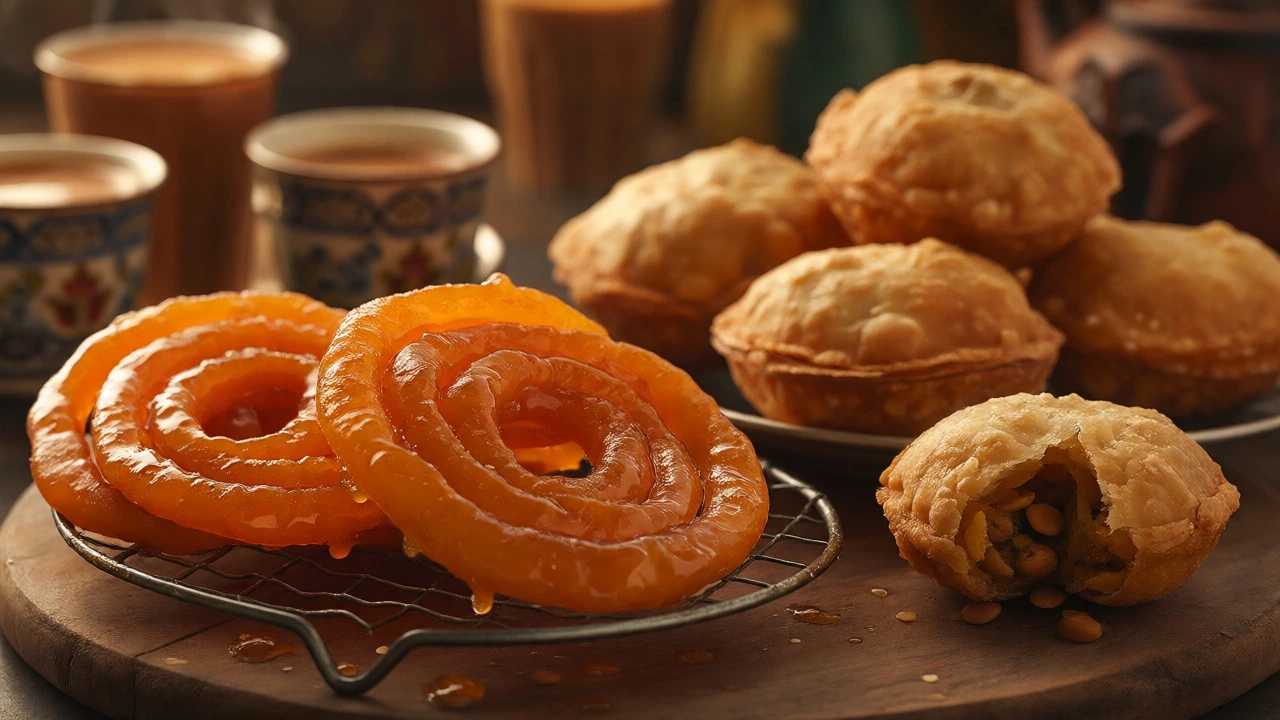
Jalebi is instantly recognizable by its orange spiral shape. It is fermented batter fried into loops and soaked in sugar syrup. It is sticky, sweet, and best eaten hot. In North India, it is often paired with Fafda (a crunchy savory snack) during festivals. In South India, a similar concept exists as Gulab Jamun, though those are solid balls rather than spirals.
For a savory twist, try Kachori. These are round, deep-fried pastries stuffed with lentils or spiced potatoes. Rajasthani kachoris are famous for their rich stuffing and thick crusts. They are calorie-dense but satisfying. If you see a large, round, golden disc on a plate, ask if it is Kachori.
| Snack Name | Main Ingredient | Flavor Profile | Origin Region |
|---|---|---|---|
| Samosa | Potatoes, Peas, Wheat Flour | Savory, Spicy | North India / Pan-India |
| Vada Pav | Potato Dumpling, Bread | Spicy, Tangy | Maharashtra |
| Dabeli | Potato Mix, Bun | Sweet-Spicy | Gujarat |
| Bhel Puri | Puffed Rice, Vegetables | Tangy, Crunchy | Maharashtra |
| Jalebi | Fermented Batter, Sugar Syrup | Sweet | Pan-India |
| Kachori | Lentils/Potatoes, Flour | Savory, Rich | Rajasthan/North India |
Regional Variations You Should Know
Traveling south changes the vocabulary. In Tamil Nadu, you might encounter Masala Vadai. This is a donut-shaped lentil fritter with black pepper and curry leaves. It is denser than North Indian pakoras. Another southern favorite is Murukku, a spiral-shaped crunchy snack made from rice and urad dal flour. It is brittle and salty, perfect for tea time.
In Kolkata, the king of snacks is Phuchka (called Gol Gappa elsewhere). These are hollow semolina shells filled with spiced potato and chickpea water. You pop the whole thing in your mouth. The burst of flavored water is the main event. Do not chew too slowly, or you will miss the experience.
How to Order Like a Local
When pointing at food, use hand gestures if language fails. But knowing a few words helps. Ask for "extra chutney" if you like tanginess. Say "spicy" or "teekha" if you can handle heat. Most vendors appreciate when foreigners try the local name. Instead of asking "Is this a potato ball?", ask "Is this a Vada?" It shows respect and interest.
Hygiene is a common concern. Look for stalls with high turnover. If the food is being fried continuously, it is likely fresh. Avoid pre-made snacks sitting out in dust for hours. Bottled water is safer than tap water for mixing drinks. Carry hand sanitizer because you will be eating with your fingers often.
What is the most popular Indian snack?
The Samosa is arguably the most widely recognized and consumed Indian snack nationwide. However, regional favorites like Vada Pav in Mumbai and Dosa in South India are equally dominant locally.
Are Indian street snacks vegetarian?
Many are, such as Samosas (usually veg), Pakoras, and Bhel Puri. However, always check, as some regions offer meat-filled versions. For example, Chicken Samosas are common in Hyderabad and Lucknow.
What is the difference between Bhel Puri and Sev Puri?
Bhel Puri uses puffed rice as the base, making it lighter and airier. Sev Puri uses crisp wheat wafers (papdi) as the base, making it crunchier and heavier. Both share similar toppings like chutneys and sev.
Why is Jalebi so sticky?
Jalebi is dipped in sugar syrup after frying. The syrup hardens slightly upon cooling, creating a glossy, sticky exterior while keeping the inside soft. This technique preserves moisture and adds sweetness.
Can I eat Indian street food if I am gluten-free?
Yes, many options are naturally gluten-free. Dosas, Idlis, and certain rice-based snacks are safe. However, cross-contamination in frying oil is common. Always inform the vendor about your allergy.