The Perfect Biryani Checklist & Timer
Follow this interactive guide to master the techniques described in the article. Check off each step as you complete it, and use the built-in timers for critical phases like marination and dum cooking.
Set for at least 4 hours, preferably overnight.
High heat 5 mins, then low heat 20-30 mins. Do not open lid.
Progress
0 of 0 steps completed
You’ve probably stood over a pot, sniffing the steam, wondering why your biryani tastes good but not that good. You followed the recipe. You bought the right basmati. So what’s missing? It’s not just one ingredient; it’s a symphony of techniques and chemistry that transforms simple rice and meat into something magical. The "secret" isn’t hidden in a vault-it’s in how you handle heat, moisture, and time.
Most home cooks treat biryani like a stew or a fried rice dish. That’s where things go wrong. Biryani is a layered masterpiece. To get that restaurant-style aroma and distinct grain texture, you need to understand the interplay between three core components: the marination, the par-cooking of rice, and the final sealed cooking process known as dum. Let’s break down exactly what makes that flavor pop.
The Foundation: Marination and Meat Quality
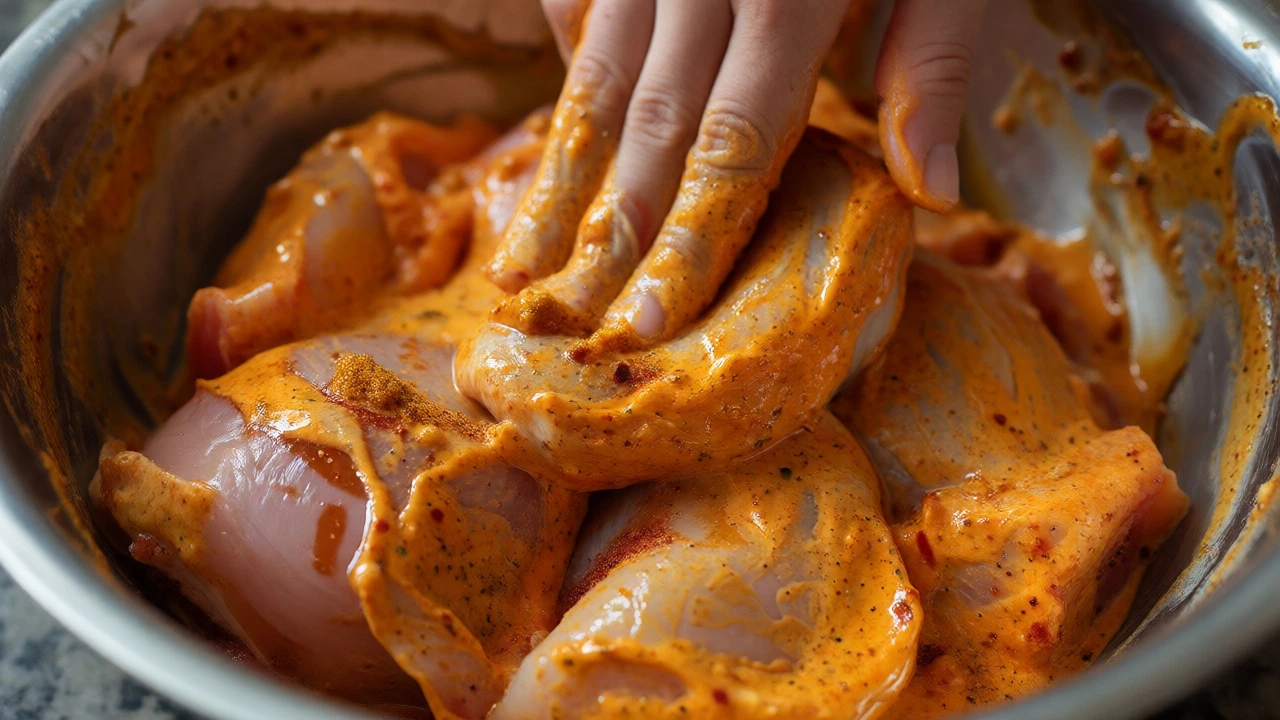
If your chicken or mutton tastes bland inside, no amount of saffron on top will save it. The secret starts with the marinade. This isn’t just about adding spices; it’s about tenderizing and infusing. Yogurt is non-negotiable here. Its lactic acid breaks down protein fibers, making the meat fall-off-the-bone tender while carrying fat-soluble spices deep into the flesh.
But yogurt alone isn’t enough. You need an acidic kick-lemon juice or green mango paste-and aromatics like ginger-garlic paste. Here’s the trick most people miss: marinate for at least four hours, preferably overnight. I know, patience is hard when you’re hungry. But if you rush this step, the spices sit on the surface rather than penetrating the muscle fibers. When you finally cook it, those surface spices burn before the inside is cooked, leading to a bitter aftertaste instead of a rich, deep flavor.
| Time | Texture Impact | Flavor Penetration |
|---|---|---|
| 30 Minutes | Tenderized surface only | Spicy exterior, bland interior |
| 4 Hours | Significantly softer | Deep, consistent seasoning |
| Overnight | Melt-in-mouth tenderness | Complex, layered aroma throughout |
The Rice: Par-Cooking is Everything
Here is the biggest myth in biryani cooking: you do not fully cook the rice before layering it. If you boil basmati until it’s soft, it will turn into mush during the final dum phase. The goal is to par-boil the rice until it is 70-80% done. It should still have a slight bite, a resistance when you press a grain between your teeth.
Why does this matter? Because the rice finishes cooking by absorbing the steam and juices from the meat below. This absorption is where the magic happens. The starches in the rice soak up the rendered fats and concentrated spices from the meat layer. If the rice is already fully cooked, it can’t absorb those flavors effectively. It just sits there, tasting like plain seasoned water.
To nail this, use plenty of water-think pasta-level volume. Add whole spices like bay leaves, cloves, and cardamom pods directly to the boiling water. This infuses the rice from the outside in. Salt the water generously; it should taste like the sea. Remember, the rice loses some saltiness during the rinse and final cook, so don’t be shy.
The Layering Technique: Creating Aroma Pockets
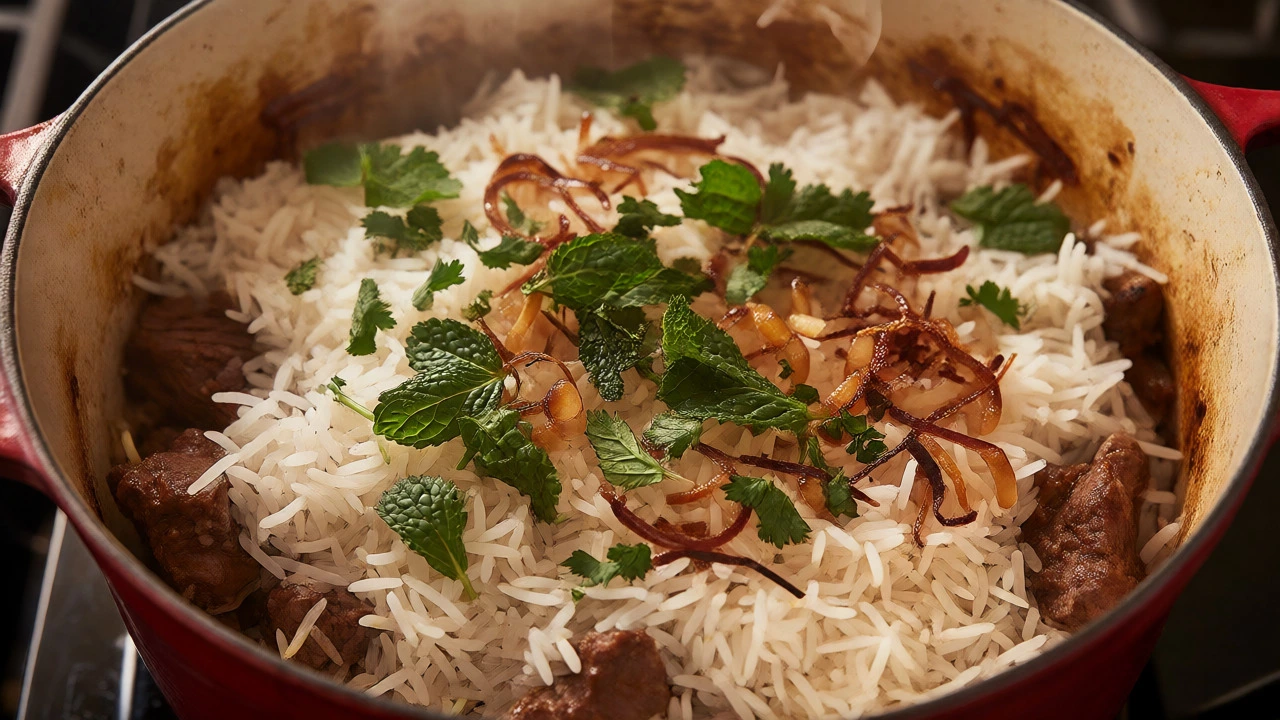
Biryani is not mixed; it is stacked. Think of it as building a flavor architecture. You start with the marinated meat at the bottom of a heavy-bottomed pot (a Dutch oven works great). Then, you add a layer of par-cooked rice. On top of that rice, you sprinkle fresh herbs-mint and cilantro are classic choices. These herbs release their essential oils when trapped under the lid, creating aromatic pockets within the dish.
Between layers, you can add fried onions (birista). Yes, they take time to make, but they provide a sweet, savory crunch that contrasts beautifully with the soft rice. Don’t skip them. They are a textural game-changer. Some regional variations, like Hyderabadi biryani, mix the raw marinated meat and partially cooked rice together before sealing. Others, like Lucknowi, keep the layers distinct. Both work, but the key is ensuring every grain of rice has contact with steam generated by the meat.
The Dum Method: Sealing in the Magic
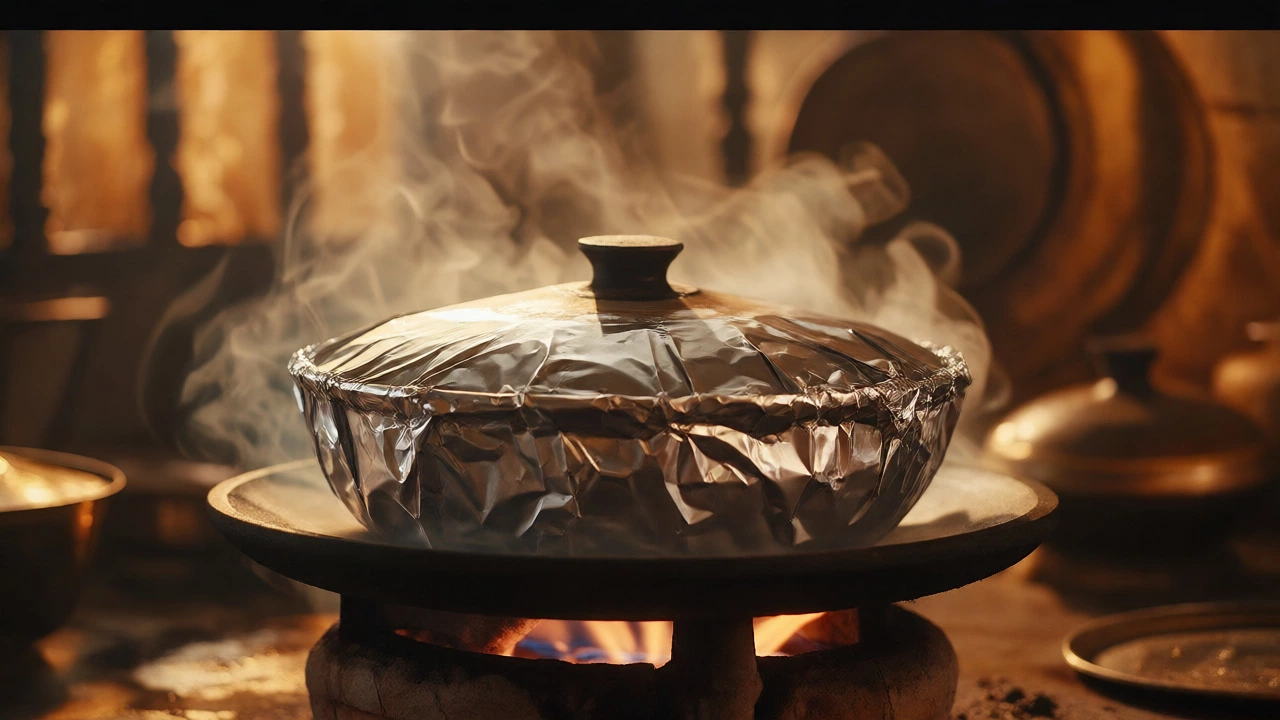
Dum pukht, or slow cooking in a sealed container, is the engine of biryani flavor. Traditionally, chefs seal the pot with dough to trap every bit of steam. At home, you can achieve similar results by placing a tight-fitting lid on your pot and wrapping it in aluminum foil to prevent steam escape.
Cook on high heat for the first five minutes to generate steam, then drop the heat to the lowest possible setting. If you have a tawa (flat griddle), place it under the pot to distribute heat evenly and prevent burning. Cook for 20-30 minutes. Do not open the lid. Every time you lift that lid, you lose pressure and temperature, which slows down the cooking and lets precious aromas escape. Trust the process.
How do you know it’s done? You’ll smell it. The aroma changes from raw spices to a complex, roasted fragrance. The rice grains will elongate and separate easily. If you stick a wooden skewer through the center, it should slide in with little resistance, and the tip should feel hot and moist, not dry.
The Finishing Touches: Saffron and Ghee
Once the pot comes off the heat, let it rest for ten minutes. This allows the moisture to redistribute. Now, prepare your garnish. Soak a pinch of saffron threads in a tablespoon of warm milk or water. This releases the crocin pigment, turning the liquid a vibrant orange-yellow. Drizzle this over the top of the biryani along with melted ghee.
Ghee adds richness and carries the scent of the toasted spices. The saffron provides visual appeal and a subtle, honey-like floral note that elevates the entire dish. Gently fluff the rice with a fork, mixing the top layer slightly to distribute the colors, but avoid stirring vigorously. You want distinct white, yellow, and brown grains, not a uniform beige mass.
Common Pitfalls to Avoid
- Using short-grain rice: Basmati is long-grain and stays separate. Jasmine or Arborio will clump and become sticky.
- Skip the resting period: Serving immediately cuts the rice. Resting lets the structure set.
- Too much water in the rice pot: If you don’t drain properly, excess water leads to soggy biryani.
- High heat throughout: Burning the bottom layer ruins the flavor profile with acrid notes.
The secret taste of biryani isn’t a single spice. It’s the discipline of preparation. It’s respecting the ingredients’ natural properties-the way yogurt tenderizes, the way rice absorbs, and the way steam concentrates flavor. Once you master these mechanics, you’ll realize that great biryani is less about following a recipe and more about understanding the physics of cooking.
Can I make biryani without a heavy-bottomed pot?
Yes, but you need to be careful with heat distribution. Use a regular stainless steel pot but place a flat skillet or tawa underneath it to diffuse the direct flame. This prevents the bottom layer from burning while the top cooks via steam. Alternatively, you can use an oven-safe pot and finish it in a low oven (300°F/150°C) covered tightly with foil.
Why is my biryani rice sticky?
Sticky rice usually means two things: you used the wrong type of rice (short-grain) or you overcooked the rice during the par-boiling stage. Ensure you use aged basmati rice, rinse it thoroughly to remove excess surface starch, and stop boiling when the grains are still firm to the bite (al dente).
Is it necessary to fry onions for biryani?
While not strictly mandatory for all regional styles, fried onions (birista) are highly recommended. They add sweetness, depth, and a contrasting texture. If you skip them, consider adding a teaspoon of sugar to the marinade to mimic that caramelized note, though the texture difference will remain noticeable.
What is the best meat-to-rice ratio?
A standard ratio is 1:1 by weight for chicken biryani (e.g., 500g chicken to 500g dry rice). For bone-in pieces, you might increase the meat slightly since bones add weight but no edible yield. Adjust based on whether you prefer a meat-heavy or rice-heavy dish.
Can I reheat leftover biryani?
Yes, but do it gently. Microwave reheating often dries out the rice. Instead, sprinkle a tablespoon of water over the leftovers, cover with a damp paper towel, and microwave on medium power. Better yet, reheat in a pan on low heat with a lid on, adding a tiny knob of butter or ghee to restore moisture and shine.