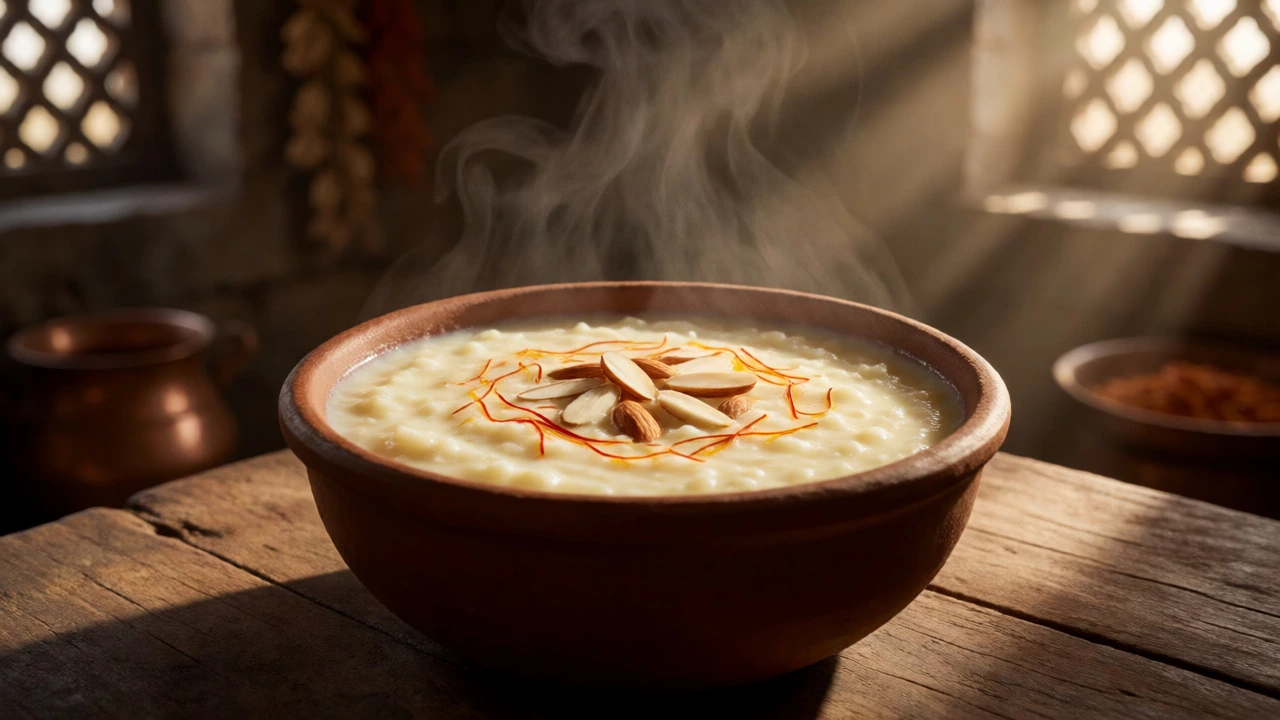
Payasam Heritage & Recipe Explorer
Explore the 2,000-year history of India's oldest sweet dish. Compare its ancient roots with modern desserts and generate a step-by-step guide for an authentic bowl.
Select a sweet to see how it compares to the ancient Payasam (Kheer).
- Method: Slow Boiling/Simmering
- Sweetener: Jaggery or Honey
- Fat Source: Whole Milk/Ghee (Moderate)
- Cultural Role: Temple Prasad (Pure)
Why is it considered the oldest?
References to Ksheeranna (milk-rice) in Sanskrit texts. Reliance on honey/jaggery as sugar was rare.
Archaeological evidence of milk-based rice preparations in royal courts and temples.
Mughal influence introduces frying techniques and refined flour sweets like Gulab Jamun.
Customize your Payasam based on regional traditions and dietary needs.
Your Customized Payasam
You might think the oldest Indian sweet is something fancy like Gulab Jamun or Rasgulla. But if you dig into ancient texts and temple records, a different answer emerges. It’s not a fried dough ball soaked in syrup. It’s a humble bowl of milk, rice, and sugar. We are talking about Payasam, known as Kheer in North India. This dish has been on Indian plates for over 2,000 years. It predates the Mughal influence that brought us many rich, cream-heavy desserts we see today.
Why does this matter? Because knowing the origin changes how you cook it. You stop treating it like a modern dessert and start respecting it as a ritual offering. If you’ve ever wondered why your grandmother insisted on stirring the pot for hours, there is a historical reason. It wasn’t just to avoid burning the milk. It was about texture and tradition. Let’s break down why Payasam holds the title of the oldest sweet, and how you can make an authentic version at home.
The Ancient Roots of Payasam
To understand the age of this dish, we have to look at what ingredients were available. In ancient India, sugar cane processing was limited. Honey and jaggery (unrefined cane sugar) were the primary sweeteners. Milk was abundant due to the dairy culture established by Vedic traditions. Rice was the staple grain. Combining these three created a high-energy food source. Historical references to Ksheeranna appear in Sanskrit literature dating back to the early centuries CE. Ksheeranna literally translates to "milk-rice."
This isn’t just folklore. Archaeological findings and textual analysis from the Gupta Empire period suggest that milk-based rice preparations were common in royal courts and temples. Unlike later sweets that require complex frying techniques or refined flour, Payasam relies on slow cooking. This method fits perfectly with the lifestyle of agrarian societies where time was plentiful but energy-dense foods were necessary for laborers and priests alike.
| Feature | Ancient Payasam (Kheer) | Later Era Sweets (e.g., Gulab Jamun) |
|---|---|---|
| Primary Ingredients | Rice, Milk, Jaggery/Honey | Maida (Refined Flour), Ghee, Sugar Syrup |
| Cooking Method | Slow Boiling/Simmering | Frying & Soaking |
| Historical Origin | Vedic/Gupta Period (Pre-1000 CE) | Mughal Influence (Post-1500 CE) |
| Nutritional Profile | High Carbs, Moderate Protein | High Fat, High Sugar |
Regional Names and Variations
One reason people get confused about the "oldest" status is because the name changes across borders. In South India, particularly in Tamil Nadu and Kerala, it is called Payasam. Here, it is often made with vermicelli, lentils, or even sago. In the North, it is Kheer. In Bengal, similar preparations exist under names like Payesh.
Despite the name differences, the core technique remains identical. The variation lies in the thickening agent. While North Indian Kheer relies almost exclusively on reducing milk, South Indian Payasam often uses coconut milk or roasted lentils. This regional divergence happened over centuries. However, the base recipe-grain plus dairy plus sweetener-remains unchanged since its inception. This consistency is proof of its antiquity. Newer dishes evolve rapidly; ancient staples stay true to their roots because they are tied to religious rituals.
Why Temple Offerings Preserved the Recipe
If you want to find the oldest recipes, look at temples. Food offered to deities, known as Prasad, must follow strict purity guidelines. These rules haven't changed much in millennia. Payasam is a mandatory offering in many major Hindu temples, including the famous Tirupati Balaji Temple. The priests prepare it using specific methods passed down through generations.
This ritualistic preservation is key. A street vendor might change a recipe to suit modern tastes, adding more sugar or artificial flavors. A temple priest cannot. They must use pure ghee, fresh milk, and traditional spices like cardamom and saffron. When you eat Payasam at a temple, you are tasting a version of the dish that hasn't fundamentally changed since the medieval period, let alone the ancient one. This makes it a living fossil of culinary history.
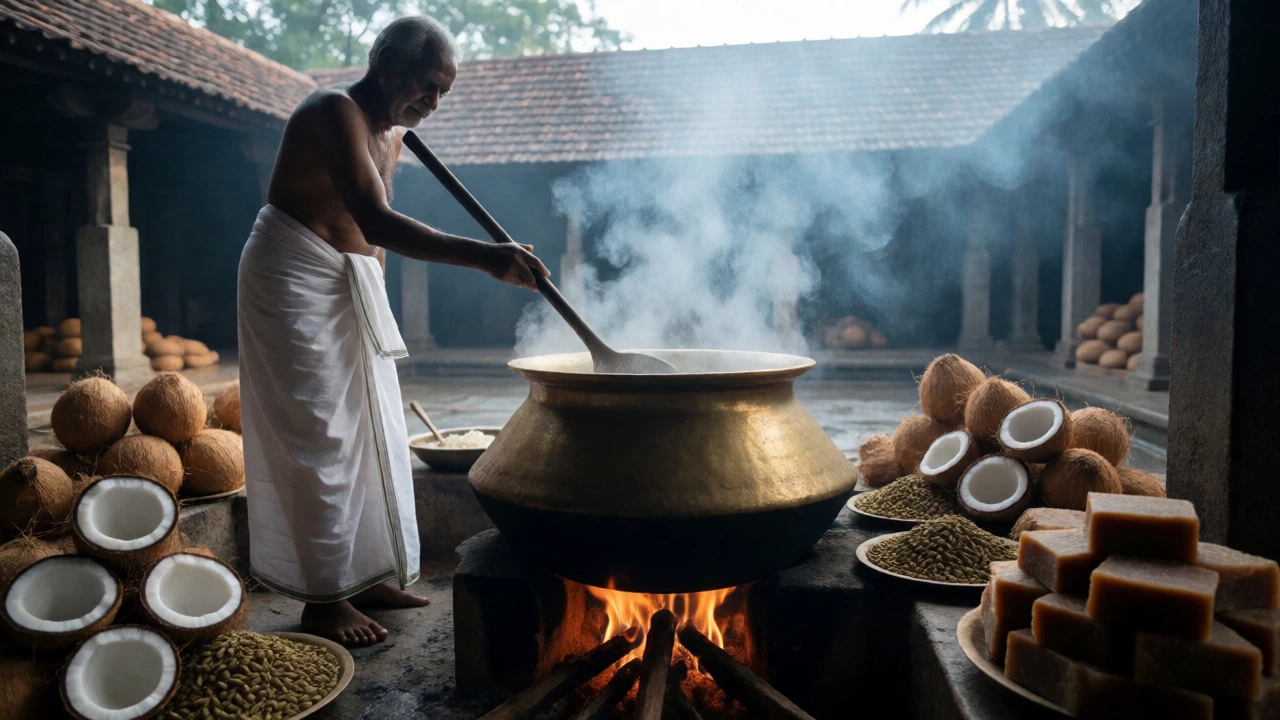
How to Make Authentic Ancient-Style Payasam
Most modern recipes shortcut the process. They use condensed milk or evaporated milk to save time. But if you want to taste the "old" flavor, you need patience. The original taste comes from the caramelization of lactose in the milk during long simmering. Here is a simplified method that respects the traditional timeline.
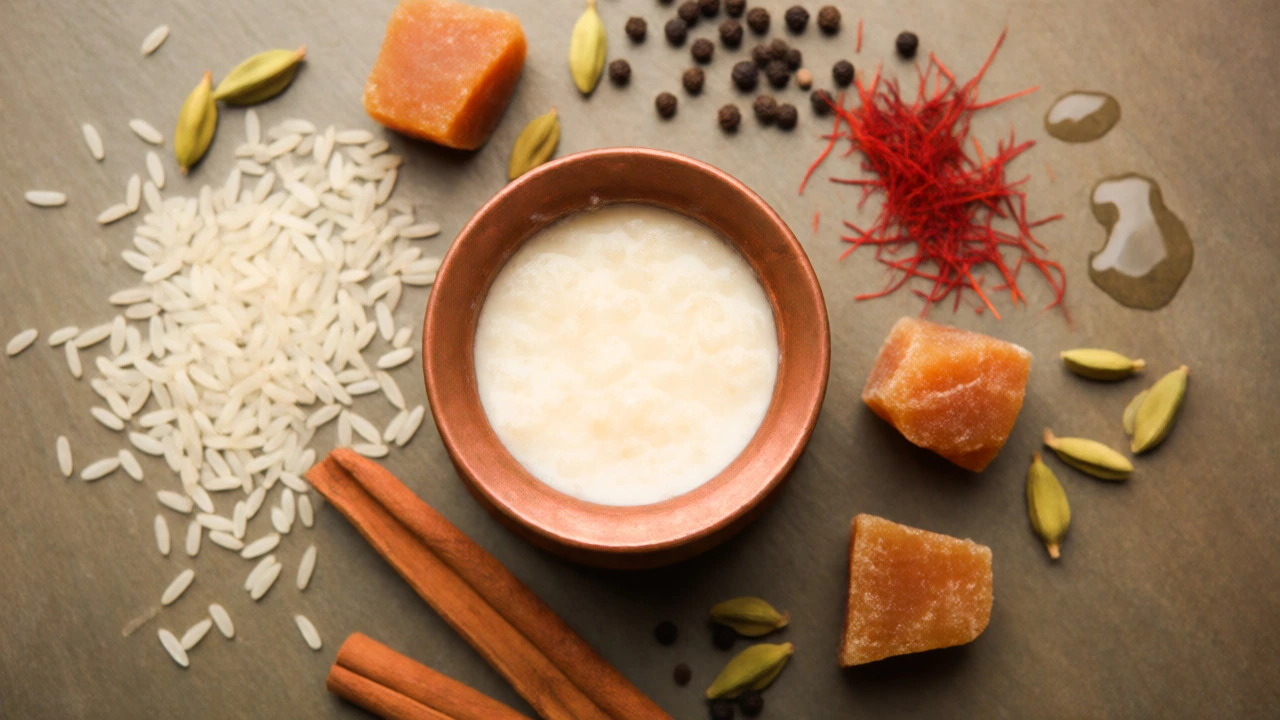
- Ingredients: 1 cup full-fat milk, 1/4 cup basmati rice (or broken wheat for a nuttier taste), 1/2 cup jaggery (shaved), 1/4 teaspoon cardamom powder, a pinch of saffron strands, and 1 tablespoon ghee.
- Step 1: Roast the Grain. Heat ghee in a heavy-bottomed pan. Add the rice and roast it until it turns golden brown. This step adds depth and prevents the rice from becoming mushy too quickly.
- Step 2: Slow Reduction. Pour in the milk. Bring it to a boil, then lower the heat to a gentle simmer. Stir occasionally. Do not rush this. It should take at least 30-40 minutes for the milk to reduce by half and thicken naturally.
- Step 3: Sweeten Properly. Dissolve the jaggery in a little warm water and strain it to remove impurities. Add this syrup to the reduced milk mixture. Jaggery provides an earthy sweetness that refined sugar lacks.
- Step 4: Final Touches. Stir in the cardamom and saffron. Cook for another 5 minutes. The saffron should bloom, turning the payasam a pale yellow hue.
Serve it warm or chilled. Traditionally, it is served in leaf bowls or copper vessels, which slightly alter the temperature retention and add a subtle metallic note that complements the dairy.
The Role of Spices in Ancient Desserts
We often think of spices only in savory curries. But ancient Indian sweets were heavily spiced. Cardamom, cinnamon, nutmeg, and black pepper were common. Why? Because they aid digestion. A heavy meal of rice and milk can be hard on the stomach. Adding warming spices helps balance the cooling nature of dairy. This Ayurvedic approach to food combining is embedded in the oldest recipes.
For example, black pepper is rarely used in modern kheer, but historical texts mention it. It cuts through the richness. If you try adding a tiny crackle of black pepper to your next batch, you’ll notice it doesn’t taste spicy-it just tastes cleaner. This is a lost art in commercial sweets, which rely on vanilla essence instead. Vanilla is a colonial import. Stick to indigenous aromatics for an authentic experience.
Health Benefits of Traditional Payasam
In an era of gluten-free and keto diets, Payasam offers a balanced profile. It provides carbohydrates from rice for immediate energy, protein from milk for muscle repair, and fats from ghee for satiety. Unlike deep-fried sweets, it contains no trans fats. The use of jaggery also means you get trace minerals like iron and magnesium, which are stripped away in white sugar.
However, portion control is still wise. One bowl is roughly 250-300 calories. For those watching their weight, substituting part of the milk with almond milk or using stevia instead of jaggery can reduce the calorie count without losing the cultural essence. But remember, the "authentic" taste requires the fat content of whole milk.
Common Misconceptions About Old Indian Sweets
A frequent error is assuming that all traditional sweets are healthy. Many are loaded with ghee and sugar. Payasam is relatively lighter, but other ancient dishes like Laddu can be calorie bombs. Another misconception is that sugar was always cheap. Refined sugar became widespread only after industrialization. Before that, sweetness was a luxury. That’s why sweets were reserved for festivals and gods. Eating them daily is a modern privilege.
Also, don’t confuse Gulab Jamun with ancient heritage. While delicious, its current form is largely a result of Persian and Mughal culinary exchanges in the last 500 years. The concept of soaking fried dough in syrup came from Central Asia. Payasam, being a boiled preparation, reflects the indigenous cooking style of the subcontinent.
Is Kheer the same as Payasam?
Yes, they are essentially the same dish with regional naming differences. Kheer is the term used in North India, while Payasam is used in South India. The base ingredients of milk, rice/grain, and sweetener remain consistent, though South Indian versions may use coconut milk or lentils.
What was the oldest sweetener used in Indian sweets?
Before refined sugar became common, honey and jaggery (unprocessed cane sugar) were the primary sweeteners. Dates and figs were also used in some regional variations. Jaggery remains the preferred sweetener for traditional Payasam due to its distinct earthy flavor.
Why is Payasam considered healthier than other Indian sweets?
Payasam is boiled rather than fried, avoiding excess oil absorption. It typically uses fewer ingredients than complex layered sweets. Additionally, the inclusion of milk provides protein and calcium, while jaggery offers trace minerals, making it a more nutrient-dense option compared to flour-based fried snacks.
Can I make Payasam vegan?
Absolutely. Substitute cow's milk with coconut milk or almond milk. Use coconut oil or vegan ghee instead of dairy ghee. Ensure your sweetener is plant-based (jaggery and maple syrup work well). Coconut milk Payasam is actually very popular in Kerala and closely mimics the traditional rich texture.
Does Payasam have religious significance?
Yes, it is a significant Prasad (offering) in many Hindu temples and is served during festivals like Diwali, Onam, and Pongal. Its simplicity and purity make it suitable for religious rituals, symbolizing prosperity and devotion.