Biryani Flavor Gap Calculator
--%
Flavor Match vs. Restaurant Standard
Top Missing Step:
You’ve just spent three hours in your kitchen. You followed the recipe to the letter. The aroma filled your house, and you felt proud. But then you take that first bite, and something feels off. It’s good, sure. But it doesn’t hit you with that same explosive punch of flavor you got at your favorite Indian spot last week. Why does restaurant biryani taste different? Is it a secret ingredient? A hidden technique? Or is it simply that they use more butter than we dare to?
The truth is less about magic and more about physics, chemistry, and industrial-scale logistics. Restaurants optimize for consistency, speed, and intense flavor delivery in ways that home kitchens rarely can. They aren't necessarily using better ingredients-often, they’re using cheaper ones-but they are using them differently. Let’s break down exactly where the gap lies between your homemade pot and their professional wok.
The Power of Volume and Surface Area
Think about the size of the pot you cook in versus what a restaurant uses. At home, you might make biryani for four people in a standard Dutch oven or heavy-bottomed pot. A restaurant makes it for fifty or a hundred. This difference in scale changes how heat transfers through the food.
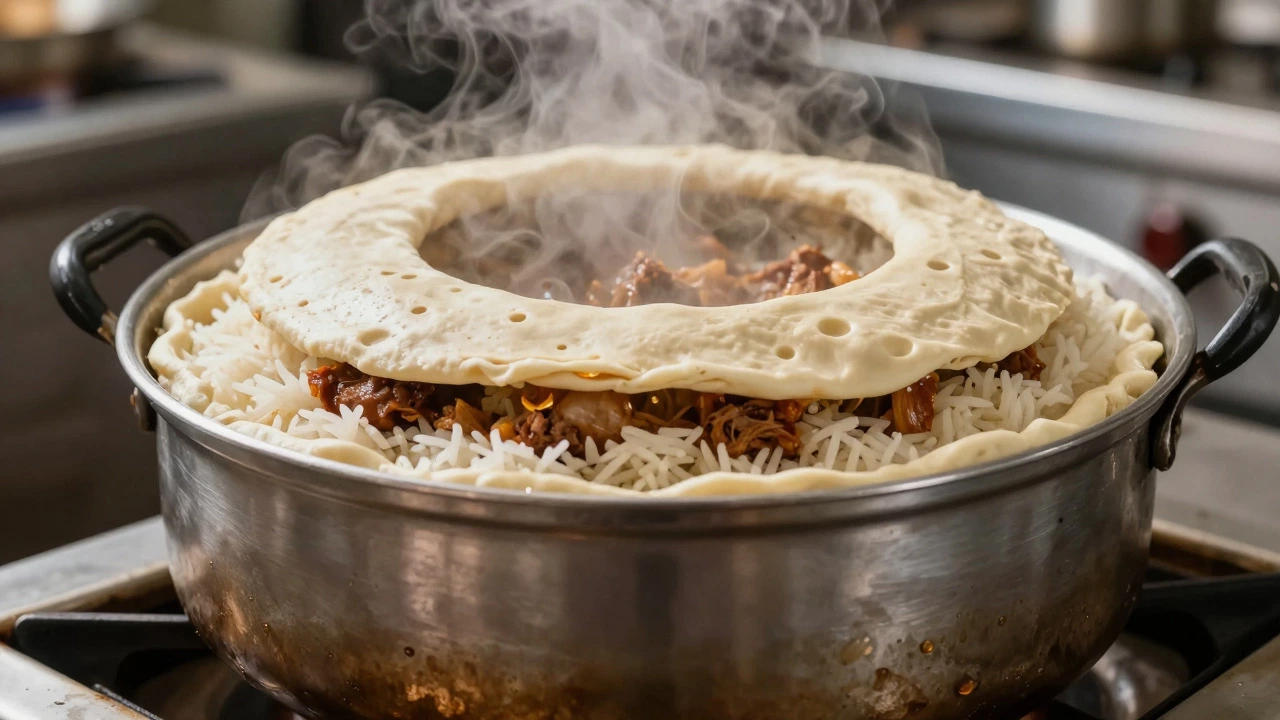
In a large commercial pot, there is significantly more surface area at the bottom relative to the volume of rice near the top. When they seal the pot for Dum Pukht, a slow-cooking method where the pot is sealed with dough to trap steam, the pressure builds up differently. More importantly, the ratio of liquid to rice changes. In small batches, it’s easy to add too much water, resulting in mushy grains. In large batches, the evaporation rate is slower, keeping the rice distinct and fluffy. If you want that restaurant texture, try cooking smaller portions if possible, or be extremely precise with your water-to-rice ratio. One cup of basmati needs exactly one and a half cups of boiling salted water, no more.
Spice Blooming vs. Spice Dumping
This is probably the biggest mistake home cooks make. We tend to throw whole spices into oil and wait thirty seconds before adding onions. Restaurants don’t do that. They bloom their spices.
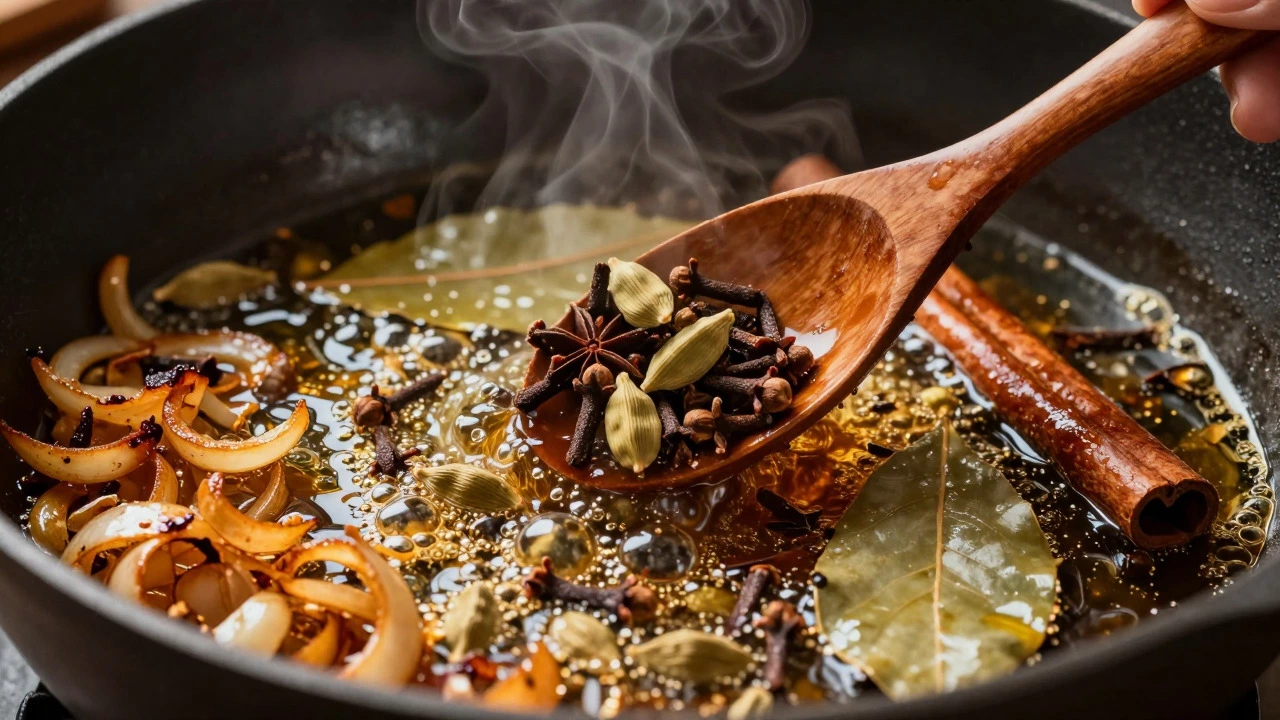
Blooming means frying whole spices like cardamom, cloves, cinnamon, and bay leaves in hot oil until they release their essential oils into the fat. Fat carries flavor. If you dump raw spices into the pot, they remain trapped inside the hard shell of the seed, releasing only a fraction of their potential aroma during the short cooking time.
| Method | Flavor Intensity | Aroma Profile | Common Use Case |
|---|---|---|---|
| Raw Addition | Low | Faint, sometimes bitter | Quick stir-fries |
| Blooming in Oil | High | Deep, nutty, aromatic | Restaurant Biryani |
| Powder Sprinkling | Medium | Surface-level heat | Finishing touch |
To replicate this, heat your ghee or oil until it shimmers. Add your whole spices. Wait until they sizzle and turn slightly darker (not burnt). Then add your onions. This step alone can bridge 30% of the flavor gap.
The Role of Acid and Fermentation
Have you ever noticed that restaurant biryani has a subtle tang? It’s not just from tomatoes. Many traditional recipes, especially Hyderabadi styles, rely on yogurt. But not just any yogurt. They often use thick, sour curd that has been sitting out or fermented slightly.
Acid breaks down proteins in meat, making it tender faster. It also cuts through the richness of the ghee and fried onions, balancing the palate. At home, we often use fresh, mild yogurt straight from the fridge. It adds creaminess but lacks that sharp kick that wakes up the taste buds.
Try this: Take your yogurt an hour before cooking. Let it come to room temperature. If it’s very mild, mix in a teaspoon of lemon juice or vinegar. Marinate your chicken or mutton for at least two hours, preferably overnight. The acid needs time to penetrate the fibers. If you marinate for ten minutes, you’ll get a bland interior and a spicy exterior. Restaurants let it sit because they have time; you need to prioritize this step over speed.
Saffron and Rose Water: The Expensive Aroma
Let’s talk about smell. Flavor is 80% smell. When you walk into a biryani place, that floral, honey-like scent hits you immediately. That’s saffron. And yes, restaurants use it. But here’s the catch: they don’t just drop dry threads into the pot.
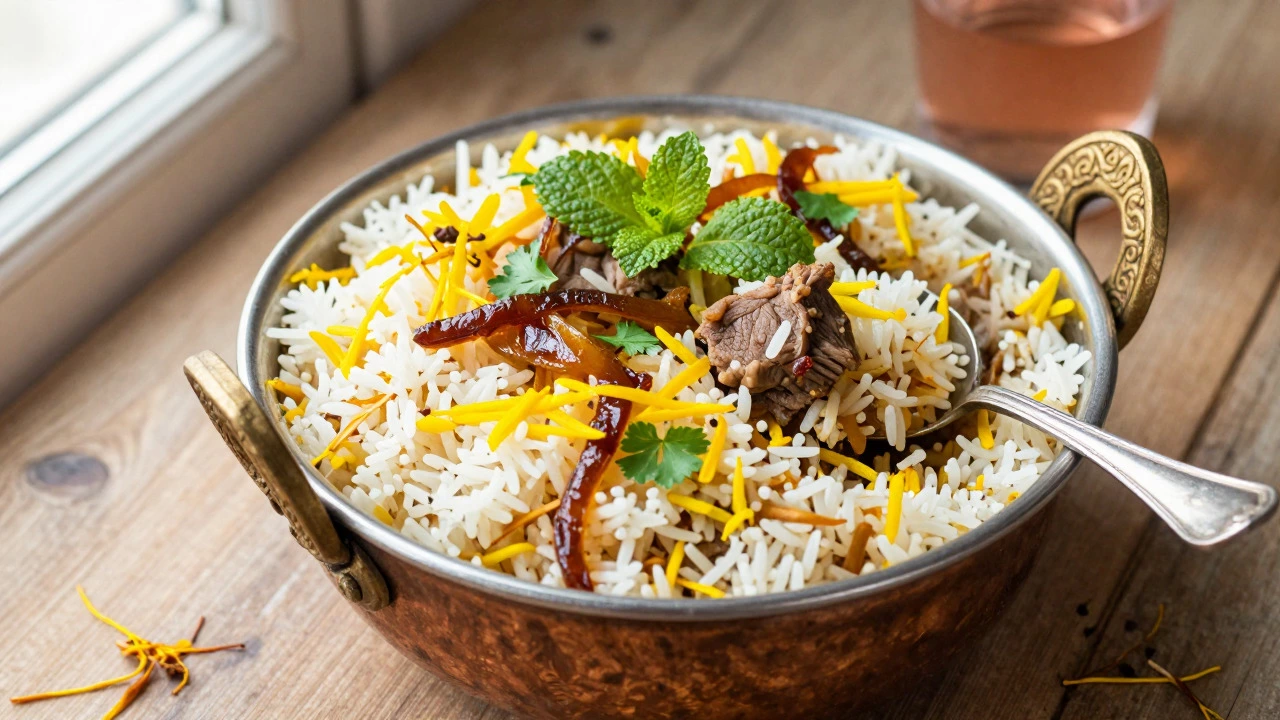
They steep high-quality Kashmiri saffron in warm milk or rose water for hours before adding it. This extracts the crocin (color) and picrocrocin (flavor) compounds fully. Adding dry saffron at the end gives you color, but little flavor.
Furthermore, many restaurants use a combination of kewra water and rose water. These are potent essences. A few drops go a long way. If you skip these, your biryani will smell like plain spiced rice, not biryani. Don’t be shy with the aroma agents. Add a splash of rose water to the final layering stage. It elevates the dish from "good dinner" to "celebration meal."
The Maillard Reaction and Fried Onions
Biryani isn’t boiled; it’s layered. The base layer usually consists of heavily caramelized onions. This is crucial. We call this birista. In a home kitchen, we often rush this step. We fry onions until they are golden brown and stop.
Restaurants fry onions until they are dark brown, almost black at the edges. Why? Because that’s when the Maillard reaction creates complex savory notes. Burnt onions sound bad, but properly deep-fried onions provide a sweet, umami depth that balances the heat of the chilies. If your onions are pale, your biryani will lack depth. It will taste flat. Patience here is non-negotiable. Fry them low and slow until they are crispy and dark amber.
Heat Control and Resting Time
Finally, let’s address the finish. Most home cooks serve biryani immediately after opening the lid. The steam escapes, the moisture redistributes poorly, and the rice grains stick together.
Restaurants let the pot rest for 10-15 minutes after turning off the heat. This allows the residual steam to finish cooking the rice gently without breaking the grains. It also lets the flavors meld. The oil separates slightly, coating each grain individually.
If you serve straight away, you get clumpy rice. If you let it rest, you get distinct, fluffy grains that shine. Gently fluff the rice with a fork, not a spoon, to avoid mashing the delicate layers. Serve with a side of raita to cool the palate, highlighting the complexity of the spices.
Key Takeaways for Better Home Biryani
- Bloom your spices: Fry whole spices in hot oil to release essential oils before adding other ingredients.
- Marinate longer: Use acidic yogurt marinades for at least 2 hours to tenderize meat and infuse flavor.
- Darken the onions: Caramelize onions deeply to create umami-rich birista.
- Steep the saffron: Dissolve saffron in warm milk or rose water beforehand for maximum aroma.
- Let it rest: Allow the cooked biryani to sit covered for 10 minutes before serving for fluffy texture.
Is restaurant biryani healthier than homemade?
Not necessarily. Restaurants often use more oil, ghee, and salt to enhance flavor and preserve the dish during transport. Homemade versions allow you to control fat content and sodium levels, making them potentially healthier if prepared with moderation.
Why is my home biryani sticky instead of fluffy?
Sticky rice usually results from using too much water or overcooking. Ensure you soak the basmati rice for 30 minutes before boiling, and par-boil it only until it is 70-80% cooked. The remaining cooking happens during the dum process with limited moisture.
Can I skip saffron in biryani?
You can, but you will lose the signature aroma and yellow hue. Turmeric can substitute for color, but it cannot replicate the floral notes of saffron. If cost is an issue, use fewer strands but steep them properly to maximize impact.
What type of rice is best for biryani?
Long-grain Basmati rice is the standard. Look for aged basmati (at least 1-2 years old), which has lower moisture content and elongates better during cooking, providing the separate grains characteristic of restaurant-style biryani.
Why does restaurant biryani taste spicier?
It’s often not just about chili heat, but the balance of aromatics. Restaurants use higher quantities of green chilies, ginger-garlic paste, and ground spices per portion. Additionally, the resting period allows capsaicin to distribute evenly throughout the dish, creating a consistent heat profile rather than localized hot spots.