Ask someone in India what they eat for breakfast, and you’ll get a different answer depending on whether they’re in Delhi, Chennai, Kolkata, or Mumbai. There’s no single "typical" Indian breakfast-instead, there’s a rich tapestry of regional meals shaped by climate, crops, and centuries of tradition. But if you want to know what most Indians actually eat on a weekday morning, the answer is simple: something hot, filling, and made fresh that morning.
North India: Parathas, Chole, and Hot Tea
In Delhi, Punjab, and Uttar Pradesh, breakfast often starts with parathas-flaky, layered flatbreads fried in ghee or oil. They’re stuffed with spiced potatoes (aloo paratha), paneer, or even minced meat. Alongside, you’ll find chole (spicy chickpeas), yogurt, and a cup of strong, milky chai. Many families make parathas fresh daily. The dough is rolled out, stuffed, folded, and fried while the kids get ready for school. It’s not a rushed meal-it’s a ritual. A typical North Indian breakfast gives you enough energy to last until lunch, even if you’re hauling heavy loads or walking miles to work.
South India: Idli, Dosa, and Sambar
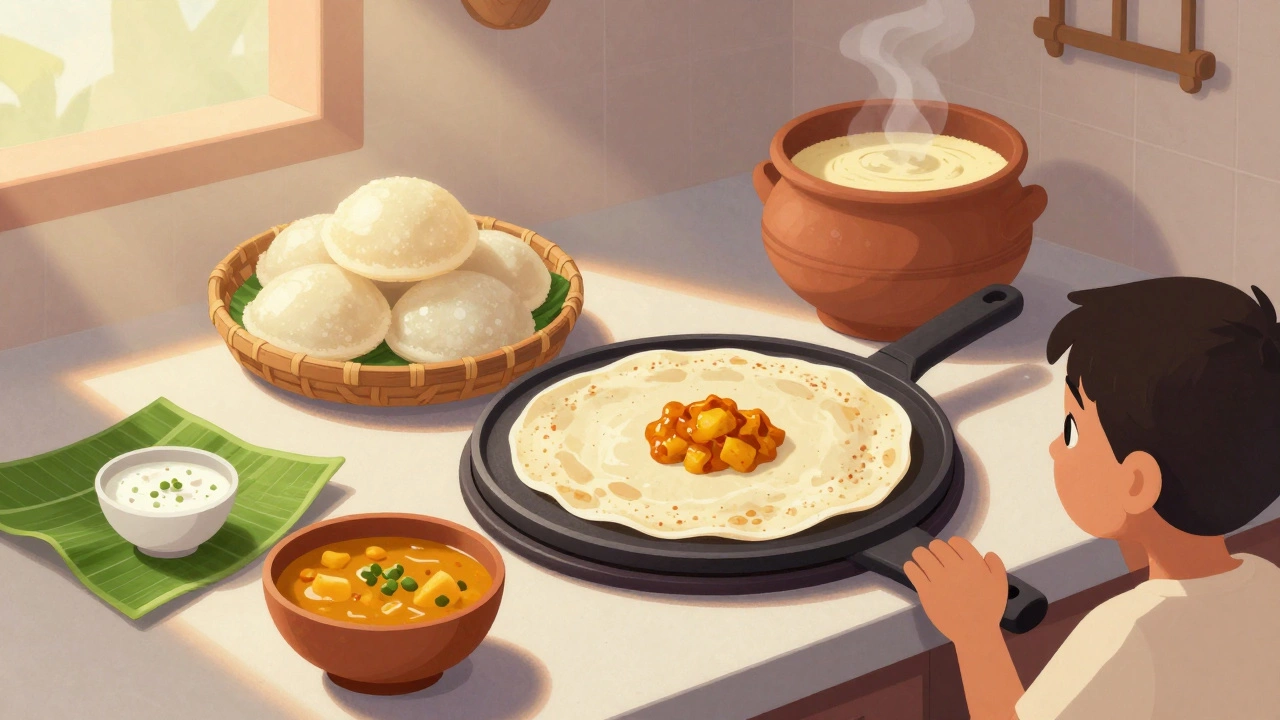
Down south, breakfast is built around fermented rice and lentil batters. Idli-soft, steamed cakes-are served with sambar (a lentil-based vegetable stew) and coconut chutney. Dosa, the crispy fermented crepe, comes in many forms: plain, masala (stuffed with spiced potatoes), or even cheese and paneer versions for modern tastes. These meals rely on soaking, grinding, and fermenting batter overnight. By morning, it’s risen, bubbly, and ready to cook. In Tamil Nadu and Karnataka, families often have idli and dosa five to six days a week. The fermentation isn’t just for flavor-it makes nutrients more digestible and gives a slow-release energy that keeps people full until lunch.
West India: Poha, Upma, and Vada Pav
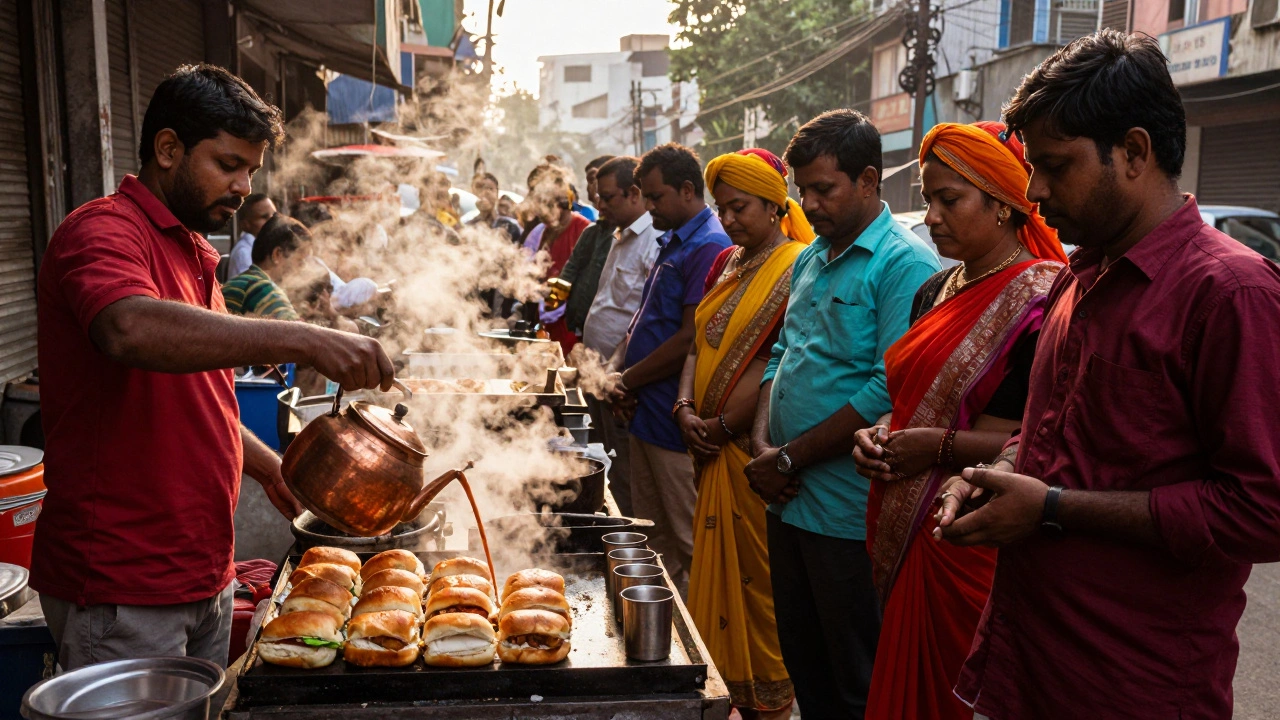
In Maharashtra and Gujarat, breakfast leans toward quick, savory dishes made from rice or semolina. Poha (flattened rice) is tossed with mustard seeds, curry leaves, onions, and peanuts, then steamed lightly. It’s ready in under 15 minutes and often eaten with a side of sev (fried chickpea noodles). Upma, made from roasted semolina, is similar but grainier and often flavored with curry leaves and green chilies. In Mumbai, vada pav-a deep-fried potato fritter in a bun with chutneys-is the go-to street breakfast. It’s cheap, portable, and eaten by office workers, students, and rickshaw drivers alike. This region values speed without sacrificing taste.
East India: Luchi, Alur Dom, and Tea
In West Bengal and Odisha, breakfast is often a mix of fried bread and sweet-savory curries. Luchi-deep-fried, puffy bread made from refined flour-is served with alur dom (potatoes cooked in a spicy, slightly sweet gravy). It’s not a light meal. It’s hearty, rich, and meant to be savored slowly. Many households pair it with a strong cup of masala chai and a small portion of sweetened yogurt. In rural areas, it’s common to eat this breakfast after morning prayers. Unlike other regions, East Indian breakfasts are less about speed and more about comfort and tradition.
The Role of Tea
No matter where you are in India, tea is the universal breakfast companion. It’s not just a drink-it’s a cultural anchor. Chai is brewed with black tea leaves, milk, sugar, and spices like cardamom, ginger, or cloves. It’s boiled hard, then strained and served hot. In many homes, the first thing done after waking is putting the kettle on. Even in cities, street vendors with giant kettles serve chai by the roadside before 7 a.m. A 2023 survey of urban Indian households found that 94% of people drink tea daily, and 87% of them have it before noon. It’s not optional. It’s part of the rhythm of the day.
Why These Meals Work
Indian breakfasts aren’t random. They’re designed for function. Most are:
- Carb-heavy for sustained energy
- Protein-rich from lentils, yogurt, or paneer
- Spiced to stimulate digestion
- Locally sourced-rice in the south, wheat in the north, millets in central India
They’re also mostly vegetarian. Even in meat-eating households, breakfast is often plant-based. This isn’t just tradition-it’s practical. Vegetarian meals are cheaper, easier to prepare in bulk, and require less fuel to cook. In a country where over 30% of the population follows vegetarian diets for religious or cultural reasons, breakfast reflects that reality.
Quick Breakfasts for Modern Life
With more people working long hours, quick versions are gaining ground. Pre-made idli and dosa batter is now sold in refrigerated packs in supermarkets. Instant poha mixes with spices already blended are on shelves in Mumbai and Bangalore. Even frozen parathas are common in urban homes. But even these shortcuts still follow the same principles: hot, savory, and served with tea. The core doesn’t change-only the time it takes to make it.
What’s Missing from Western Breakfasts
If you’re used to cereal, toast, or pancakes, Indian breakfasts might seem overwhelming. But they’re not heavy-they’re balanced. There’s no sugary cereal, no processed yogurt, no artificial flavoring. The sweetness comes from natural sources: jaggery in rice cakes, ripe banana in some regional dishes, or a hint of sugar in chai. The saltiness comes from spices, not salt shakers. And the texture? Crunchy, soft, chewy, and smooth-all in one meal.
Indian breakfasts don’t follow the "protein-first" trend. They don’t count calories. They’re not marketed as "superfoods." But they’ve kept generations healthy, active, and energized for centuries. That’s not luck. It’s wisdom built into every bite.
Try It Yourself
Want to taste a real Indian breakfast? Start simple. Buy ready-made idlis from an Indian grocery store or make poha with store-bought flattened rice. Heat oil, add mustard seeds, curry leaves, onions, and peanuts. Toss in the rice, steam it for five minutes, and serve with a cup of strong chai. You don’t need fancy ingredients. Just time, heat, and a little curiosity.
Is Indian breakfast healthy?
Yes, traditional Indian breakfasts are generally healthy. They’re made with whole grains, legumes, vegetables, and spices that aid digestion. Fermented foods like idli and dosa improve gut health. Tea with spices like ginger and cardamom has anti-inflammatory properties. The meals are low in added sugar and processed fats. The real health risk comes from modern shortcuts-fried snacks sold on the street or sugary packaged cereals-but those aren’t the norm.
Do Indians eat breakfast every day?
Almost all Indians eat breakfast daily. A 2024 national survey found that 98% of households in urban areas and 96% in rural areas consume breakfast every day. Skipping breakfast is rare. It’s seen as disruptive to the body’s rhythm. Even in busy cities, people make time for it-often eating on the way to work or school.
What’s the most popular breakfast in India?
Idli and dosa are the most widely eaten breakfasts across the country. They’re common in South India, but you’ll find them in cities from Delhi to Hyderabad. Poha and paratha are close behind, especially in the north and west. No single dish dominates nationwide, but fermented rice-lentil meals have the broadest reach.
Can I make Indian breakfast without a tawa or steamer?
Absolutely. You can make poha in a regular saucepan. Parathas can be cooked on a standard nonstick skillet. Even idlis can be steamed in a regular pot with a colander or metal steamer basket. You don’t need special tools-just heat and time. Many people in small apartments or dorms make these meals with basic kitchen gear.
Why is tea so important in Indian breakfasts?
Tea is the glue that holds the meal together. It warms the body, aids digestion, and brings people together. In many homes, the first thing done in the morning is brewing tea. It’s not just a drink-it’s a signal that the day has started. The spices in chai (like ginger and cardamom) also help wake up the metabolism. Without tea, breakfast feels incomplete.
Next Steps
If you’re curious about trying one of these meals, start with poha. It’s the easiest to make, takes under 15 minutes, and needs only three ingredients: flattened rice, oil, and spices. Buy it at any Indian grocery store or online. Heat oil, add mustard seeds and curry leaves, toss in onions and peanuts, then stir in the rice. Steam it for five minutes. Serve with a cup of chai. That’s your first taste of a real Indian morning.