Indian Dish Nutrition Calculator
Calculate Your Meal Nutrition
When people ask what the healthiest Indian dish is, they’re often thinking of something that’s flavorful but doesn’t pack on the calories, oil, or sugar. The truth? There’s no single answer - but there are a few dishes that stand out because of how they’re made, what they’re made of, and how they fuel your body. These aren’t fancy restaurant specials. They’re everyday meals that have been eaten in homes across India for generations - simple, balanced, and packed with real nutrition.
Why Some Indian Dishes Are Healthier Than Others
Not all Indian food is created equal. A plate of butter chicken with fried naan and creamy korma might taste amazing, but it’s loaded with saturated fat and refined carbs. On the other hand, a bowl of steamed dal with brown rice and a side of raw cucumber salad? That’s a different story. The healthiest Indian dishes rely on whole ingredients: lentils, vegetables, legumes, whole grains, and spices like turmeric, cumin, and coriander - all of which have real, science-backed benefits.
Take turmeric, for example. Its active compound, curcumin, is known for reducing inflammation. Studies from the Journal of Medicinal Food show that regular consumption of turmeric can support joint health and digestion. Cumin aids in iron absorption, and lentils? They’re one of the best plant-based sources of protein and fiber you can find.
The Top Contender: Khichdi
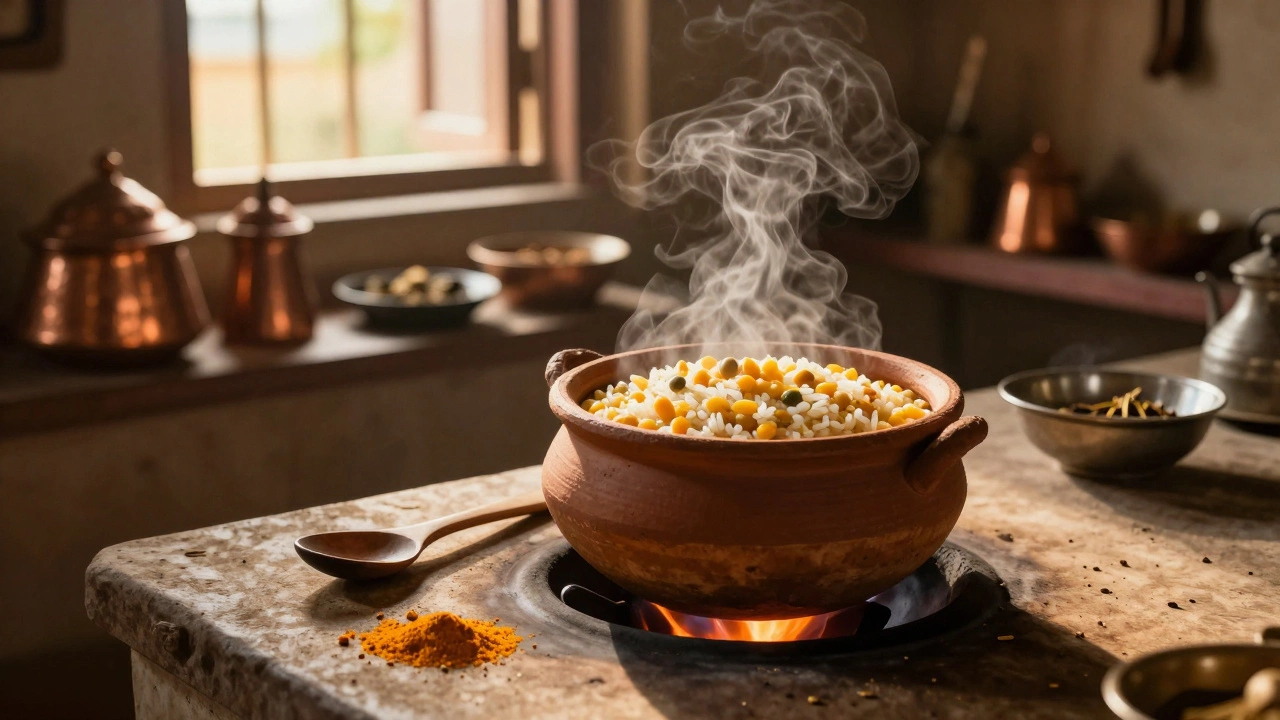
If you had to pick one dish as the healthiest Indian meal, it would be khichdi. It’s a one-pot dish made from rice and moong dal (split yellow lentils), cooked with turmeric, cumin, and a touch of ghee - or none at all if you’re avoiding fats. It’s gentle on the digestive system, easy to digest, and packed with complete protein because rice and lentils together provide all nine essential amino acids.
Khichdi is often served during illness in Indian households - not because it’s bland, but because it’s nourishing without being heavy. A typical serving (1 cup) has about 220 calories, 8 grams of protein, and 6 grams of fiber. It’s naturally gluten-free, vegan if made without ghee, and works for babies, elderly people, and athletes alike.
Some people add chopped carrots, spinach, or pumpkin to make it even more nutrient-dense. That’s not a twist - it’s tradition. In Ayurveda, khichdi is called the “perfect food” because it balances all three doshas (body energies). It’s not just food. It’s medicine.
Other Top Healthy Indian Dishes
Khichdi leads, but it’s not alone. Here are five other dishes that deserve a spot on your plate:
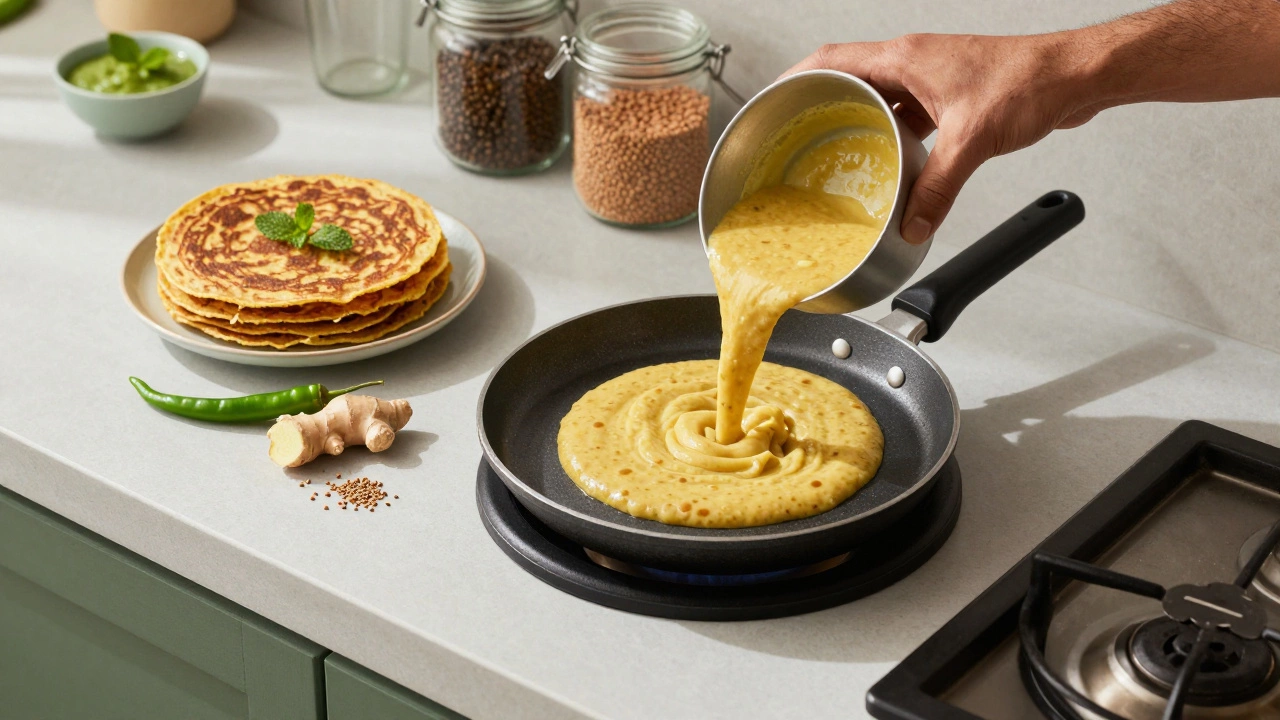
- Moong Dal Chilla - These savory lentil pancakes are made from ground moong dal, water, ginger, and green chilies. No flour, no eggs. Just protein and fiber. One chilla has about 110 calories and 7 grams of protein. Great for breakfast or a snack.
- Palak Paneer (Light Version) - Spinach is rich in iron and calcium, and paneer (Indian cottage cheese) adds protein. Skip the cream and heavy butter. Make it with low-fat paneer and sauté it in minimal oil. A cup gives you 180 calories, 12 grams of protein, and 4 grams of fiber.
- Vegetable Upma - Made from semolina (rava), this breakfast dish gets its nutrition from onions, peas, carrots, and cashews. Use whole wheat rava instead of refined, and you boost the fiber to over 5 grams per serving.
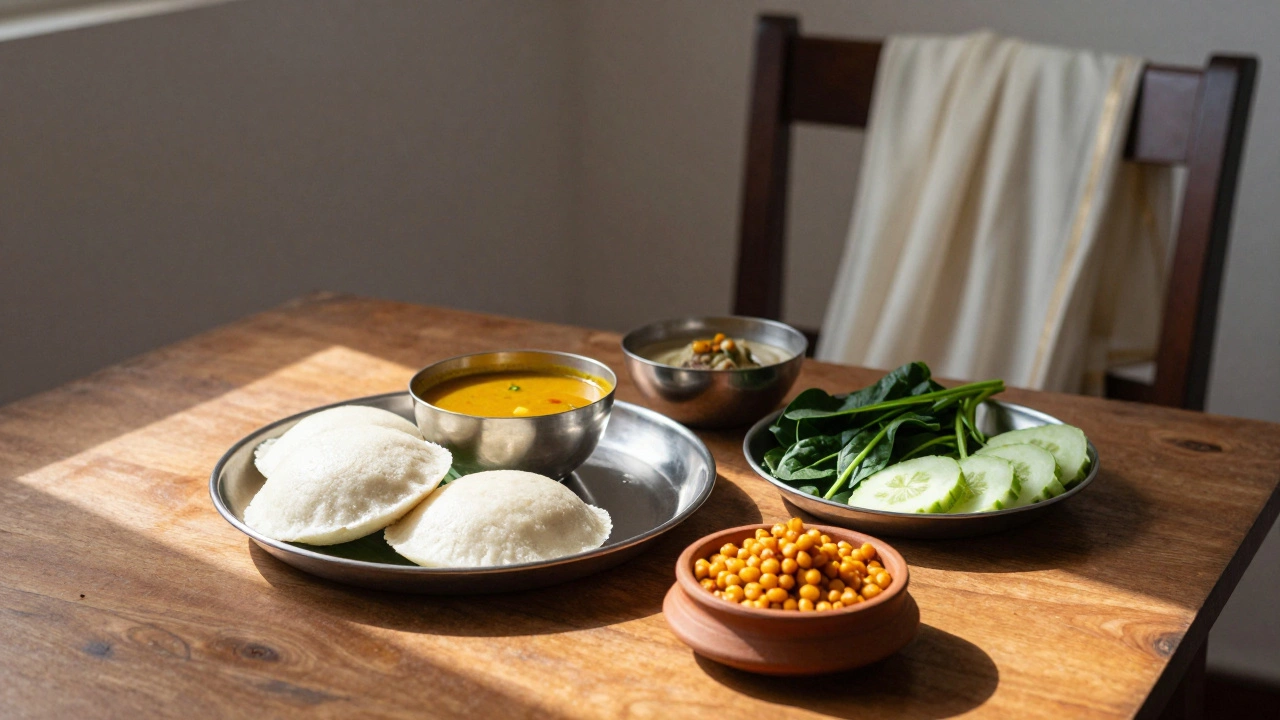
- Idli and Sambar - Steamed rice and lentil cakes with a tamarind-based lentil stew. Idlis are fermented, which makes them easier to digest and improves nutrient absorption. Sambar is loaded with lentils and vegetables. Together, they form a balanced meal with low fat and high protein.
- Chana Masala (No Cream) - Chickpeas cooked with tomatoes, onions, and spices. A cup has 210 calories, 12 grams of protein, and 10 grams of fiber. It’s one of the most filling vegetarian dishes you can eat.
What to Avoid - Even if It’s Indian
Some dishes get labeled as “healthy” just because they’re vegetarian. But that doesn’t mean they’re good for you. Here are three common traps:
- Deep-fried snacks - Samosas, pakoras, and bhajjis are often made with refined flour and soaked in oil. One samosa can have 200-300 calories - mostly from fat.
- White rice with ghee - White rice has little fiber. Adding ghee raises the saturated fat content. Swap it for brown rice or millet.
- Sweetened yogurt (lassi) - Lassi is great when made plain with yogurt and salt. But the sweet version? It’s basically a milkshake with sugar. Skip the honey or sugar and add a pinch of cardamom instead.
How to Make Indian Food Healthier at Home
You don’t have to give up flavor to eat well. Here are three simple swaps that make a big difference:
- Swap oil for steam or dry roasting - Instead of frying spices in oil, toast them in a dry pan first. Then add a teaspoon of oil at the end. You’ll get the same flavor with 70% less fat.
- Use whole grains - Replace white rice with brown rice, red rice, or millet (like bajra or jowar). Millet has more magnesium and antioxidants than rice.
- Load up on vegetables - Add spinach, cauliflower, zucchini, or beans to any curry or dal. A half-cup of extra veggies adds fiber, vitamins, and volume without many calories.
Real-Life Example: A Day of Healthy Indian Eating
Here’s what a typical day might look like for someone eating Indian food the healthy way:
- Breakfast: Two idlis with sambar and coconut chutney - 200 calories, 10g protein
- Snack: A handful of roasted chana (chickpeas) with lemon and black salt - 120 calories, 6g protein
- Lunch: Khichdi with steamed spinach and a side of cucumber-yogurt raita - 300 calories, 15g protein
- Dinner: Moong dal chilla with mint chutney - 180 calories, 9g protein
Total: Around 800 calories - nutrient-dense, filling, and low in processed ingredients. This isn’t a diet. It’s how millions of Indians eat every day.
Why This Matters Outside India
When you eat healthily, you don’t have to abandon your culture. Indian cuisine, at its core, is built around balance. It uses spices not just for taste, but for healing. It values plant-based proteins. It respects digestion. And it doesn’t need fancy ingredients - just fresh ones.
Whether you’re in Wellington, New York, or Mumbai, you can make these meals work. You don’t need to buy expensive superfoods. Just find good-quality lentils, whole grains, and spices. Cook them simply. And let the food do the work.
Is Indian food generally healthy?
Indian food can be very healthy - but it depends on how it’s prepared. Traditional home cooking using lentils, vegetables, whole grains, and spices is nutrient-rich and low in unhealthy fats. However, restaurant versions often use excess oil, cream, sugar, and refined flour, which can make meals less healthy. The key is choosing dishes made with whole ingredients and minimal processing.
What Indian dish has the most protein?
Moong dal chilla and khichdi are among the highest in protein for their calorie count. A single serving of moong dal chilla provides about 7 grams of protein with only 110 calories. Chana masala and palak paneer (made with low-fat paneer) also offer 12 grams or more per cup. Lentils and legumes are the backbone of protein in Indian diets - not meat.
Can I eat Indian food if I’m trying to lose weight?
Absolutely - if you focus on the right dishes. Khichdi, idli, vegetable upma, dal, and chana masala are all low-calorie, high-fiber options that keep you full longer. Avoid fried snacks, creamy curries, and white rice with extra ghee. Stick to steamed, boiled, or dry-sautéed dishes with lots of vegetables and lentils. A daily intake of 1,400-1,800 calories from these foods can support steady weight loss without feeling deprived.
Are there any Indian snacks that are healthy?
Yes - and they’re not what you think. Roasted chana (chickpeas), moong dal chilla, sprouted salad with lemon, and plain yogurt with spices are all traditional, healthy snacks. Even a small portion of steamed sweet potato with chaat masala works. Skip the samosas and fried pakoras. The healthiest Indian snacks are made from legumes, whole grains, and vegetables - not deep fryers.
Why is khichdi considered the healthiest Indian dish?
Khichdi combines rice and moong dal to create a complete protein, meaning it has all essential amino acids. It’s naturally gluten-free, easy to digest, and packed with fiber and slow-release carbs. It’s low in fat unless you add ghee, and it’s rich in turmeric and cumin - both with anti-inflammatory properties. Unlike many other dishes, it’s designed to nourish without overloading the body. It’s food as medicine.
If you’re looking for a simple, powerful way to eat better using Indian flavors, start with khichdi. Make a big batch on Sunday. Eat it for breakfast, lunch, or dinner. Add whatever vegetables you have. Season it lightly. And let your body feel the difference - not just in how you look, but how you feel.