Sweets Eating Habits: How Indians Really Enjoy Their Desserts
When we talk about sweets eating habits, the daily and cultural patterns of consuming Indian desserts, often tied to tradition, mood, and celebration. Also known as Indian dessert rituals, it's not just about sugar—it's about timing, occasion, and connection. In India, sweets aren’t reserved for birthdays or holidays. They show up at breakfast in some homes, appear after dinner like clockwork, and are handed out like greetings when someone visits. This isn’t indulgence—it’s a language of care.
Take traditional Indian desserts, region-specific sweet dishes like gulab jamun, jalebi, rasgulla, and barfi, each tied to local ingredients and customs. Also known as mithai, it's a category that changes with the season and the state. In the north, ghee-laden laddoos are packed into boxes for Diwali. In the south, payasam is served warm after meals, even on ordinary Tuesdays. In Bengal, rasgulla isn’t just dessert—it’s a Sunday ritual. And in the west, you’ll find children eating kheer with their lunch, not as a treat, but as part of their plate. These aren’t snacks. They’re habits, passed down like recipes.
What drives these habits? It’s not just taste. It’s texture—the melt-in-mouth softness of a freshly made jalebi, the crunch of a sugar-coated peda, the slow dissolve of a saffron-kissed barfi. It’s the smell of cardamom and fried milk rising from a kitchen at 7 a.m. It’s the way a grandmother insists you eat one more piece, even if you’re full. And yes, it’s also the fact that in many homes, sugar is the first thing offered to guests—not tea, not water, but a small sweet. That’s the unspoken rule.
Even modern life hasn’t erased these habits. You’ll see office workers grabbing a box of barfi on their way home, students sharing ladoos before exams, and families ordering online for a quick fix after a long day. The most expensive Indian sweet might cost ₹2.5 lakh, but the most common one? A ₹10 jalebi from a street cart, eaten with fingers, still warm, still perfect. That’s the real heartbeat of sweets eating habits.
Below, you’ll find real stories and practical insights from people who live these habits every day—from how to pick the right sweet for a mood, to why some desserts are eaten only at certain times, to what makes a sweet feel like home. No fluff. Just the truth behind the sugar.
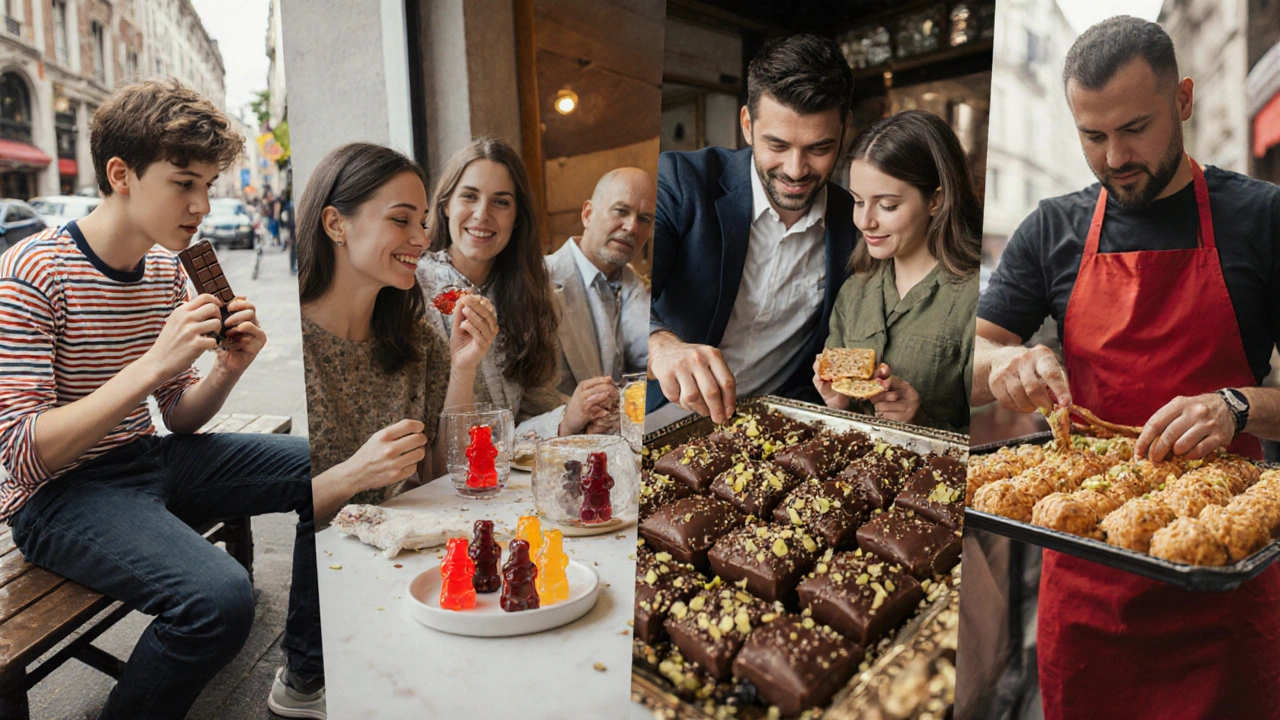
Which Nationality Consumes the Most Sweets? Global Per‑Capita Rankings
Discover which nationality eats the most sweets, why cultural habits matter, and what the health implications are. Includes data, comparisons, and practical tips.