Tomatoes are everywhere in Indian kitchens. They’re in curries, chutneys, soups, and even breakfast parathas. But if you’ve ever wondered whether they’re truly safe to eat-especially with all the talk about pesticides, ripening agents, and dirty produce-you’re not alone. The short answer? Yes, tomatoes are safe to eat in India. But not all tomatoes are the same, and knowing how to pick, clean, and cook them makes all the difference.
Why People Worry About Tomatoes in India
The fear isn’t baseless. Stories circulate about tomatoes being ripened with calcium carbide-a toxic chemical banned in India since 2011 but still used illegally in some places. Then there’s the pesticide issue. A 2023 study by the Food Safety and Standards Authority of India (FSSAI) found that 18% of tomato samples from wholesale markets had pesticide residues above legal limits. That sounds alarming, but here’s the real context: those numbers dropped by 40% compared to 2019, thanks to stricter testing and farmer education programs.
Most of the contaminated tomatoes come from unregulated street vendors or small local markets with no traceability. Supermarkets, organic stores, and even large chain grocers like Big Bazaar and Reliance Fresh now test their produce before stocking. Many farmers in Maharashtra, Karnataka, and Andhra Pradesh-India’s top tomato-growing states-are switching to certified organic methods or using bio-pesticides.
How to Spot Safe Tomatoes
You don’t need a lab to tell if a tomato is safe. Here’s what to look for:
- Color: Bright red, even skin. Avoid tomatoes with patches of yellow or green that look unnatural-those might’ve been chemically ripened.
- Smell: A ripe tomato should smell sweet and earthy near the stem. If it smells like nothing or has a sharp, chemical odor, leave it.
- Texture: Firm but slightly soft when gently squeezed. Overly hard tomatoes are often picked green and treated with ethylene gas or carbide.
- Stem area: Natural, slightly rough stems are good. Smooth, shiny stems can mean artificial ripening.
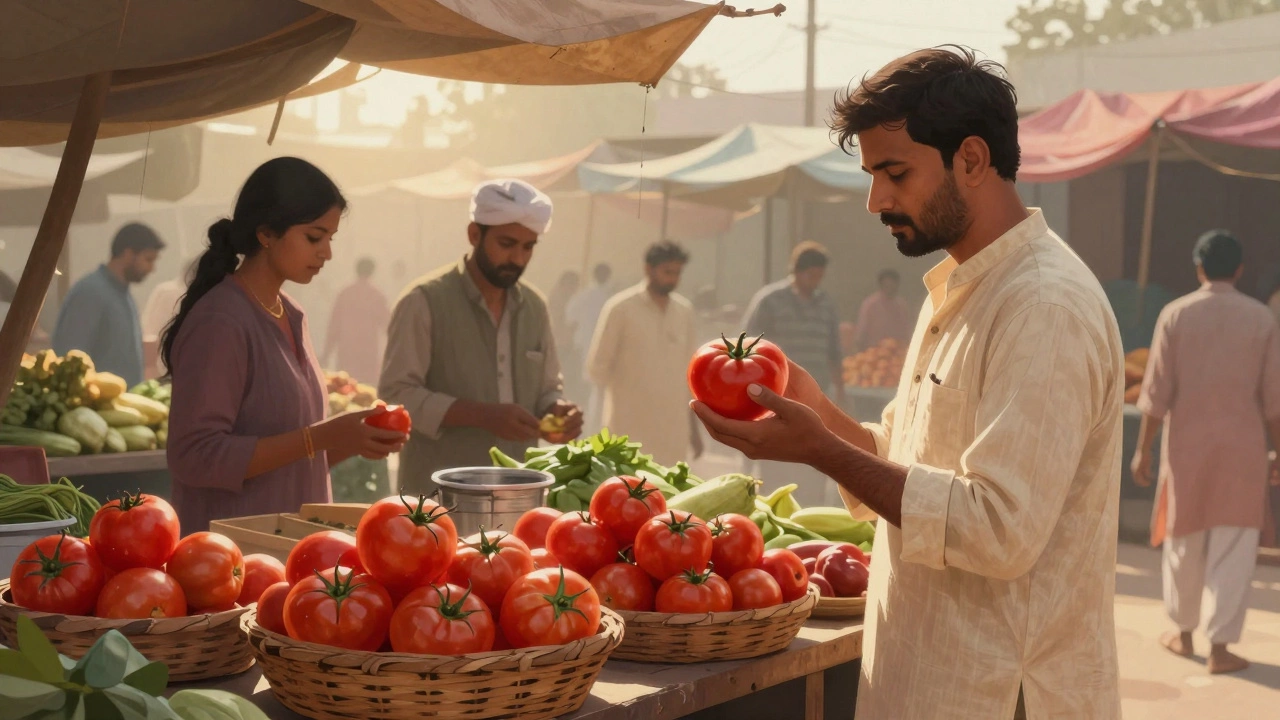
Buy from local farmers’ markets where you can ask where the tomatoes came from. In cities like Pune, Delhi, and Bengaluru, farmers’ markets have become popular for safe, traceable produce. Even small vendors who sell directly from their farms are often more careful about what they use.
Washing Tomatoes the Right Way
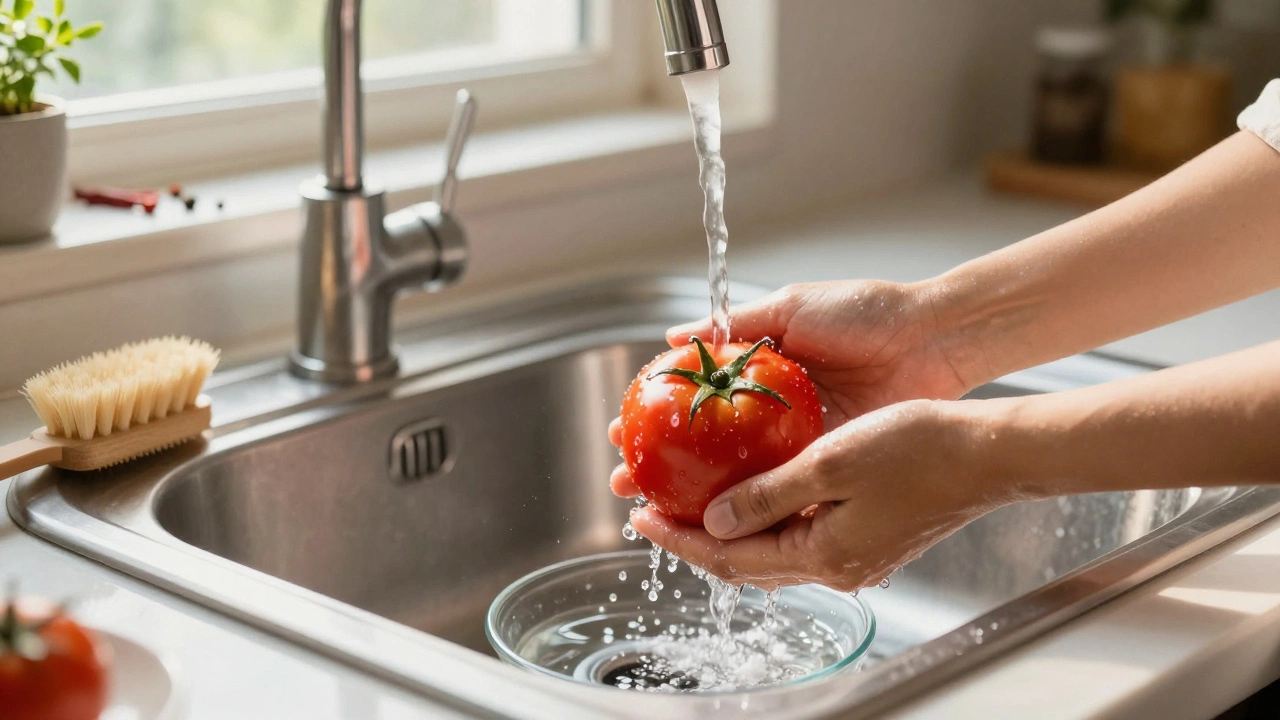
Washing with plain water isn’t enough. A 2022 study from the Indian Council of Agricultural Research found that soaking tomatoes in a 2% saltwater solution for 10 minutes removed 85% of surface pesticides. Vinegar works too-mix one part white vinegar to three parts water, soak for 15 minutes, then rinse under running water.
Scrubbing with a soft brush helps, especially on the stem area where dirt and chemicals cling. Don’t peel tomatoes unless you’re making a sauce or puree. Most nutrients are right under the skin.
Cooking Makes Them Safer
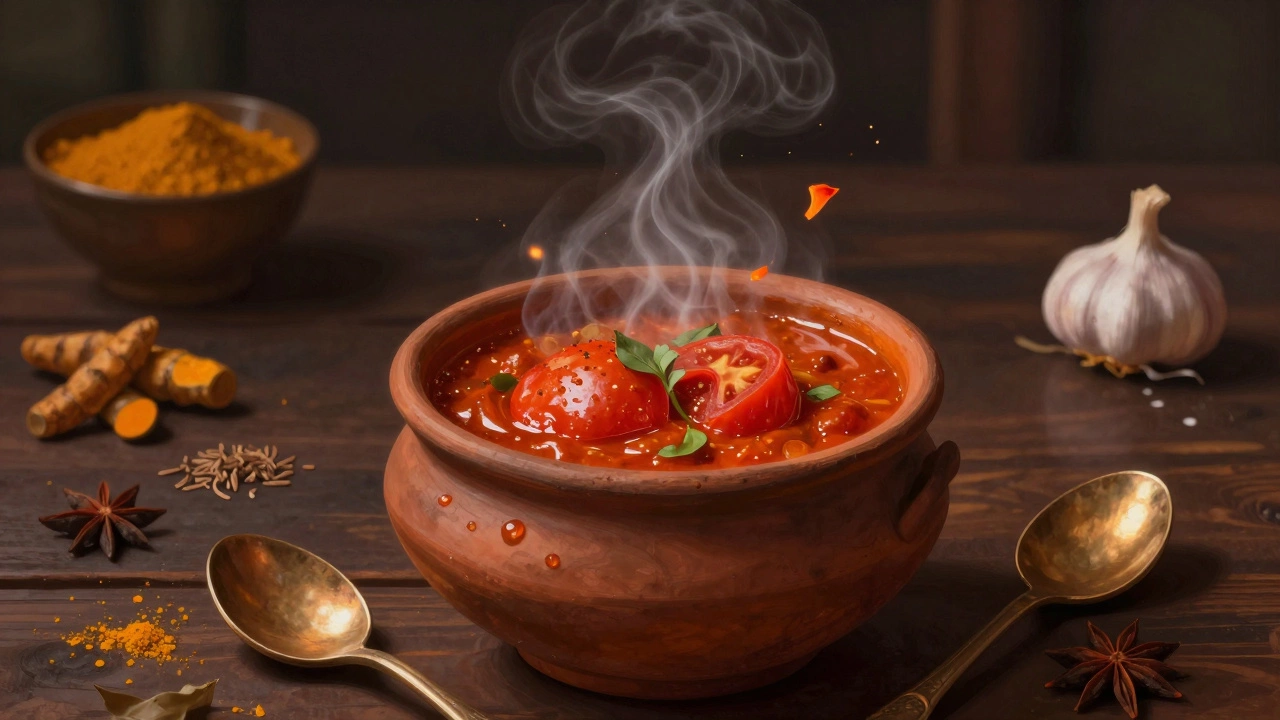
Heat kills bacteria and breaks down many pesticide residues. That’s why cooked tomatoes in Indian curries are far safer than raw ones. When you simmer tomatoes in oil with spices like turmeric, cumin, and garlic, you’re not just making flavor-you’re neutralizing potential contaminants.
Traditional Indian cooking methods naturally reduce risk. Tomato-based dishes like tamatar ka salan, rajma chawal with tomato gravy, or even simple tomato dal are cooked for 20-30 minutes. That’s long enough to degrade most chemical residues. Raw tomato salads are fine too, as long as you wash them properly.
Organic vs. Regular Tomatoes: Is It Worth It?
Organic tomatoes cost about 30-50% more in Indian cities. But are they worth it? For most people, the answer is: not always. A 2024 analysis by the Centre for Science and Environment showed that regular tomatoes from regulated markets had pesticide levels well below the danger threshold. The real risk isn’t the tomato-it’s the source.
If you’re cooking for babies, pregnant women, or elderly people with weak immunity, going organic or buying from certified farms (look for FSSAI’s ‘India Organic’ label) is a smart move. For everyday cooking, washing and cooking regular tomatoes properly is just as effective.
Tomatoes in Indian Recipes: A Safe Staple
Think of all the dishes you love: palak paneer with tomato base, masala dosa with tomato chutney, baingan bharta with tomatoes, or even a simple tomato rice. These recipes rely on tomatoes for flavor, color, and acidity. None of them require raw tomatoes unless it’s a salad or raita.
Even in street food-like pav bhaji or chaat-tomatoes are cooked or heavily seasoned. The heat and spices act as natural safeguards. If you’re eating at a busy stall, the turnover is high, so the tomatoes are fresh. Avoid places where tomatoes sit out in the sun all day without refrigeration.
What to Do If You’re Still Unsure
If you’re still nervous, here’s a simple rule: Buy from trusted sources, wash with saltwater, cook thoroughly. That’s it. You don’t need expensive gadgets or imported tomatoes. Indian tomatoes, grown in the right conditions and handled properly, are nutritious, flavorful, and safe.
And here’s a pro tip: grow your own. Even a single tomato plant on a balcony in Mumbai or Jaipur can give you a steady supply of clean, chemical-free fruit. Many urban families in India are doing this now-no pesticides, no transport, no worries.
Bottom Line
Tomatoes are not dangerous in India. They’re one of the most important ingredients in Indian cooking. The real issue isn’t the tomato-it’s the system around it. With better awareness, better washing, and smarter buying, you can enjoy tomatoes without fear. Every curry, every chutney, every plate of dal tadka with tomatoes is a taste of home-and it’s safe.
Are tomatoes in India treated with chemicals?
Some tomatoes, especially from unregulated sources, may be treated with calcium carbide or pesticides. But these practices are declining. Most tomatoes sold in supermarkets, farmers' markets, and certified stores are tested and safe. Washing and cooking reduce any risk significantly.
Can I eat raw tomatoes in India?
Yes, but only if they’re washed properly. Soak them in saltwater or vinegar water for 10-15 minutes, then rinse under running water. Avoid raw tomatoes from street vendors unless you’re sure of their source. Cooked tomatoes are always safer.
Do organic tomatoes taste better?
Many people say yes. Organic tomatoes often have more natural sweetness and less watery texture because they ripen slowly on the vine. But taste also depends on the variety and season. A ripe, locally grown regular tomato can taste better than a bland organic one shipped from far away.
Is it safe to give tomatoes to kids in India?
Yes, as long as they’re cooked or properly washed. For toddlers, pureeing cooked tomatoes into soups or khichdi is safest. Avoid raw tomato slices unless you’re certain of the source. FSSAI recommends washing all fruits and vegetables before giving them to children.
Which Indian states grow the safest tomatoes?
Maharashtra, Karnataka, Andhra Pradesh, and Telangana produce the most tomatoes. In recent years, farmers in these states have adopted FSSAI-certified practices. Look for tomatoes labeled with ‘FSSAI’ or ‘India Organic’-they’re more likely to be safe. Urban co-ops in Pune and Bengaluru also source from trusted farms.