Secret Spices in Biryani: What Makes It Taste Like Home
When you talk about secret spices in biryani, the hidden aromatic blend that turns rice into something unforgettable. It’s not just cumin and coriander—it’s the quiet players that make your nose twitch and your mouth water before you even take a bite. These aren’t the spices you find in a generic curry powder. They’re the ones passed down in families, whispered about in kitchens, and sometimes hoarded like treasure. Think whole cardamom pods cracked open just before frying, or a single star anise dropped into hot oil to release its clove-like sweetness. These aren’t garnishes. They’re the foundation.
The real magic happens when these spices meet heat and time. cinnamon sticks, used whole, not ground, to slowly infuse warmth without overpowering float in the oil as the onions brown. mace, the lacy outer shell of nutmeg, often mistaken for a luxury add-on but actually essential for depth gives that subtle, almost floral note you can’t name but miss the second it’s gone. And then there’s saffron, not just for color, but for the way it pulls the whole dish together with its earthy honey aroma. You don’t need a pound of it—just a few threads soaked in warm milk, then drizzled over the rice before the lid goes on.
People think biryani is about the meat or the rice. It’s not. It’s about the layering. The spices go in at three different stages: first, bloomed in oil to wake them up; second, mixed into the marinated meat to seep in; and third, scattered between the rice layers to steam into the final aroma. That’s why your biryani tastes different from the one down the street. It’s not the recipe—it’s the rhythm of the spices.
You’ll find some of these same spices hiding in the posts below. One explains why potatoes show up in biryani—not just for bulk, but to soak up flavor. Another breaks down the green garnish you see on top, and how mint and cilantro aren’t just decoration—they’re part of the spice story too. There’s even a post on how long to bake biryani so the spices don’t burn but still bloom. This isn’t about following a checklist. It’s about understanding why each spice does what it does, so you can tweak, trust, and make it your own.
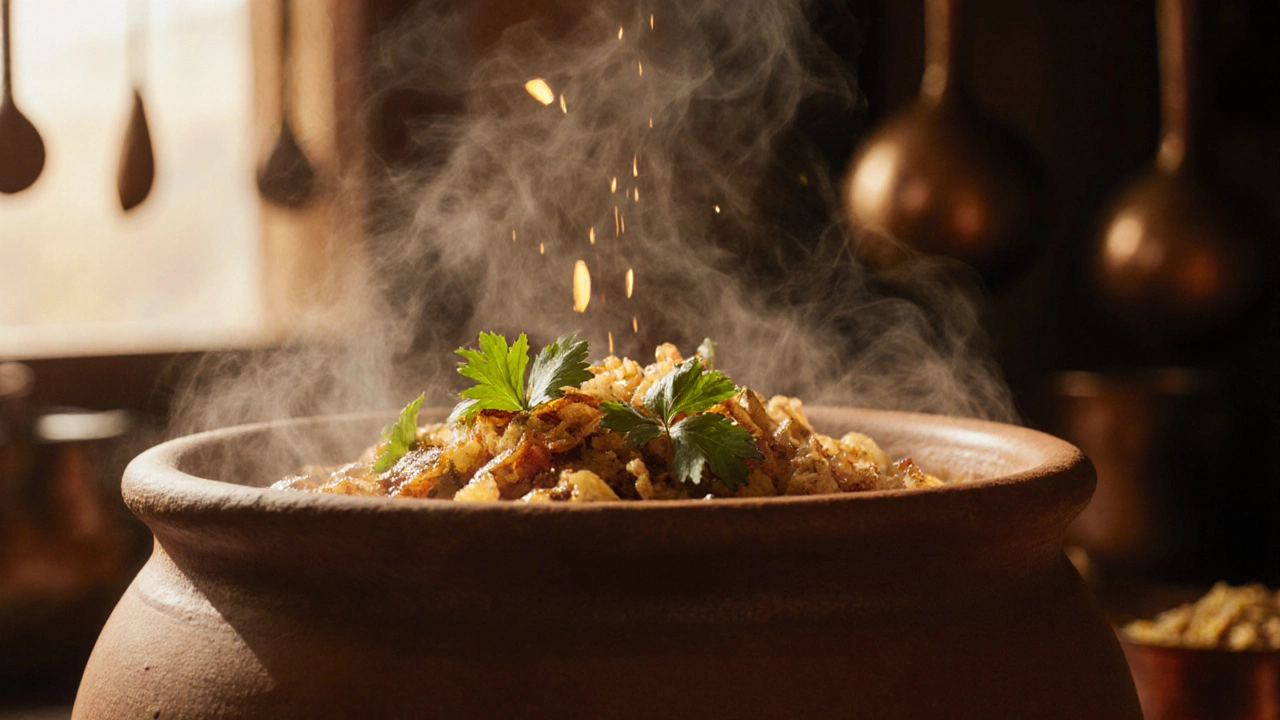
What Is the Secret Smell of Biryani? The Real Aromas Behind the Dish
The secret smell of biryani comes from layered spices, slow cooking, and hidden ingredients like kewra water and saffron-not just curry powder. Learn what makes it unforgettable.