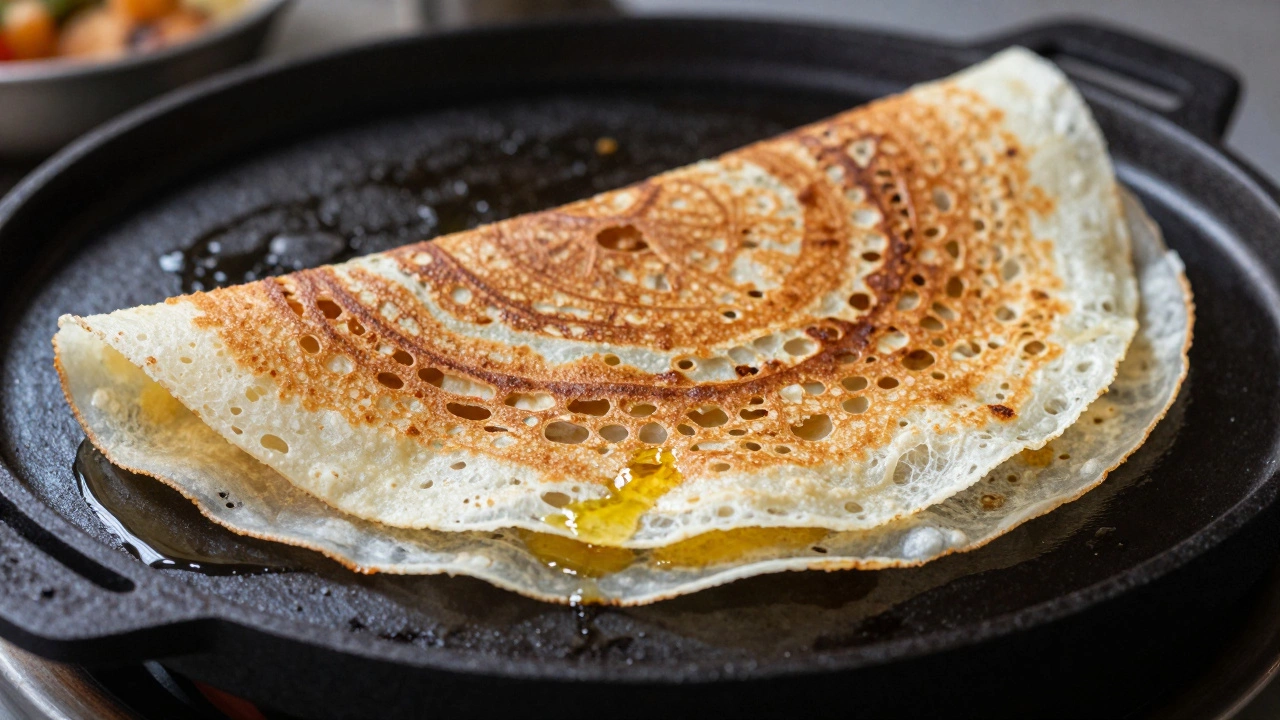
Dosa Batter Ratio Calculator
Calculate the perfect amount of rice for your urad dal based on desired dosa texture.
The Golden Rule of Dosa Batter Ratios
If you have exactly three cups of urad dal (black gram), the short answer is that you need between six and nine cups of rice. However, throwing those ingredients together without understanding the mechanics will likely result in a dense, unfermented mess. The magic of a perfect dosa lies not just in the quantity, but in the specific types of rice and dal you choose, and how they interact during fermentation.
Most traditional South Indian households use a 1:2 or 1:3 ratio of dal to rice. This means for every one cup of dal, you use two or three cups of rice. So, with your three cups of dal, aiming for six cups (for a softer, thicker dosa) or nine cups (for a thin, crisp paper dosa) is the standard approach. But why does this matter so much? Because the dal provides the protein and the yeast-like fermentation power, while the rice provides the starch structure. Too much dal makes the batter sour and dark; too little dal means it won’t rise at all.
Why Your Choice of Rice Changes Everything
You cannot simply grab any bag of white rice from the supermarket and expect success. The type of rice dictates the texture, color, and crispiness of your final product. If you are using three cups of urad dal, here is how the rice choice shifts the outcome:
- Idli Rice (Parboiled Sona Masoori): This is the gold standard. It is parboiled, meaning it has been steamed before milling. This process gelatinizes the starch, making the batter smoother and the dosa lighter. For 3 cups of dal, use 6-7 cups of Idli rice.
- Raw Sona Masoori (Short-grain non-basmati): This produces a darker, crunchier dosa. It ferments faster but can turn slightly sour if left too long. Use 8-9 cups of raw rice for 3 cups of dal to balance the strong flavor of the dal.
- Basmati Rice (Long-grain aromatic): Avoid this for traditional dosas. It breaks down too easily during grinding, creating a gummy texture that doesn't spread well. If you must use it, mix it with raw rice.
A pro tip from experienced cooks: add half a cup of poha (flattened rice) to your mix. Poha acts as a tenderizer. It contains less gluten-forming proteins than wheat and helps the batter ferment more evenly, ensuring your dosa stays soft even after it cools.
The Critical Role of Urad Dal Quality
Since you are starting with a significant amount of dal (three cups), the quality of that dal is paramount. Not all black grams are created equal. You want Whole Black Gram with skins removed, often labeled as "split skinless urad dal." The skins contain tannins that can inhibit fermentation and give the batter a muddy gray color instead of a clean white-yellow hue.
Here is a common mistake: using too much salt in the dal wash. Salt draws out moisture via osmosis, which can dehydrate the dal grains before they even hit the grinder. Rinse your three cups of dal thoroughly until the water runs clear, but do not soak it in salted water. Soak the dal separately from the rice for about 4 to 5 hours. Dal takes longer to soften than rice, so giving them separate soaking times ensures both grind to a fine, fluffy paste.
| Dosa Type | Rice Amount | Rice Type Recommended | Texture Result |
|---|---|---|---|
| Soft & Thick (Neer Dosa style) | 4 - 5 Cups | Idli Rice + Poha | Cake-like, very soft |
| Standard Home Dosa | 6 - 7 Cups | Idli Rice or Mix | Balanced chew and crisp |
| Paper Crisp Dosa | 8 - 9 Cups | Raw Sona Masoori | Thin, shatteringly crisp |
Grinding Technique: The Secret to Fluffiness
Having the right ratio is only half the battle. How you grind the batter determines whether it rises. With three cups of dal, you are dealing with a large volume of protein-rich paste. You must grind the dal first. Add ice-cold water gradually while grinding. The friction from the grinder generates heat, and heat kills the beneficial bacteria needed for fermentation. Keeping the mixture cool ensures the batter becomes airy and voluminous.
Once the dal is ground to a smooth, ribbon-like consistency (it should fall off the spoon in continuous ribbons, not droplets), transfer it to a large vessel. Then grind the rice. Rice requires less water than dal. Grind it to a coarse, slightly grainy texture. Do not over-grind the rice into a slurry; those tiny grains provide the necessary roughness for the dosa to crisp up on the griddle.
Mix the two batters together. At this stage, do not add salt. Adding salt immediately can slow down fermentation by inhibiting bacterial activity. Let the batter rest for at least 12 to 18 hours in a warm place. If you live in a cooler climate like Wellington, New Zealand, where temperatures rarely exceed 20°C in winter, your batter might struggle to rise. In such cases, place the bowl in an oven with just the light on, or near a radiator, to maintain a temperature around 25-30°C.
Troubleshooting Common Fermentation Issues
If your batter hasn't doubled in size after 18 hours, don't panic. Here is how to diagnose the problem based on your inputs:
- Too Cold: If the kitchen is below 20°C, fermentation slows drastically. Move the batter to a warmer spot. You can also add a pinch of baking soda (not powder) to help lift it mechanically, though this changes the flavor slightly.
- Too Much Water: If the batter looks watery and spreads too thin before cooking, it may be diluted. Add a cup of finely ground roasted chana dal (Bengal gram) to thicken it and aid rising.
- Wrong Dal: If you used skinned dal but it was old or stored improperly, the natural yeasts may be dead. Next time, buy fresh dal from a reputable source. Fresh dal has active enzymes that kickstart fermentation.
When the batter is ready, it should smell slightly tangy, not rotten. Small bubbles should be visible on the surface. Stir gently to incorporate air, then add salt to taste. Now, heat your cast iron skillet (tawa) until a drop of water sizzles and evaporates instantly. Pour a ladle of batter, swirl quickly, drizzle oil around the edges, and cover with a lid for 2 minutes. The steam traps heat, cooking the top layer while the bottom crisps. Uncover for the last minute to let excess moisture escape, ensuring maximum crunch.
Variations for Dietary Needs
Not everyone can consume gluten or wants to stick to traditional ratios. If you are looking for a healthier alternative, you can substitute some of the rice with quinoa (gluten-free ancient grain) or millet (finger millet/ragi). However, these grains absorb water differently. For every cup of millet added, reduce the water by 10%. Millet-based dosas tend to be denser and nuttier. They pair beautifully with coconut chutney, which cuts through the earthiness of the grain.
For those avoiding lentils due to allergies, you can replace the urad dal with chickpea flour (besan). Use a 1:1 ratio of besan to rice. Note that besan does not ferment the same way dal does, so the batter will be flatter and more pancake-like. These are delicious but lack the signature puffiness of a traditional dosa.
Can I use brown rice for dosa batter?
Yes, but you must soak brown rice overnight because it is much harder than white rice. Brown rice retains the bran layer, which adds fiber and nutrients but results in a darker, grittier dosa. Use a 1:2 ratio with urad dal. The fermentation time may need to be extended by 4-6 hours due to the tougher grain structure.
Why did my dosa batter turn grey?
Grey batter usually indicates oxidation or the presence of dal skins. Ensure you are using split, skinless urad dal. Also, avoid using iron vessels for mixing unless they are well-seasoned, as iron can react with the acids in the fermented batter, causing discoloration. Plastic or glass containers are safer for fermentation.
How long can I store dosa batter in the fridge?
Fermented dosa batter lasts up to 5 days in the refrigerator. The cold slows down fermentation, preserving the taste. However, the batter will become firmer. Before cooking, let it come to room temperature for an hour and stir in a little warm water to achieve the right pouring consistency. Do not freeze fermented batter as it ruins the texture.
What is the best water temperature for grinding?
Always use ice-cold water. Friction from the grinder blades heats up the batter, which can kill the natural yeasts responsible for fermentation. Cold water keeps the batter cool, resulting in a fluffier, better-risen dosa. If your kitchen is hot, add ice cubes directly into the mixer jar while grinding the dal.
Can I make dosa batter without a heavy-duty mixer grinder?
It is challenging but possible. You can use a high-speed blender, but you may need to grind in small batches to avoid overheating. Alternatively, traditional stone grinding (wet mill) produces the best texture because it generates minimal heat. If using a regular blender, pulse frequently and scrape down the sides to ensure even grinding.