Dosa Batter Safety Checker
Is Your Dosa Batter Safe to Eat?
You left your dosa batter out for a few extra days, hoping it would get extra sour and fluffy. Now it smells like a mix of yogurt and old cheese, bubbles are bursting on the surface, and the texture feels a little slimy. You pause. Over-fermented dosa batter-is it safe to eat, or should you toss it?
What does over-fermented dosa batter look and smell like?
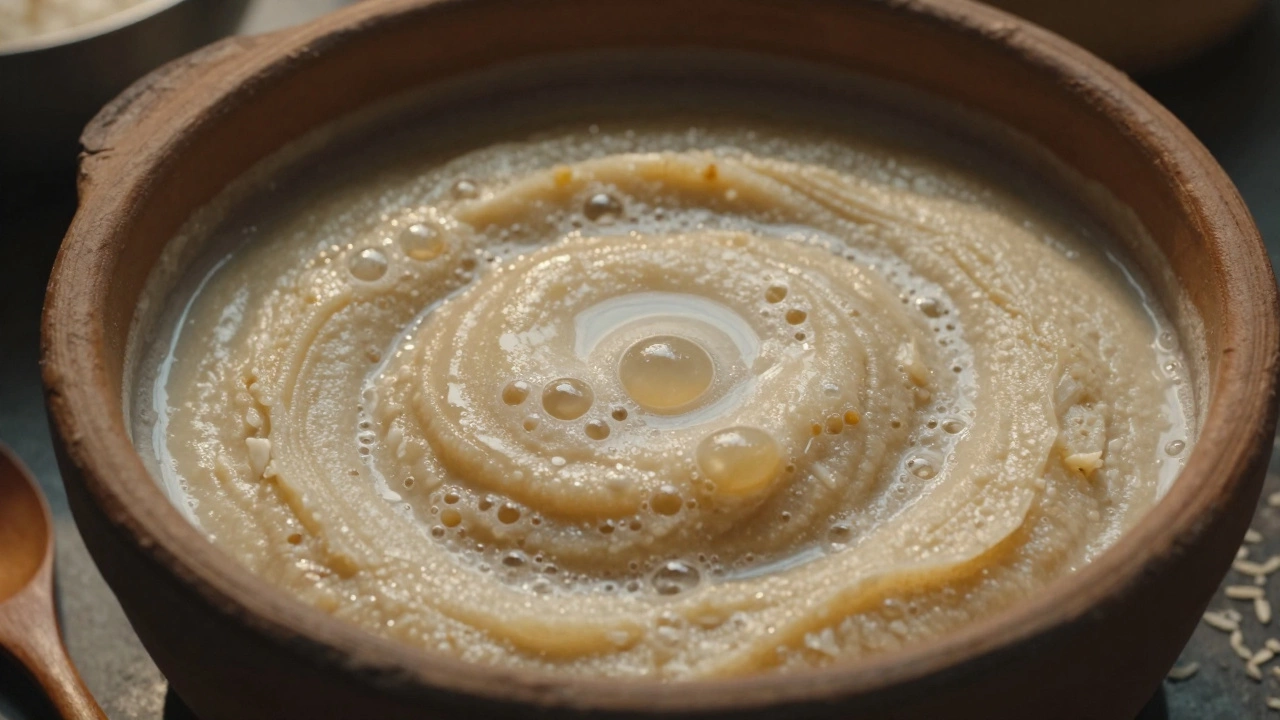
Normal fermented dosa batter should smell tangy, like yogurt or sourdough bread. It should be bubbly, slightly puffy, and have a pleasant sour aroma. Over-fermented batter takes this further. It smells sharp, almost alcoholic, like beer gone bad. The bubbles are larger and more aggressive. The batter may separate into layers-liquid on top, thick paste below. It might even develop a thin white film or faint mold spots.
If you see green, black, or fuzzy mold, throw it out. That’s not fermentation-that’s spoilage. But a white film? That’s usually kahm yeast, harmless but unpleasant. It’s not dangerous, but it’ll ruin the flavor. Scoop it off if you want to try saving the batter.
Why does dosa batter over-ferment?
Dosa batter ferments because wild bacteria and yeast feed on the starch and sugars in rice and urad dal. In warm climates (like South India), this takes 8-12 hours. In cooler places-like Wellington in winter-it can take 24-36 hours. If you leave it too long, the lactic acid bacteria keep producing acid, and the yeast keeps making alcohol and carbon dioxide.
Over-fermentation happens when:
- You ferment it longer than 24 hours at room temperature
- You use too much urad dal (it ferments faster than rice)
- You kept it in a too-warm spot, like near the oven or on top of the fridge
- You didn’t refrigerate it after the first fermentation
There’s no magic timer. It’s about smell, texture, and how it behaves when you stir it. If it collapses after rising, or smells like vinegar and rotten eggs, it’s past its prime.
Is over-fermented dosa batter dangerous?
No, not if it’s just sour and smells strong but shows no mold. The acid produced during fermentation-lactic acid and acetic acid-is actually protective. It lowers the pH, killing off harmful bacteria like salmonella or E. coli. That’s why traditional fermented foods like kimchi, sauerkraut, and dosa batter have been eaten safely for centuries.
Studies show that properly fermented batter reduces harmful microbes by over 99% within 12 hours. Even after 48 hours, the acidity keeps pathogens at bay. So if it smells sour but clean, and there’s no mold, it’s safe.
But here’s the catch: safety doesn’t mean quality. Over-fermented batter can make you feel bloated or give you heartburn. The high acidity can irritate your stomach, especially if you’re sensitive. And the taste? It’ll be bitter, sharp, and flat-no nutty, earthy depth left. Your dosas might taste like vinegar with a hint of alcohol.
Can you fix over-fermented dosa batter?
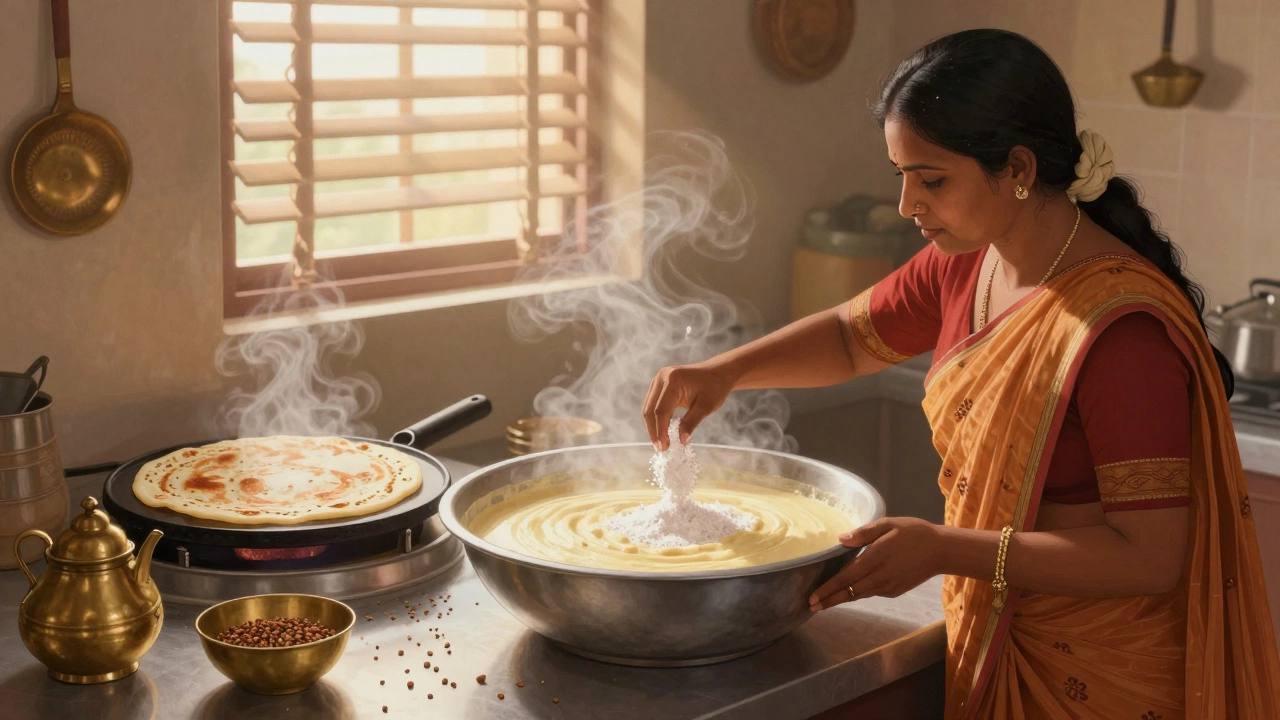
You can’t reverse fermentation, but you can salvage it.
- Stir it well to release excess gas
- Add 1-2 tablespoons of fresh rice flour or all-purpose flour
- Stir in a pinch of baking soda (¼ teaspoon max)
- Let it rest for 30 minutes before cooking
The flour dilutes the acidity. Baking soda neutralizes some of the acid and helps the batter rise again. It won’t taste like fresh batter, but it’ll cook into decent dosas. Skip the baking soda if you’re on a low-sodium diet.
Another trick: mix half over-fermented batter with half fresh batter. This balances the flavor and texture. Many home cooks in Chennai and Bangalore do this regularly.
What happens if you eat it without fixing it?
If you cook and eat over-fermented batter as-is, your dosas will be thin, crispy, and very sour. They might even taste metallic. The texture will be brittle, not soft and chewy. You’ll notice the sourness hits your tongue fast, then lingers.
Some people love this. In parts of Tamil Nadu, people deliberately ferment batter for 3 days to make ulthapam-a super sour, thick pancake. It’s an acquired taste. But if you’re not used to it, you might get a stomachache or feel bloated.
There’s no evidence that over-fermented batter causes food poisoning if it’s mold-free. But if you’re pregnant, elderly, or have a weak immune system, avoid it. Better safe than sorry.
How to prevent over-fermentation next time
Here’s what works:
- Use a 3:1 or 4:1 ratio of rice to urad dal. More rice = slower fermentation
- Soak rice and dal separately. Urad dal ferments faster, so soaking them together can throw off timing
- Ferment in a warm spot (28-32°C). A turned-off oven with the light on works
- Check every 8 hours after the first 12. Don’t leave it unattended for more than 24 hours
- Refrigerate after fermentation if you’re not cooking right away. Cold slows fermentation
Pro tip: Add a tablespoon of fenugreek seeds to the soaking dal. It helps with fermentation and gives a better flavor. It’s a traditional trick used by street vendors in Bengaluru.
What to do with spoiled batter
If you see mold-any color, fuzzy or powdery-pitch it. Don’t scrape it off. Mold can spread invisible roots into the batter. Even if you remove the surface, the toxins are still there.
Don’t compost it unless you’re sure your compost reaches high heat. Fermented batter can attract flies and pests.
Instead, pour it down the drain with plenty of water. Rinse the container well with hot soapy water. Let it dry completely before using it again.
When in doubt, throw it out
There’s no shame in tossing fermented batter. It’s just rice and lentils. You’ll save money on stomach meds and avoid the disappointment of ruined dosas. The best dosas come from batter that’s just right-not too young, not too old.
Next time, write the start date on the container. Set a phone reminder. Fermenting batter isn’t magic. It’s science. And science has rules.