Ayurvedic Curd Suitability Checker
Result:
Ever noticed how your grandmother refuses to serve curd at night? Or how Ayurvedic practitioners warn against it during certain seasons? It’s not just tradition - it’s science wrapped in centuries of observation. Ayurveda doesn’t ban curd outright, but it does say curd can be harmful under specific conditions. And if you’re making homemade paneer as a replacement, you’re not just cooking - you’re following a deeper wisdom.
What Ayurveda Says About Curd
Ayurveda classifies foods by their energy, not just their nutrients. Curd, or dahi, is considered heavy, cooling, and sticky. That sounds harmless, right? But in Ayurvedic terms, heavy means slow to digest. Cooling means it can dampen your digestive fire - called agni. And sticky? That’s the problem. It increases kapha, the dosha linked to mucus, sluggishness, and congestion.
According to Charaka Samhita, one of the oldest Ayurvedic texts, curd is best avoided in the evening, during winter, or if you already have a cold, cough, or asthma. Why? Because your body’s ability to process fats and proteins drops when temperatures fall or when your system is already overloaded with mucus. Curd turns into a thick, sticky residue that lingers in the throat and lungs. It doesn’t just sit in your stomach - it settles in your sinuses.
Why Homemade Paneer Is the Better Choice
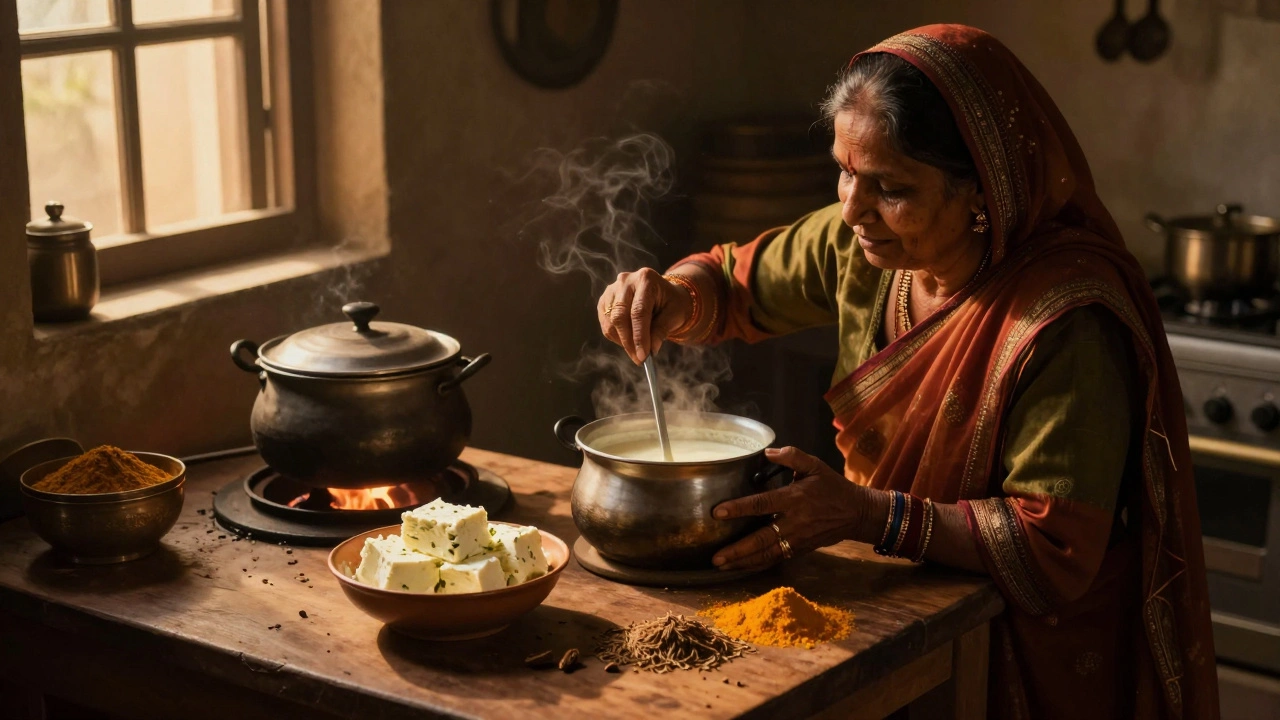
If you’re cutting out curd, you still need protein. That’s where homemade paneer steps in. Unlike curd, paneer is made by boiling milk and curdling it with lemon juice or vinegar, then pressing out the whey. This removes most of the lactic acid and liquid content. What’s left? A dense, clean protein block - easy to digest, low in moisture, and warming to the body.
Paneer doesn’t increase kapha the way curd does. It’s still dairy, yes - but it’s transformed. The process of heating and pressing changes its nature. Ayurveda calls this “processing” - and it’s why fermented foods like curd, cheese, and yogurt get warnings, while fresh, cooked dairy like paneer or ghee are encouraged.
Think of it this way: curd is milk that’s been left to sit. Paneer is milk that’s been cooked, purified, and reshaped. One is passive. The other is intentional.
When Curd Is Actually Okay
Ayurveda isn’t dogmatic. It’s context-driven. Curd isn’t evil - it’s just misused. Here’s when it’s fine:
- During summer - when your digestion is strong and you need cooling foods
- When mixed with sugar, honey, or ginger - these counteract its heaviness
- At lunchtime - when agni is at its peak
- If it’s fresh, homemade, and not sour - store-bought curd is often over-fermented and loaded with additives
Many people in rural India still eat curd with a pinch of black salt and roasted cumin seeds. That’s not a snack - it’s a digestive aid. The spices light up agni and break down the fat. Without them, curd just sits.
Why You Might Be Feeling Bloated After Curd
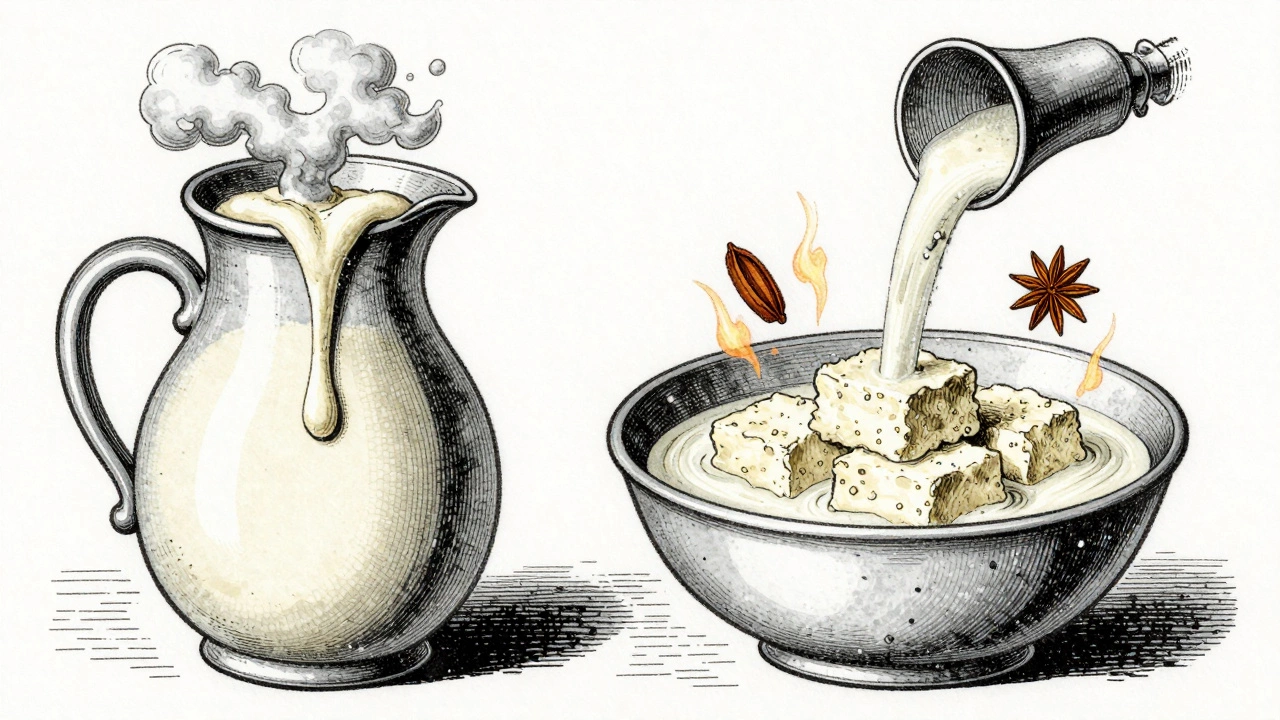
If you’ve ever felt bloated, heavy, or foggy after eating curd, you’re not imagining it. Modern research backs Ayurveda here. Curd contains lactose - and about 65% of the global population has some degree of lactose intolerance. But even if you’re not lactose intolerant, your body might struggle with the bacterial load.
Store-bought curd often has added cultures that aren’t native to your gut. Homemade curd is better, but still acidic. That acidity can irritate the gut lining over time, especially if you’re already stressed, sick, or eating late.
Paneer, on the other hand, has almost no lactose. The whey - where most lactose lives - is drained away. That’s why paneer is often recommended for people with sensitive stomachs, irritable bowel syndrome, or chronic inflammation.
How to Make Paneer the Ayurvedic Way
Making paneer isn’t just about cheese. It’s about intention. Here’s how to do it right:
- Use full-fat, organic cow’s milk - goat or buffalo milk is heavier and harder to digest
- Heat the milk slowly until it just starts to bubble - don’t boil hard
- Add lemon juice or vinegar - one tablespoon per liter. Stir gently once
- Let it sit for 10 minutes. The curds will separate cleanly
- Strain through a muslin cloth - don’t squeeze too hard
- Press lightly under a weight for 20 minutes - you want firm, not rock-hard
Don’t salt it. Ayurveda says salt increases water retention. Instead, flavor paneer with turmeric, black pepper, or asafoetida when cooking. These spices boost digestion and reduce inflammation.

What to Eat Instead of Curd at Night
If you’re avoiding curd at night, what should you eat? Ayurveda recommends light, warm, easily digested foods:
- Warm milk with a pinch of turmeric and cardamom - it’s calming and nourishing
- Boiled rice with ghee - simple, grounding, and soothing
- Steamed vegetables with cumin and coriander - light on the stomach
- Herbal teas like ginger-lemon or fennel
- Small portions of homemade paneer - grilled or lightly sautéed with spices
These options don’t just fill you - they prepare your body for rest. Curd might feel comforting, but it doesn’t support sleep. It keeps your digestion working when it should be resting.
The Bigger Picture: Food as Medicine
Ayurveda doesn’t tell you what to eat because it’s old. It tells you what to eat because it works. The same milk that turns sour and sticky into curd becomes firm and clean as paneer. One is a product of time. The other is a product of care.
When you make paneer at home, you’re not just making cheese. You’re choosing a path that honors your body’s rhythm. You’re rejecting the convenience of processed foods and embracing the wisdom of transformation.
It’s why, in villages across India, families still make paneer every few days - not because it’s trendy, but because they’ve seen the difference. Less bloating. Clearer skin. Better sleep. No more nighttime coughs.
You don’t need to follow every rule. But if you’ve been struggling with digestion, mucus, or fatigue after dairy - maybe it’s not the dairy. Maybe it’s the form.