Ladoo Quantity Calculator
Calculate the exact amounts of ingredients needed for besan ladoo based on how many people you're serving. The classic recipe serves 12 people.
Adjusted Ingredients
Pro Tip: For best results, roast gram flour slowly over medium heat until golden-brown and nutty smelling. This step is crucial for authentic texture and flavor.
Ask anyone who’s tasted Indian sweets what the most famous one is, and chances are they’ll say ladoo. Not just because it’s sweet, but because it’s everywhere-in homes, temples, festivals, and weddings. It’s the first sweet offered to guests, the go-to gift during Diwali, and the treat that marks every big moment in an Indian life. But what makes ladoo stand out among hundreds of other Indian desserts? It’s not just flavor. It’s history, texture, and meaning rolled into one small, round bite.
What Exactly Is a Ladoo?
A ladoo is a round, ball-shaped sweet made from flour, sugar, ghee, and often nuts or seeds. It’s not one recipe-it’s a family of sweets. The most common types include besan ladoo (made with gram flour), coconut ladoo, attu ladoo (from roasted flour), and jalebi ladoo (a modern twist). But the classic besan ladoo, with its nutty, buttery richness and melt-in-your-mouth texture, is the one most Indians recognize instantly.
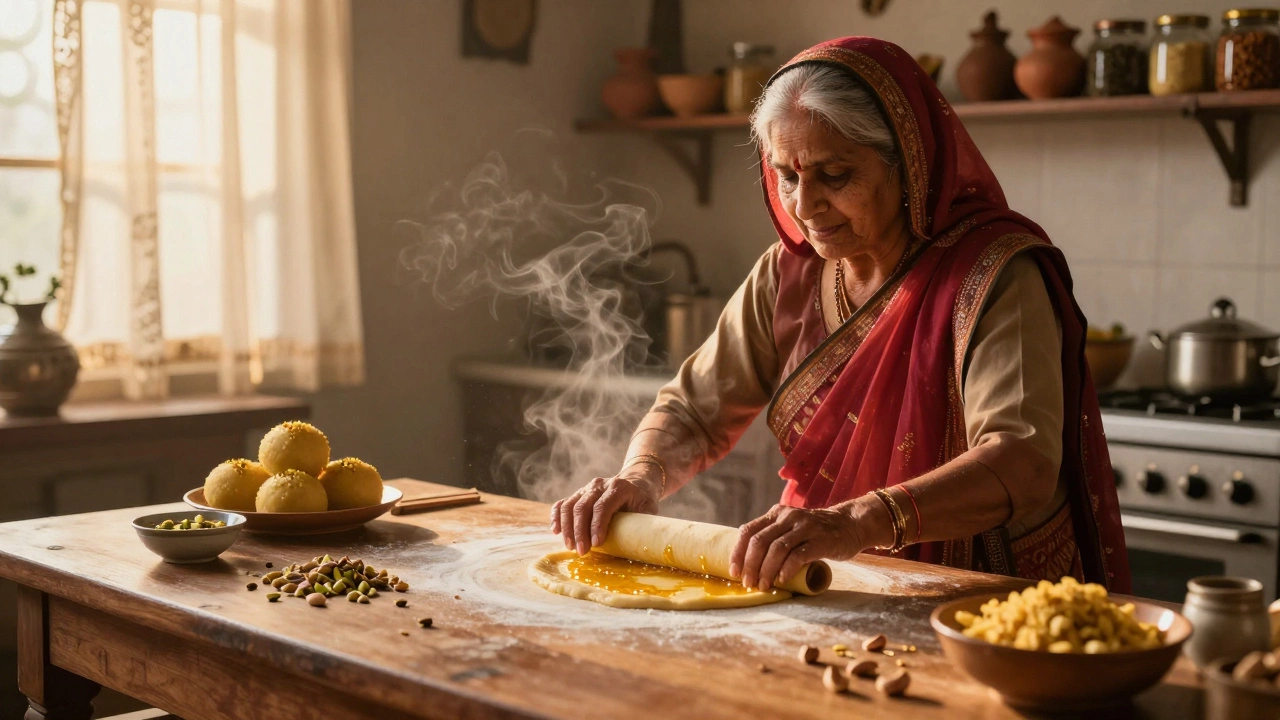
It’s made by roasting gram flour in ghee until it turns golden and smells like toasted almonds. Then sugar and cardamom are mixed in, followed by chopped cashews or pistachios. The warm mixture is rolled into balls while still soft. No molds, no baking-just hands shaping tradition.
Why Ladoo Dominates Indian Sweet Culture
Other sweets like jalebi, gulab jamun, or rasgulla are popular, but none match ladoo’s cultural footprint. Why? Because ladoo is portable, shelf-stable, and deeply symbolic.
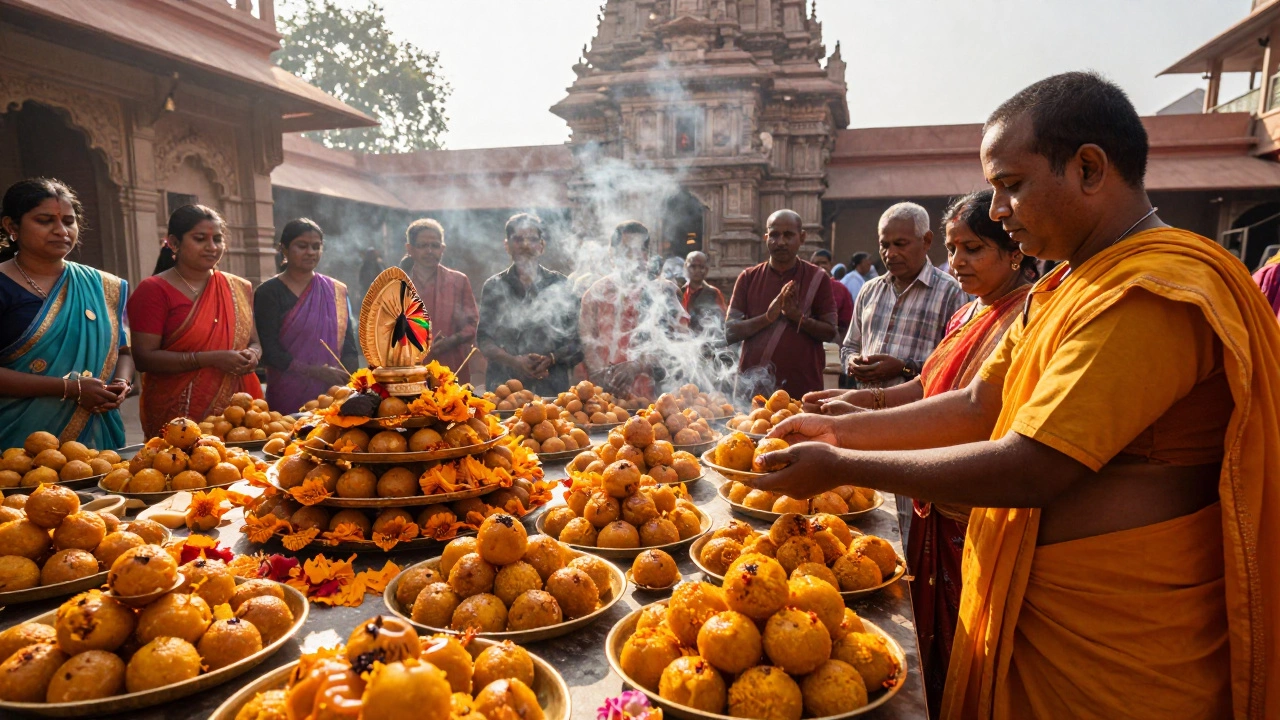
During Diwali, families prepare dozens of ladoos to give as gifts. In temples, ladoos are offered to deities-like the famous prasadam at Tirupati, where over 100,000 ladoos are distributed daily. At weddings, ladoos are handed out to guests as a sign of good fortune. Even in hospitals, ladoos are given to new mothers as a traditional postpartum food.
Unlike jalebi, which needs to be eaten fresh, or rasgulla, which requires refrigeration, ladoos last for weeks at room temperature. That’s why they became the default sweet for travel, festivals, and celebrations. You can pack a box of ladoos and carry them across the country without worrying about spoilage.
The Science Behind the Texture
What makes a good ladoo? It’s all in the roasting. If the gram flour isn’t roasted long enough, the ladoo tastes raw and gritty. If it’s roasted too long, it turns bitter. The sweet spot is about 15-20 minutes on medium heat, stirring constantly until the flour releases its oils and turns a deep gold.
The ghee ratio matters too. Too little, and the ladoo crumbles. Too much, and it turns greasy. Most traditional recipes use 1 cup of ghee for every 2 cups of gram flour. Sugar is added while the mixture is still warm-too early, and it melts into syrup; too late, and it won’t bind.
Real ladoo doesn’t need binders like milk or eggs. The starch in the roasted flour and the fat in the ghee naturally hold everything together. That’s why homemade ladoo tastes different from store-bought versions-they often use condensed milk or preservatives to speed things up.
Regional Variations You Should Know
While besan ladoo is the national favorite, every region has its own twist.
- In South India, coconut ladoos are common-made with freshly grated coconut, jaggery, and cardamom. They’re less sweet and have a fibrous, chewy texture.
- In West Bengal, you’ll find chhena ladoo, made from cottage cheese, sugar, and saffron. It’s softer and creamier than besan ladoo.
- In Rajasthan, gond ladoo is popular during winter. It includes edible gum (gond) for warmth and energy, often given to new mothers.
- In Punjab, sooji ladoo (semolina) is common, with a grainier texture and a hint of rose water.
- In Maharashtra, til ladoo (sesame and jaggery) is eaten during Makar Sankranti. It’s dark, nutty, and packed with iron.
These aren’t just flavor changes-they’re cultural adaptations. Climate, local ingredients, and religious practices all shape how ladoo is made.
How It Compares to Other Indian Sweets
Let’s be clear: ladoo isn’t the only sweet that matters. But it’s the only one that works in every context.
| Sweet | Texture | Shelf Life | Cultural Use | Preparation Time |
|---|---|---|---|---|
| Ladoo | Melting, dense, crumbly | 3-4 weeks | Gifts, festivals, religious offerings | 30-45 minutes |
| Jalebi | Crispy outside, syrupy inside | 1-2 days | Breakfast, street food | 1 hour+ |
| Gulab Jamun | Spongy, soaked in syrup | 5-7 days | Weddings, parties | 1.5 hours |
| Rasgulla | Soft, spongy, juicy | 3-5 days (refrigerated) | Regional festivals | 2 hours |
| Kheer | Creamy, porridge-like | 3-4 days | Religious rituals, postpartum | 1 hour |
Notice how ladoo wins on shelf life and versatility. Jalebi is fun to eat but messy. Gulab jamun is rich but needs refrigeration. Rasgulla is delicate and regional. Ladoo? It travels. It lasts. It fits.
Modern Twists and Global Appeal
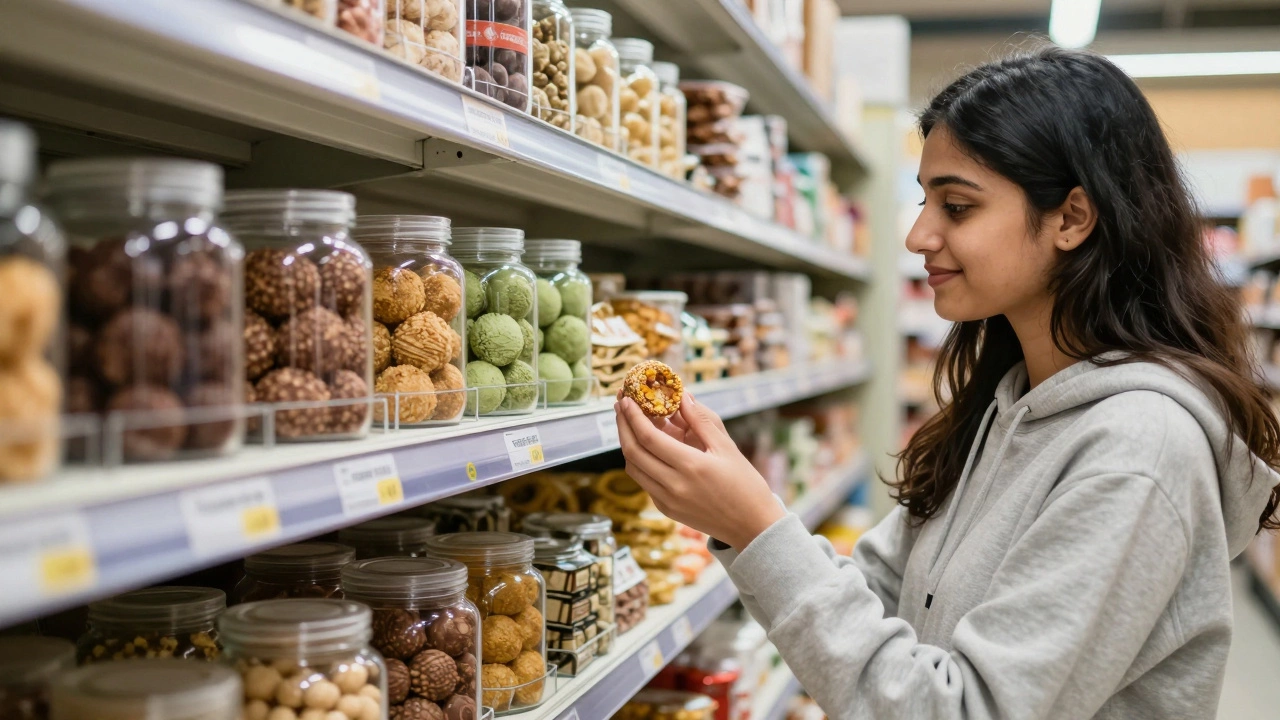
Today, ladoo isn’t stuck in tradition. You’ll find chocolate ladoo, matcha ladoo, and even protein ladoo made with oats and peanut butter. In the U.S., Indian grocery stores sell pre-made ladoo in freezer sections. In London, cafes serve ladoo ice cream.
But the purists still insist: nothing beats the classic besan ladoo made at home with freshly roasted flour and homemade ghee. That’s why, even in 2026, millions of Indian households still make ladoo the old way-because it’s not just dessert. It’s memory. It’s love.
How to Make the Perfect Besan Ladoo at Home
Want to try making it? Here’s the simple, tested version:
- Roast 1 cup of gram flour in 1/2 cup of ghee over medium heat for 15-20 minutes, stirring constantly until it turns golden and smells nutty.
- Remove from heat and let cool slightly-warm but not hot.
- Add 3/4 cup of powdered sugar and 1/2 teaspoon of ground cardamom. Mix well.
- Stir in 2 tablespoons of chopped cashews or pistachios.
- Once cool enough to handle, roll into 1-inch balls.
- Let sit for 30 minutes before serving. They’ll firm up.
Store in an airtight container at room temperature. They’ll last a month. If they don’t get eaten before then, you’re doing something wrong.
Is ladoo the same as burfi?
No. Ladoo is rolled by hand into balls and has a softer, crumbly texture. Burfi is pressed into a tray, chilled, and cut into squares. Burfi is denser, often made with milk solids (khoya), and has a smoother, fudge-like bite. Ladoo is more about convenience and portability; burfi is about elegance and presentation.
Can ladoo be made without ghee?
Yes, but it won’t taste the same. Ghee gives ladoo its rich flavor and helps it hold shape. You can substitute with coconut oil or butter, but the aroma and texture change. Many modern versions use condensed milk as a binder, but traditionalists avoid it-it masks the nuttiness of the roasted flour.
Why is ladoo offered in temples?
Ladoo is considered pure, simple, and nourishing. It’s made from basic ingredients-flour, sugar, ghee-which are seen as sattvic (pure) in Ayurveda. Offering ladoo symbolizes giving something wholesome and sweet to the divine. At Tirupati, the ladoo is so sacred that it’s distributed only after being blessed, and many pilgrims carry it home as prasadam.
Are ladoos healthy?
Not in the modern sense. They’re high in sugar and fat, but they’re also energy-dense and contain protein from gram flour. In traditional settings, they’re eaten in moderation during festivals or after physical labor. Some versions, like til ladoo or gond ladoo, are even used for their nutritional benefits-like iron or warmth in winter. But they’re not daily snacks.
What’s the best way to serve ladoo?
At room temperature, on a plate with a few nuts on the side. Don’t refrigerate-it hardens the texture. Serve with a cup of masala chai or a glass of warm milk. For festivals, arrange them in a decorative tray with rose petals. The presentation matters as much as the taste.