Build Your Traditional Thali
Select ingredients below to fill your plate.
Meal Analysis
Start by adding Dal or Curry for protein and Raita for cooling balance.
Picture this: you sit down for lunch, and instead of one plate with a single main course, you are presented with a large metal tray. It holds small bowls of rice, lentils, yogurt, pickles, crispy fried snacks, and soft flatbreads. This isn't just a meal; it is an experience. If you have ever wondered what is a traditional Indian lunch, the answer lies in this balance of flavors, textures, and temperatures served all at once.
Indian cuisine is incredibly diverse because India itself is vast. A lunch in Mumbai looks nothing like a lunch in Chennai or Delhi. However, there is a common thread that ties most traditional meals together: the concept of the Thali. Understanding this structure helps you appreciate why Indian food tastes the way it does and how you can recreate these balanced meals at home using easy Indian recipes.
The Anatomy of the Thali: More Than Just Rice
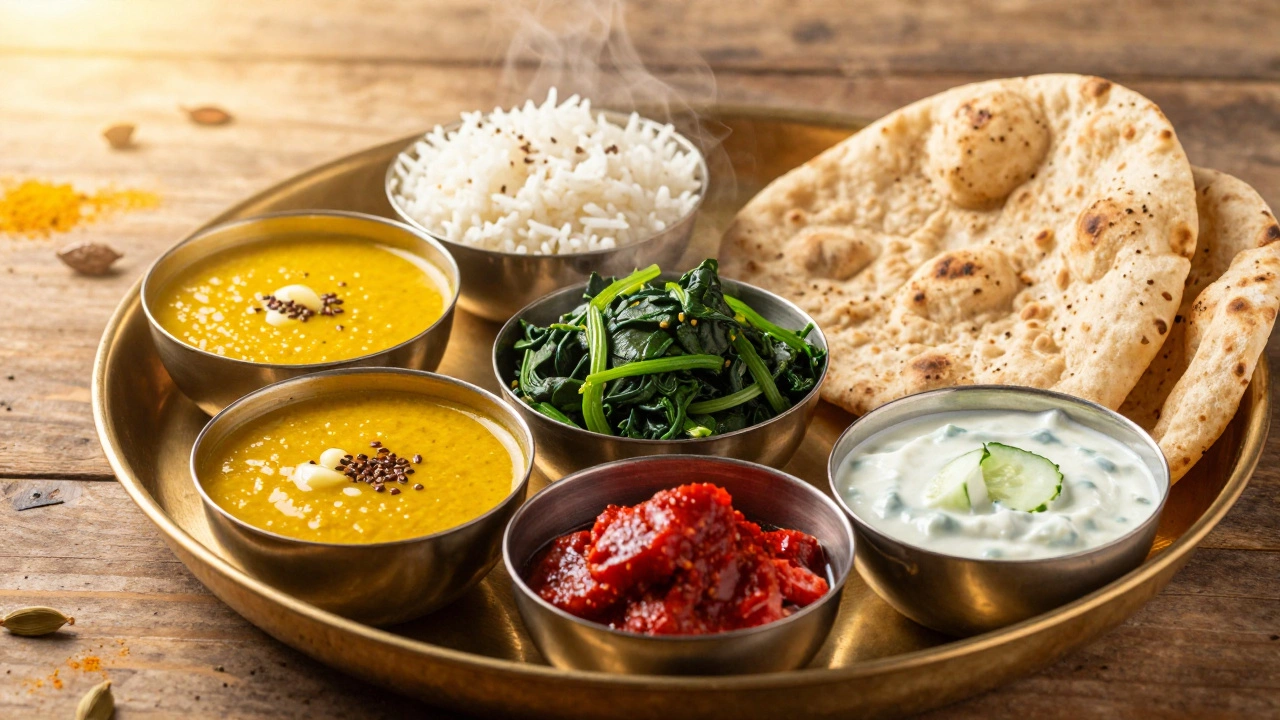
The word "thali" simply means "plate" or "tray." In many parts of India, especially in the North and West, the thali is the standard format for a midday meal. It is designed to provide complete nutrition and sensory satisfaction in one sitting. You don't eat everything at once; you take small bites of different components to create your own flavor combinations.
A typical North Indian thali includes several key elements:
- Rice: Usually long-grain Basmati, cooked plain or with a little ghee (clarified butter).
- Roti or Chapati: Whole wheat flatbreads, often eaten by hand to scoop up other dishes.
- Dal: Lentil soup or stew, which provides protein and comfort. Yellow dal tadka (tempered with cumin and garlic) is a staple.
- Sabzi: Vegetable curries. There might be two types-one dry stir-fry and one wet curry.
- Raita: Yogurt mixed with cucumber, onions, or boondi (fried gram flour droplets). This cools down the heat from spices.
- Pickle (Achar): Fermented fruits or vegetables preserved in oil and spices, adding a sharp, tangy kick.
- Fried Snack: Something crunchy like papadum or pakora to add texture contrast.
The magic happens when you mix them. A bite of hot rice, a spoonful of spicy vegetable curry, a dollop of cool raita, and a pinch of salty pickle creates a complex flavor profile that no single dish could achieve alone. This method of eating encourages moderation and variety, ensuring you get carbohydrates, proteins, fats, and fiber in every meal.
North vs. South: Two Different Worlds on a Plate
While the thali is iconic, it is not universal. To truly understand what constitutes a traditional lunch, you must look at the geographic divide between Northern and Southern India. The climate, agriculture, and culture dictate the ingredients.
| Feature | North Indian Lunch | South Indian Lunch |
|---|---|---|
| Staple Grain | Wheat (Roti/Chapati) | Rice (Steamed or Idli/Dosa) |
| Primary Protein | Lentils (Dal), Chickpeas | Toor Dal, Sambar (Lentil & Veg Stew) |
| Spice Profile | Cumin, Coriander, Garam Masala | Mustard Seeds, Curry Leaves, Tamarind |
| Accompaniments | Raita, Pickle, Papad | Coconut Chutney, Sambar, Rasam |
| Cooking Fat | Ghee, Mustard Oil | Coconut Oil, Groundnut Oil |
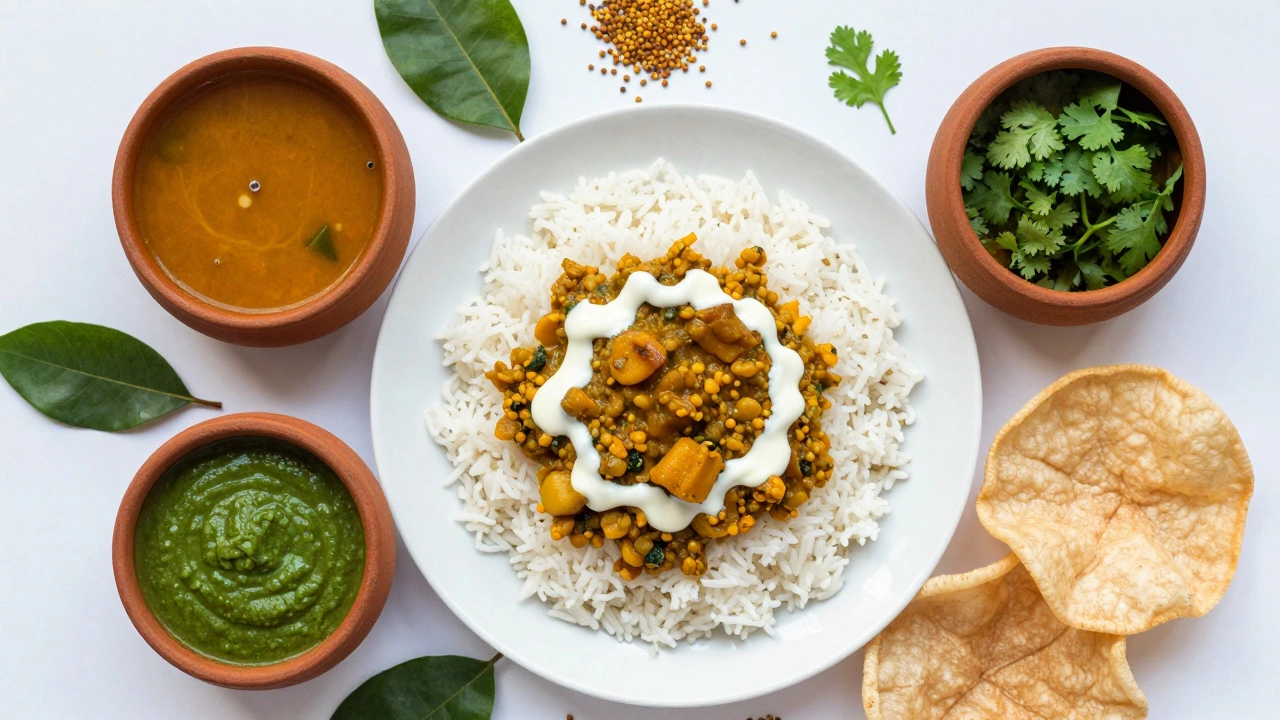
In the South, rice is king. A traditional lunch here often starts with steamed rice topped with Sambar, a tangy lentil and vegetable stew flavored with tamarind and fenugreek. Alongside this, you will find Rasam, a thin, peppery broth that aids digestion. Instead of yogurt raita, South Indians rely heavily on chutneys made from fresh coconut, coriander, or tomato. The use of mustard seeds and curry leaves gives these dishes a distinct aroma that is absent in the creamier, ghee-laden North Indian dishes.
The Role of Spices and Digestion
You might notice that Indian lunches are rarely bland. But the spice level isn't just about heat; it is functional. Traditional Indian cooking philosophy, rooted in Ayurveda, emphasizes foods that are easy to digest. Lunch is considered the heaviest meal of the day because your digestive fire is strongest around midday.
Spices like turmeric, ginger, and cumin are anti-inflammatory and aid gut health. For example, tempering dal with mustard seeds and dried red chilies isn't just for flavor; it breaks down the heavy lentils, making them easier for your body to process. Even the cooling elements like yogurt and mint serve a purpose by balancing the internal heat generated by spicy foods. This holistic approach to eating means that a traditional Indian lunch is designed to keep you energized without making you feel sluggish in the afternoon.
Regional Variations: Beyond the Basics
If you travel further into specific regions, the definition of a traditional lunch shifts again. In Bengal, for instance, fish is central to the diet. A Bengali lunch might feature Macher Jhol (fish curry) served with steamed rice and a side of shukto, a bitter vegetable medley. In Gujarat, where vegetarianism is deeply cultural, the lunch is known as "Fafda-Jalebi" for breakfast but transitions to a heavy thali with kadhi (yogurt-based curry) and puri (fried bread) during festivals.
Even within cities, urban lifestyles are changing these traditions. Many modern Indian households now opt for simpler versions of these meals due to busy schedules. However, the core principle remains: a combination of grains, legumes, vegetables, and fermented items. Whether it is a elaborate seven-course banquet or a simple bowl of khichdi (rice and lentils cooked together), the goal is balance.
How to Make a Simple Traditional Lunch at Home
You do not need to spend hours in the kitchen to enjoy a traditional Indian lunch. With a few smart swaps and basic ingredients, you can assemble a thali-style meal in under 30 minutes. Here is a practical guide to creating a balanced plate using easy Indian recipes.
- Start with the Base: Cook a batch of Basmati rice or buy pre-made rotis. If you are short on time, microwaveable rotis work perfectly.
- Prepare the Protein: Make a quick dal. Use canned or pre-soaked toor dal. Simmer with turmeric, salt, and a pinch of asafoetida until soft. Temper it with mustard seeds, cumin, and dried chili in hot oil.
- Add Vegetables: Sauté seasonal vegetables like spinach, beans, or cauliflower with ginger and garlic. Keep it simple; let the natural flavors shine.
- Create the Cooler: Mix plain yogurt with diced cucumber, a squeeze of lemon juice, and a pinch of roasted cumin powder. This takes two minutes but adds essential creaminess.
- Add Crunch and Tang: Include a store-bought pickle and a roasted papadum. These pantry staples elevate the meal instantly.
This approach allows you to customize your meal based on what you have available. The beauty of the thali system is its flexibility. You can swap chicken for paneer, or add a second vegetable dish if you want more variety. The key is to include at least one grain, one protein source, one vegetable, and one fermented or cooling element.
Why This Meal Structure Matters Today
In a world of fast food and processed snacks, the traditional Indian lunch offers a blueprint for healthy eating. It prioritizes whole foods, minimizes added sugars, and maximizes nutrient density. By combining complex carbohydrates from rice and roti with plant-based proteins from lentils and healthy fats from ghee or oils, you get sustained energy release.
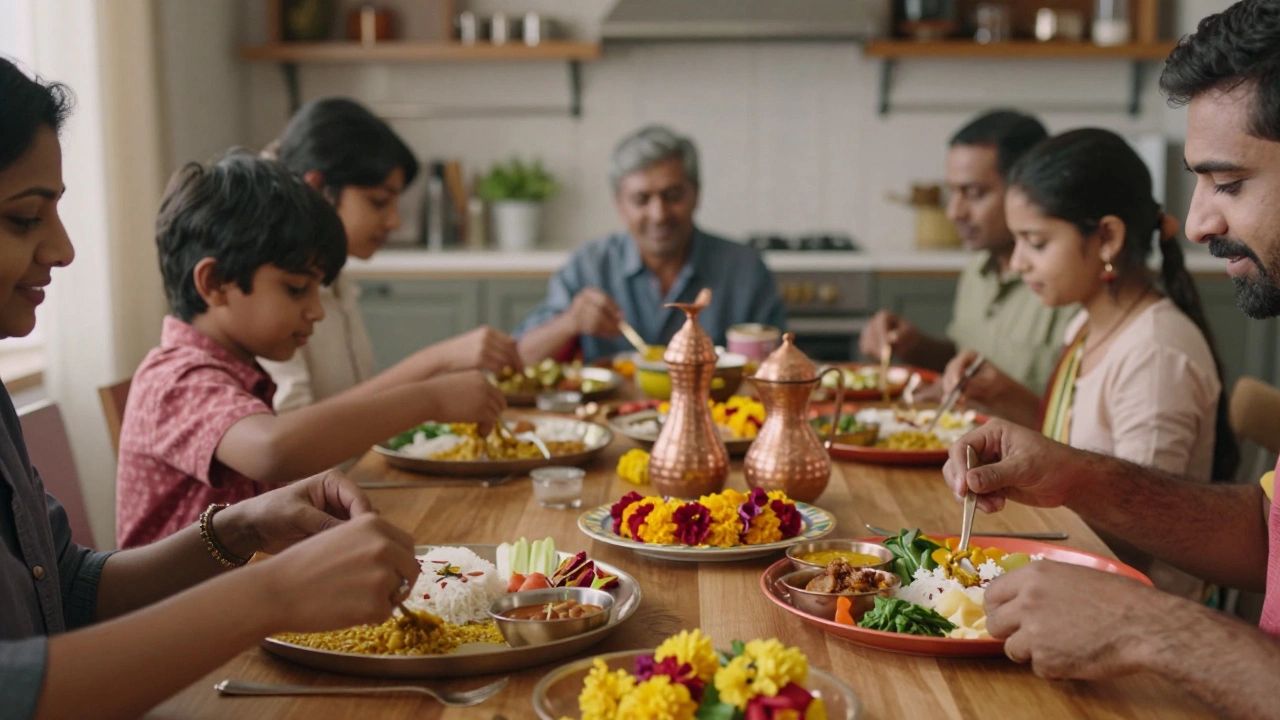
Moreover, the communal aspect of sharing a thali fosters social connection. In many Indian homes, lunch is a family affair where everyone gathers around the same table. This mindful eating practice slows down consumption and improves satiety signals. As we move towards more conscious dietary choices, adopting elements of this traditional structure can help us eat better and feel fuller with less waste.
Is a traditional Indian lunch always vegetarian?
No, it is not. While many communities in India are vegetarian, non-vegetarian lunches are common in coastal regions like Kerala and Goa, as well as in parts of Bengal and Hyderabad. Chicken, mutton, and fish curries are frequently served alongside rice and breads. The structure of the meal remains the same, but the protein source changes.
What is the difference between a thali and a platter?
A thali is specifically a circular plate with attached or separate small bowls for different dishes, emphasizing a balanced combination of flavors. A platter is generally a larger serving dish used for shared appetizers or buffet-style servings. The thali is personalized for individual consumption, while a platter is communal.
Can I make a traditional Indian lunch gluten-free?
Yes, easily. Simply replace wheat-based rotis with rice cakes, millet rotis, or extra steamed rice. Most lentils, vegetables, and spices are naturally gluten-free. Be cautious with certain pickles or sauces that may contain wheat flour as a thickener, but the core components of a thali are inherently safe for gluten-sensitive diets.
Why is rice so important in South Indian lunches?
The climate in South India is tropical and humid, making rice cultivation ideal. Historically, rice became the staple crop. Additionally, rice is lighter and easier to digest than wheat in hot weather. It serves as the perfect neutral base for the strong, tangy flavors of sambar and rasam.
Do Indians eat lunch at a specific time?
Traditionally, yes. Lunch is typically eaten between 12:30 PM and 2:00 PM. This timing aligns with the body's peak metabolic rate. Dinner is usually lighter and eaten earlier, around 7:00 PM or 8:00 PM, to allow for proper digestion before sleep.