Sick Chicken Symptoms: Signs, Causes, and What to Do
When your sick chicken symptoms, observable physical or behavioral changes in chickens that signal illness or distress. Also known as poultry illness signs, they’re not just about a bird looking tired—they’re urgent signals that something’s wrong in your coop. Chickens are prey animals. They hide weakness until they can’t anymore. By the time you see obvious signs, the problem may already be advanced. That’s why knowing the early, subtle clues matters more than waiting for a chicken to collapse.
Look for changes in behavior first. A healthy chicken is alert, scratches actively, and eats regularly. If one stops eating, sits hunched, or stays away from the flock, that’s a red flag. Other clear signs include drooping wings, when a chicken’s wings hang lower than normal, often paired with lethargy, discolored comb, a pale, blue, or swollen comb that signals poor circulation or infection, or runny droppings, abnormal feces that are watery, green, or bloody, pointing to digestive or parasitic issues. These aren’t random quirks—they’re direct links to underlying problems like respiratory infections, parasites, nutritional gaps, or bacterial outbreaks.
It’s not just about one bird. Sick chickens can spread illness fast, especially in crowded or damp coops. A single case of Newcastle disease or coccidiosis can wipe out a whole flock if ignored. That’s why early detection isn’t just kind—it’s critical. You don’t need a vet to spot the basics. Watch how they move, eat, breathe, and interact. Is their breathing raspy? Are they sneezing or coughing? Is there crust around their eyes? These are the same signs farmers and backyard keepers have used for generations to catch problems before they escalate.
Some causes are easy to fix—like dirty water or too much wet bedding. Others need action: isolating the bird, adjusting feed, or calling a poultry vet. But you can’t fix what you don’t see. The goal isn’t to become a chicken doctor. It’s to notice the small things before they become big problems. Your flock depends on you to pay attention.
Below, you’ll find real posts that break down exactly what to look for, how to tell if it’s something serious, and what steps actually work when your chickens aren’t acting right. No fluff. Just clear, practical help from people who’ve been there.
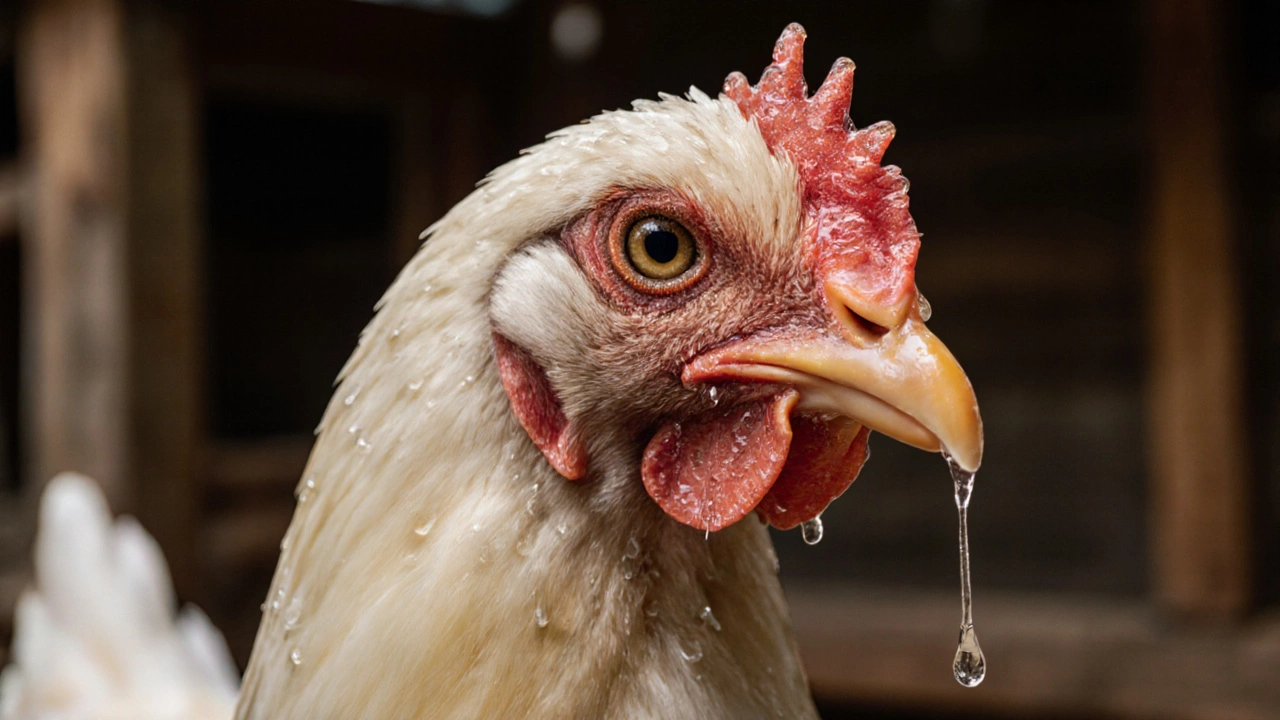
What Is the Liquid Coming Out of My Chicken’s Mouth? (It’s Not What You Think)
Clear liquid from a chicken's mouth isn't poison-it's usually mucus or crop fluid from stress or cold. Learn when it's harmless and when to discard the bird before cooking.