Indian Dal: Simple, Nutritious, and Full of Flavor
When you think of Indian food, you might picture rich curries or spicy tandoori dishes—but at the heart of most Indian homes is something quieter, simpler, and just as essential: Indian dal, a comforting lentil stew made from split pulses, tempered with spices, and served daily across the country. Also known as lentil curry, it’s not just food—it’s tradition in a bowl. Whether it’s yellow toor dal from the south, red masoor dal in the north, or black urad dal in the east, every region has its own version, and every family has their own way of making it.
What makes dal so special isn’t just how it tastes—it’s how it works. It’s packed with plant-based protein, easy to digest, and cooks quickly, making it perfect for busy days. You don’t need fancy ingredients: just lentils, water, turmeric, cumin, garlic, and a quick tempering of mustard seeds and dried chilies. That’s it. Dal tadka, the most common version, gets its name from the final sizzle of spices in hot oil poured over the cooked lentils. That step? That’s where the magic happens. It transforms a plain pot of lentils into something aromatic, layered, and deeply satisfying.
Indian dal isn’t just eaten on its own. It’s the sidekick to rice, the partner to roti, and the base for bigger meals. It’s what you eat when you’re sick, what you eat when you’re celebrating, and what you eat when you need something that feels like home. Red lentils, often used in quick dal recipes, break down into a creamy texture that clings to spoons and bread. Meanwhile, Indian vegetarian food, a category where dal shines brightest, relies on this humble dish for balance, protein, and flavor. It’s no wonder so many people say the best Indian meals start with dal.
You’ll find dal in restaurants, street stalls, and kitchens from Mumbai to Manipur. But the real story isn’t in the fancy versions—it’s in the everyday ones. The ones made with a pinch of salt, a splash of lemon, and a spoonful of ghee. The ones your grandmother made, and the ones you’ll make for your kids. This collection below dives into those recipes, the tricks that make them better, and the little mistakes people make when they think they’re doing it right. Whether you’re new to dal or you’ve been eating it your whole life, there’s something here that’ll make you see it differently.
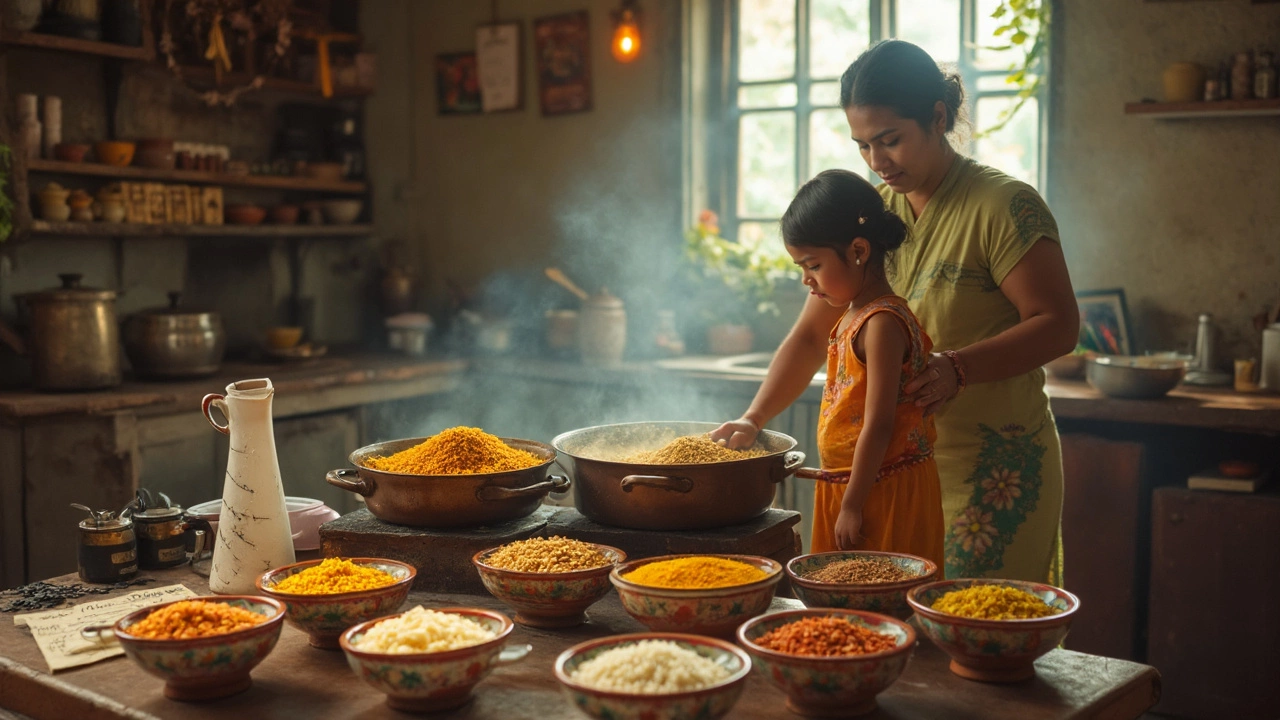
Water to Dal Ratio: The Simple Trick for Perfect Dal Every Time
Getting the water to dal ratio right can mean the difference between a creamy, luscious dal or a pot of mushy disappointment. This article explains how much water you actually need for different types of dals – because not all lentils are created equal. You'll get hands-on tips that make dal recipes much easier and taste way better. No guesswork, just straightforward answers. Plus, discover tweaks that suit pressure cookers, stovetops, and even picky kids at the table.