Biryani Difficulty Estimator
How Likely Are You to Succeed?
Answer these questions based on your biryani approach to see your success probability. Your choices reflect common pitfalls from the article.
Your Success Score
Everyone thinks they can make biryani. You’ve seen the videos-golden rice, tender meat, fragrant saffron, perfectly layered. It looks simple. But when you try it? The rice turns mushy. The spices taste flat. The meat is dry. And that beautiful layering? It collapses into a soggy mess. Why does something that looks so straightforward turn into a cooking disaster so often?
It’s Not One Recipe. It’s a Dozen.
Biryani isn’t a single dish. It’s a family of dishes with wildly different rules. Hyderabadi biryani uses the pot-dum method-raw meat and partially cooked rice layered and sealed with dough. Lucknowi biryani uses the pukki method-meat and rice cooked separately, then gently folded together. Kolkata biryani adds boiled eggs and potatoes. And then there’s Sindhi, Malabar, and even New Zealand-style biryani with lamb and local herbs. Each has its own spice blend, rice type, cooking time, and technique.When you follow a recipe labeled "biryani" without knowing which version it’s based on, you’re already lost. A recipe meant for Hyderabadi biryani will fail if you treat it like Lucknowi. The rice will overcook. The spices will burn. The aroma won’t develop. You’re not making biryani-you’re making confusion.
The Rice Is the Enemy
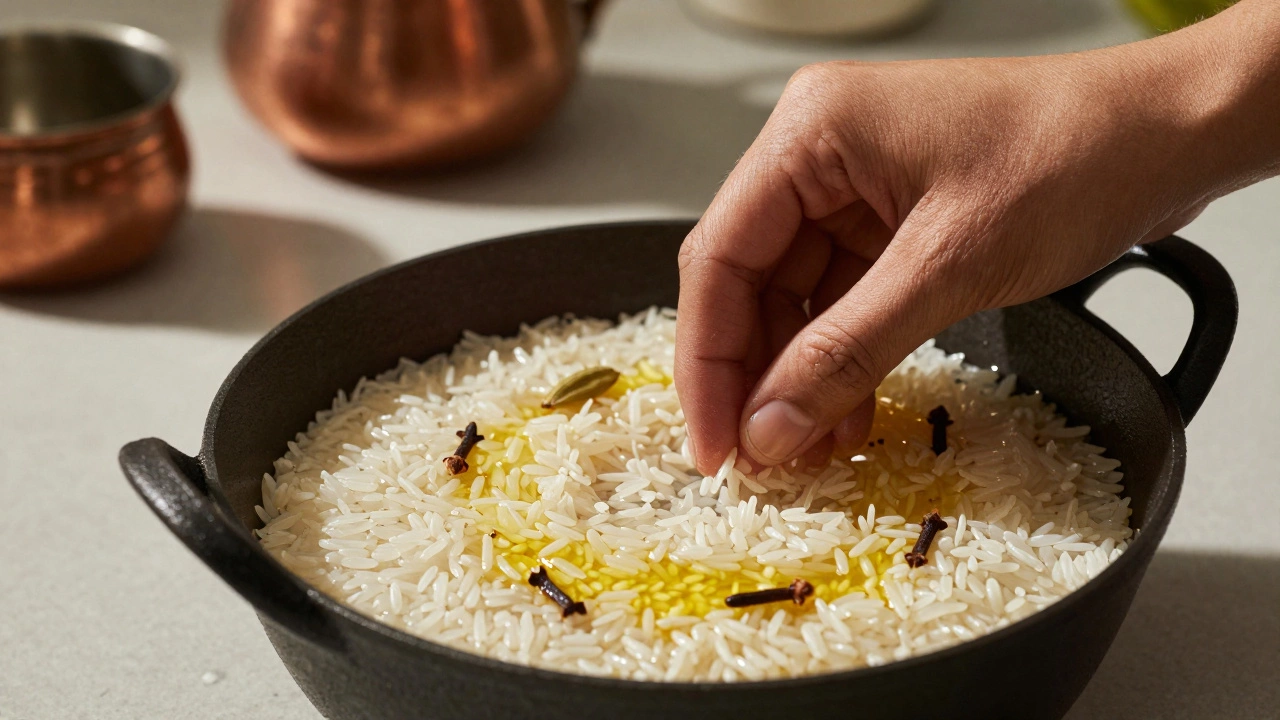
Most people think any long-grain rice will do. It won’t. Basmati is non-negotiable. But even within basmati, there’s a difference. Older, aged basmati (2-3 years) holds its shape better. Fresh basmati? It breaks down too easily. And the soaking? Skipping it is a mistake. Soaking for 30 minutes lets the grains absorb water evenly. Without it, some grains stay hard while others turn to paste.Parboiling is where most fail. You need the rice to be 70% cooked-not 60%, not 80%. That’s the sweet spot. Too undercooked, and it stays crunchy in the final steam. Too overcooked, and it turns to glue. You can’t taste it to check. You have to press a grain between your fingers. It should give slightly but still have a firm core. If you don’t know that trick, you’re guessing.
Spices Don’t Mix. They Layer.
Biryani isn’t about throwing spices into a pot and hoping for the best. It’s about timing and heat control. Whole spices like cardamom, cloves, and cinnamon are fried in ghee at the start to release their oils. Ground spices like turmeric, red chili, and coriander are added later, often with yogurt or water to prevent burning. If you add ground spices too early, they turn bitter. Too late, and they taste raw.Then there’s the saffron. It’s not just for color. Soaking a pinch in warm milk or water and drizzling it over the rice at the right moment gives that signature floral note. If you dump it in with the rice, it gets lost. If you add it too early, it evaporates. You have to wait until the last 10 minutes of steaming. That’s not in most recipes. But it’s the difference between ordinary and unforgettable.
The Layering Isn’t Decorative. It’s Functional.
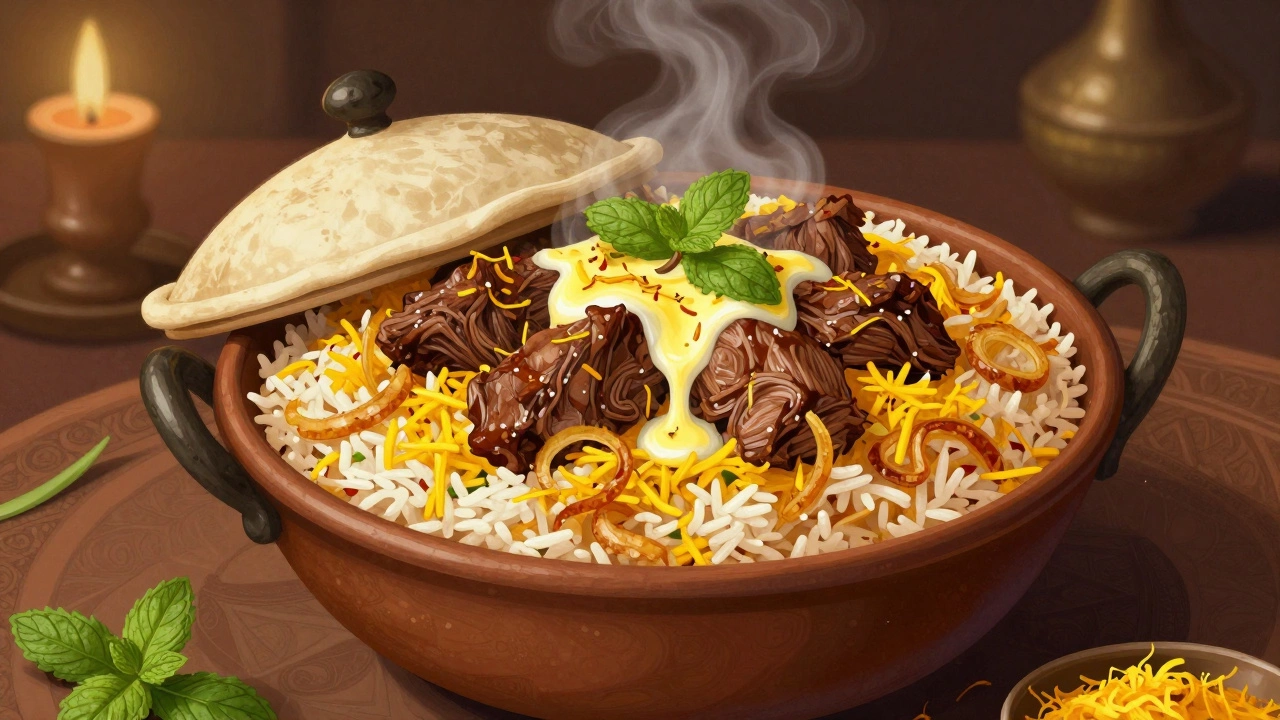
The layers aren’t there to look pretty. They’re there to control steam and heat. Meat goes on the bottom because it needs direct heat to tenderize. Rice goes on top because it steams gently. Onions, fried until golden, go between layers to add sweetness and texture. Fresh mint and cilantro? Sprinkled on top so they don’t cook into mush.And the seal? That’s the secret most skip. A dough made from flour and water, pressed around the lid, traps steam inside. That steam cooks the rice slowly, letting the flavors marry without drying out the meat. If you just put the lid on and walk away, steam escapes. The top layer dries. The bottom burns. You end up with uneven, sad biryani.
Heat Is the Silent Killer
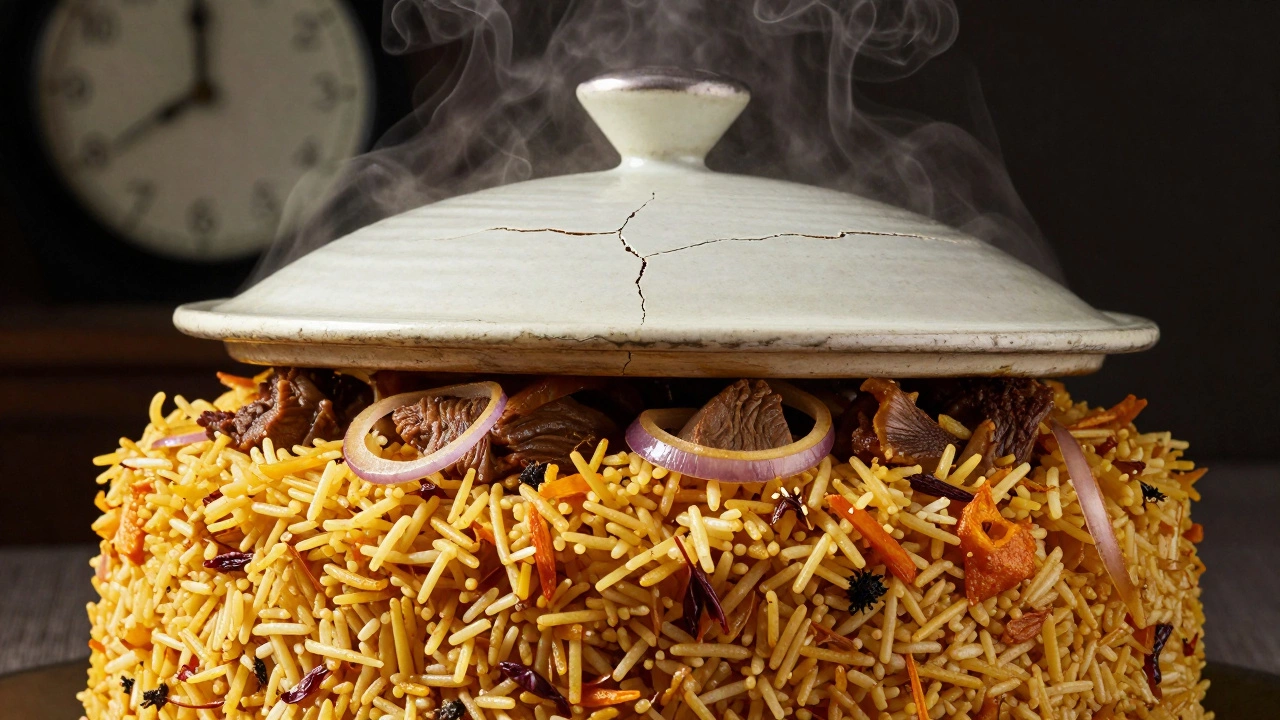
Biryani needs low, even heat for the final steam. But most home stoves don’t deliver that. High flame? Burnt bottom. Low flame? Undercooked rice. The solution? Use a heavy-bottomed pot-cast iron or Dutch oven. And if you’re on an electric stove? Place a heat diffuser under it. That’s not optional. It’s physics.And timing? You can’t rush it. The final steam takes 20-30 minutes. No peeking. No lifting the lid. You have to trust the process. Most people lift the lid after 10 minutes because they’re nervous. That’s when the steam escapes. That’s when it all falls apart.
It’s Not About Skill. It’s About Patience.
You don’t need to be a chef to make good biryani. You just need to stop treating it like a quick dinner. This isn’t stir-fry. It’s not a one-pot weeknight meal. It’s a slow dance of ingredients, heat, and time. The meat needs to simmer for two hours. The rice needs to soak, parboil, and steam. The spices need to bloom, not just mix.People get frustrated because they expect results in 45 minutes. Biryani takes 3 hours. If you’re not ready for that, you’ll keep failing. And you’ll blame the recipe. But the recipe isn’t broken. You’re just rushing the process.
What Happens When You Get It Right?
When you nail it, the rice grains stay separate, each one coated in spice and fragrant with saffron. The meat pulls apart with a fork, tender but not falling apart. The onions are crispy on top, sweet underneath. The aroma hits you before you even lift the lid. And when you serve it? No one asks for sauce. No one reaches for bread. They just eat. Quietly. Slowly. Like they’re savoring something rare.That’s why biryani feels so hard. Because it’s not just food. It’s tradition. It’s memory. It’s patience made edible. And once you understand that, the difficulty doesn’t disappear. It becomes part of the reward.
Can I use regular rice instead of basmati for biryani?
No. Regular rice lacks the long, slender shape and low starch content that basmati has. It becomes sticky and mushy when cooked, ruining the texture biryani needs. Basmati is the only rice that holds its structure through parboiling and steaming. Even other long-grain varieties like jasmine won’t give you the same result.
Why does my biryani taste bland even when I use all the spices?
You’re probably adding ground spices too early or too quickly. Ground spices burn easily and turn bitter if fried too long. They need to be added after the whole spices have bloomed in ghee, and mixed with a little liquid like yogurt or water to prevent scorching. Also, many people skip toasting the whole spices in oil-this step unlocks their flavor. Without it, the spices stay flat and lifeless.
Is it okay to skip the dough seal on the pot?
You can skip it, but you’ll lose the authentic texture. The dough seal traps steam, creating an even, gentle heat that cooks the rice slowly without drying out the meat. Without it, steam escapes, the top layer gets dry, and the bottom risks burning. You can use a tight-fitting lid and a towel under it as a substitute, but it’s not as effective. The seal is traditional for a reason.
How do I know when the rice is 70% cooked?
Take a grain and press it gently between your thumb and forefinger. It should bend slightly but still have a firm, white core in the center. If it breaks easily, it’s undercooked. If it’s completely soft with no resistance, it’s overcooked. You want it halfway-just enough to finish cooking in the steam. Taste isn’t reliable here; texture is.
Can I make biryani in a rice cooker or Instant Pot?
You can, but you’ll miss the layered texture and depth of flavor. Rice cookers and pressure cookers don’t allow for the slow, controlled steaming that biryani needs. The meat won’t tenderize properly, the spices won’t bloom correctly, and the layers will blend into one mushy mass. If you’re short on time, try a simplified version-but don’t expect it to taste like the real thing.
Why does my biryani smell good but taste under-seasoned?
The aroma comes from whole spices and saffron, but flavor comes from salt and layered seasoning. Many recipes forget to season the meat properly before cooking, or they don’t salt the rice during parboiling. You need salt in both the meat marinade and the boiling water for the rice. Taste each layer as you go. Biryani isn’t seasoned once-it’s seasoned in stages.
What to Try Next
If you’ve tried and failed, don’t give up. Start with a simple Hyderabadi chicken biryani. Use aged basmati. Soak the rice. Parboil it to 70%. Fry the onions until golden. Toast the whole spices slowly. Seal the pot with a cloth and lid. Cook on the lowest flame for 30 minutes. Don’t peek. Then open it. Taste it. Feel the difference.This isn’t about perfection. It’s about respect. For the ingredients. For the process. For the people who’ve been making this for generations. Once you slow down, it stops being hard. It becomes meditative. And that’s when the magic happens.