Curry Spices: The Real Flavors Behind Indian Curries
When you think of curry spices, a blend of ground seeds, roots, and dried fruits used to build deep, complex flavors in Indian cooking. Also known as spice masala, it’s not one single mix—it’s a living system of heat, earth, and aroma that changes with every region, family, and dish. Forget the pre-mixed powder in the grocery aisle. Real curry spices start with whole seeds toasted in hot oil—cumin, coriander, mustard, fenugreek—and then ground fresh. They’re not just added to food; they’re awakened.
These spices don’t work alone. turmeric, the golden root that gives curry its color and earthy base is almost always there, but it needs cinnamon, a sweet bark that balances heat with warmth to shine. Then there’s cardamom, a fragrant pod that lifts the whole dish like a breath of fresh air. In biryani, you’ll find whole spices like cloves and star anise tucked into the rice, releasing scent slowly as it steams. In chicken curry, ground spices bloom in oil before tomatoes or yogurt go in—that’s when the magic happens.
It’s not about throwing everything in. It’s about timing. Add chili too early and it burns bitter. Add garam masala at the end and it stays bright. That’s why your homemade curry might taste flat even if you used the same spices as a restaurant—they’re not using them the same way. The secret isn’t more spice. It’s smarter spice. The posts below show you exactly how this works: why saffron and kewra water make biryani smell unforgettable, how to build depth in chicken curry without salt, and which spices actually belong in a real Indian kitchen—not a tourist shop.
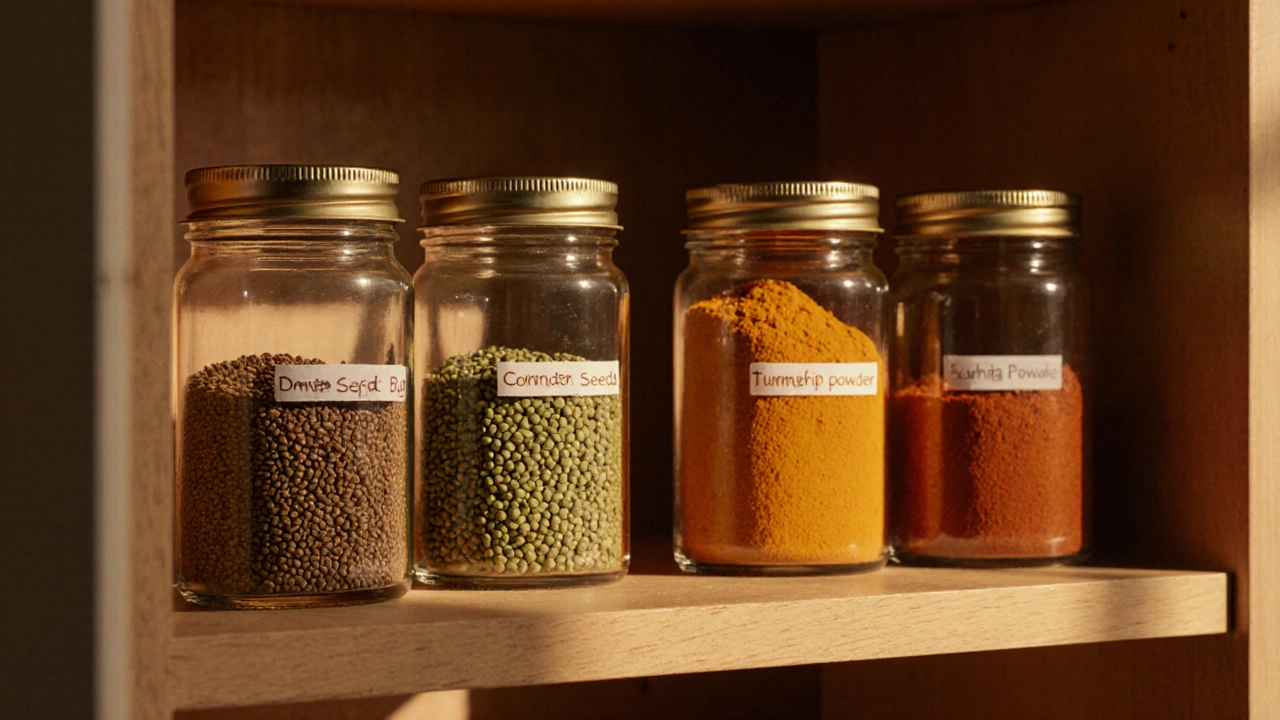
Four Key Spices in Curry - What They Are and How to Use Them
Learn the four essential spices that form the backbone of a classic chicken curry, how each works, and step‑by‑step tips for perfecting the dish.