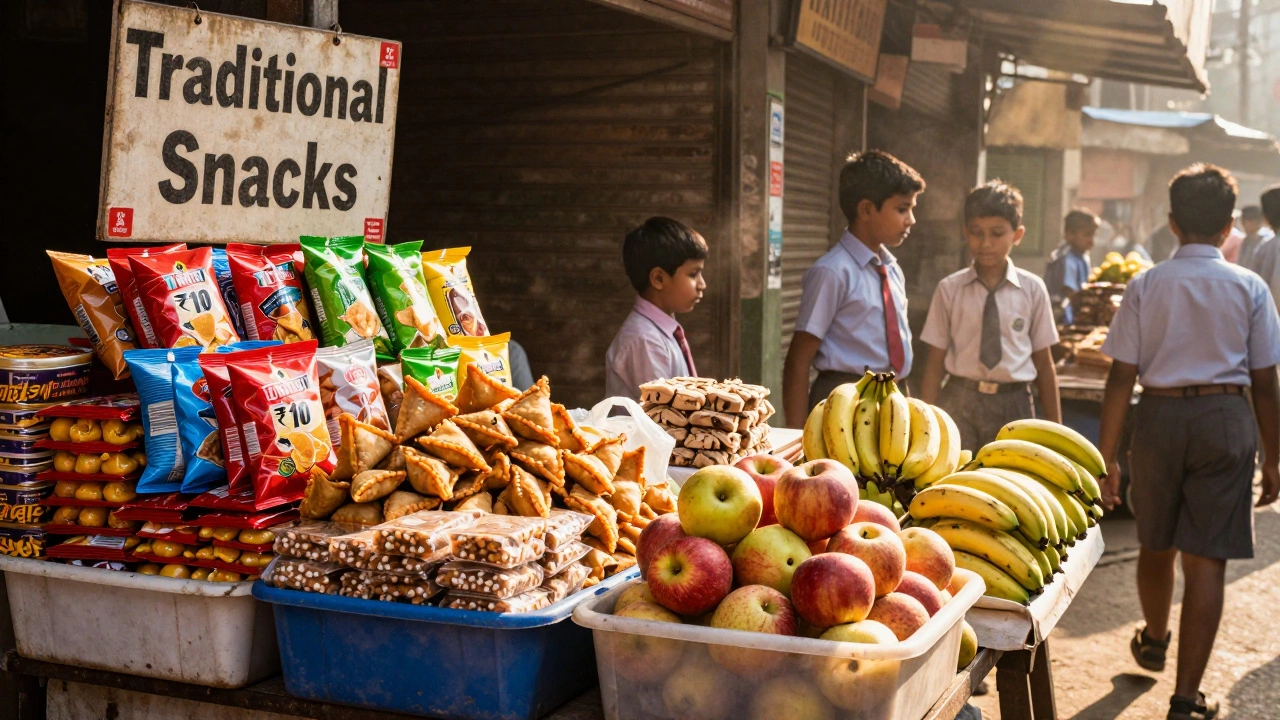
When you think of unhealthy food, you might picture fast food burgers, sugary sodas, or greasy fries. But the country that eats the most unhealthy food isn’t the one with the most McDonald’s. It’s the one where people eat junk food daily-not as a treat, but as a normal part of life. And surprisingly, it’s not the United States or the UK. It’s India.
Why India Leads in Unhealthy Snacking
India has over 1.4 billion people. That’s a lot of snacks. And most of them aren’t the healthy, spiced chickpeas or roasted makhana you see in Instagram posts. They’re the kind sold on street corners, in tiny shops, and even in school canteens: fried samosas filled with refined flour and cheap oil, sugary chikki made with jaggery and hydrogenated fats, and packaged namkeen loaded with MSG and artificial colors.
A 2024 study by the Indian Council of Medical Research found that over 68% of urban Indian children snack on processed foods at least twice a day. In rural areas, the numbers aren’t much better. Traditional snacks like bhel puri or sev puri, once made fresh daily with lentils and vegetables, are now mass-produced with trans fats and preservatives to last weeks on shelves.
The problem isn’t just what’s in the food-it’s how often it’s eaten. Unlike in the U.S., where junk food is often an occasional indulgence, in India, it’s part of the rhythm of daily life. A child might have a packet of chips after school, a sugary biscuit with tea in the afternoon, and fried mathri as an evening snack. All of it happens before dinner.
The Myth of ‘Healthy Indian Snacks’
Many people assume Indian snacks are naturally healthy because they’re made with spices, lentils, or whole grains. That’s only true if you make them yourself. Most store-bought versions aren’t.
Take poha. Traditionally, it’s a light, steamed rice flake dish with peanuts, curry leaves, and turmeric. But packaged poha snacks? They’re fried in palm oil, coated in sugar, and loaded with sodium. Same with murukku-once a crispy, savory rice-and-lentil treat, now often baked with hydrogenated oils to extend shelf life.
Even ‘healthy’ labels are misleading. A popular brand calls its snack ‘No Added Sugar’-but it’s sweetened with maltodextrin, which spikes blood sugar faster than table sugar. Another claims ‘High Protein’ because it contains 3 grams per serving-less than a boiled egg.
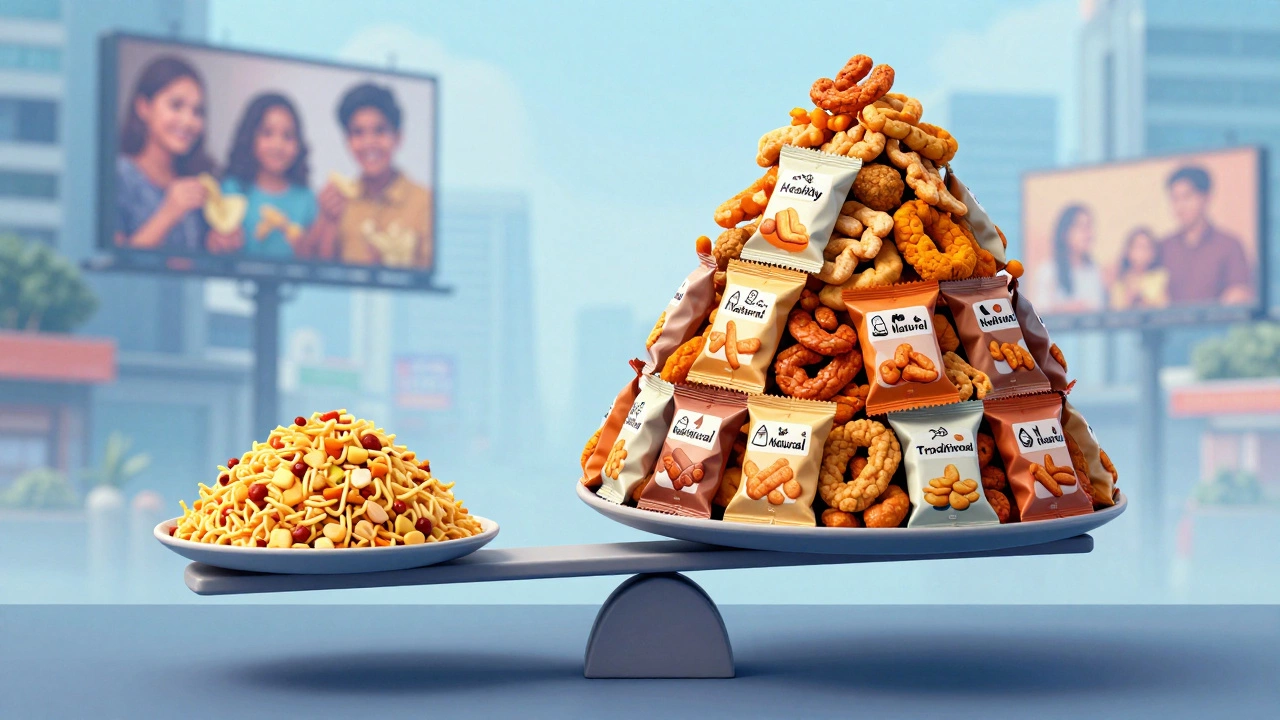
The truth? Most packaged Indian snacks are designed for profit, not nutrition. They’re cheap to make, addictive in flavor, and marketed as ‘traditional’ to trick people into thinking they’re wholesome.
How It Compares to Other Countries
Let’s put this in perspective. The U.S. eats more sugar per capita. Mexico has higher rates of obesity. But no country matches India’s scale of daily, widespread junk food consumption across all income levels.
In the U.S., junk food is often eaten on weekends or during fast food runs. In India, it’s eaten every day, by children, office workers, and elders alike. A 2023 World Health Organization report found that 42% of Indian adults consume ultra-processed snacks daily-compared to 28% in the U.S. and 21% in Germany.
Why? Three reasons:
- Price: A packet of chips costs less than ₹10 (about 12 cents). A banana or apple costs more and isn’t always available in small towns.
- Accessibility: Every neighborhood corner store stocks at least five types of packaged snacks. Fresh fruit? Not so much.
- Cultural normalization: Snacking isn’t seen as a bad habit-it’s seen as a sign of hospitality. Offering guests fried snacks is a gesture of care.
What’s Being Done About It?
Some change is happening. In 2023, the Indian government introduced new labeling rules requiring packaged snacks to display a red ‘High in Sugar, Salt, or Fat’ label on the front. But enforcement is weak. Many small manufacturers still ignore it.
Meanwhile, grassroots movements are growing. In cities like Pune and Kochi, local moms are forming ‘Snack Swaps’-exchanging homemade makhana, roasted chana, or jowar puffs instead of buying packaged ones. Some schools now ban chips and candies during recess. A few states, like Kerala, have started nutrition education in primary schools.
But the real shift will come when people stop believing that ‘Indian snack’ equals ‘healthy snack.’ It doesn’t. Not anymore.
What You Can Do-Even If You Love Indian Snacks
You don’t have to give up Indian snacks. You just need to know how to eat them right.
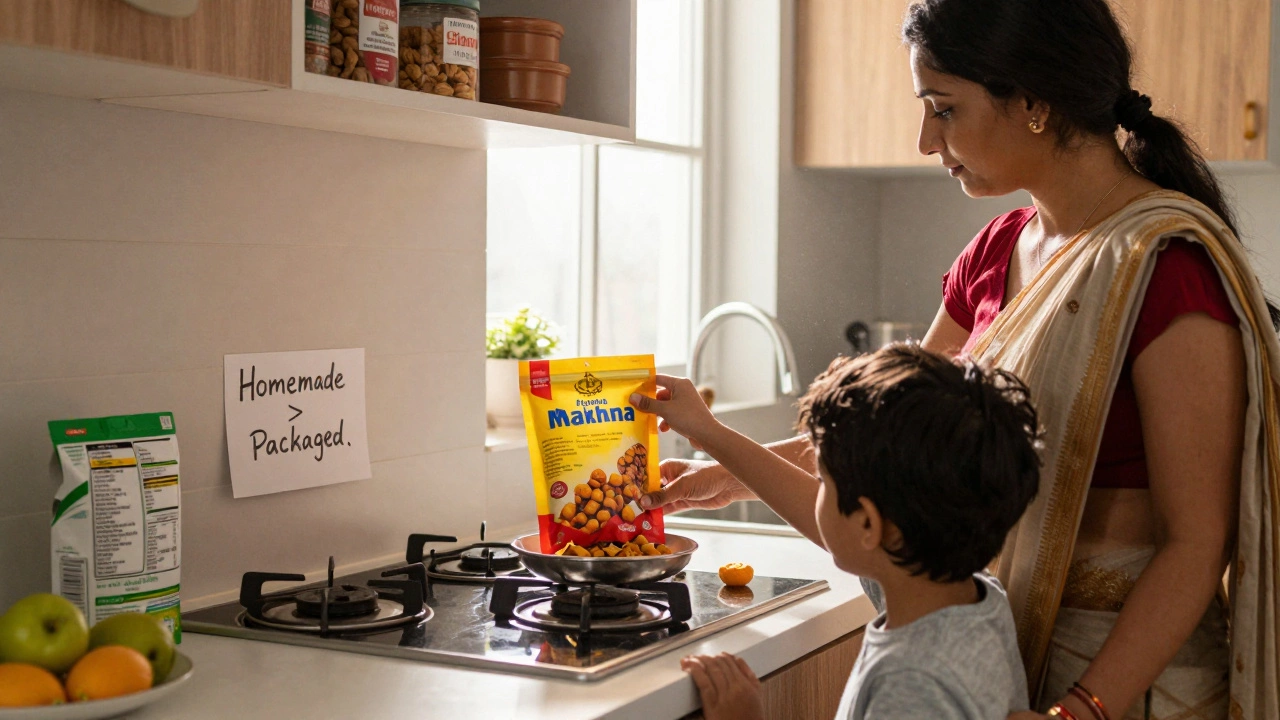
- Make your own: Roast chana with cumin and black salt. Bake makhana with a dash of turmeric. It takes 15 minutes and costs less than buying packaged versions.
- Read the label: If the ingredient list has more than five items, or if you don’t recognize half of them, put it back.
- Choose whole ingredients: Look for snacks made with jowar, ragi, oats, or lentil flour-not refined wheat.
- Limit frequency: Treat packaged snacks like dessert-not a daily meal.
There’s no shame in enjoying a samosa once in a while. But when you eat three a week, every week, for years, it adds up. And that’s when it stops being a snack-and starts being a health risk.
The Bigger Picture
India’s snack problem isn’t just about food. It’s about how modernization, marketing, and tradition collided. Companies didn’t invent unhealthy eating-they just made it easier, cheaper, and more convenient than ever before.
The same thing happened in the U.S. in the 1970s. In Japan in the 1990s. Now it’s happening in India, faster and on a much larger scale.
But here’s the good news: India also has the strongest tradition of plant-based, spice-rich eating in the world. The knowledge to eat well is already there. It just needs to be reclaimed from the shelves of corner shops and the ads on social media.
Healthy Indian snacks aren’t gone. They’re just hidden. You just have to know where to look-and what to avoid.
Which country eats the most unhealthy food in the world?
India currently has the highest rate of daily consumption of ultra-processed, unhealthy snacks among large populations. While countries like the U.S. and Mexico have higher obesity rates, India stands out because nearly half of its adult population eats packaged junk food every single day-often as a regular part of meals, not just occasional treats.
Are traditional Indian snacks really healthy?
Traditional Indian snacks like dhokla, poha, or murukku can be healthy-but only when made at home with fresh ingredients. Most packaged versions use refined flour, hydrogenated oils, added sugar, and preservatives to extend shelf life. What’s sold as ‘authentic’ is often a processed version designed for profit, not nutrition.
What are the healthiest Indian snacks you can buy?
Look for snacks made with whole grains like jowar, ragi, or oats, and avoid anything with hydrogenated oils, maltodextrin, or artificial colors. Good options include roasted chana (without sugar coating), unsweetened makhana, baked lentil crackers, and plain sev made with gram flour. Always check the ingredient list-five items or fewer is ideal.
Why do Indians eat so much junk food?
Junk food is cheap, widely available, and culturally accepted as a normal part of daily life. A ₹10 bag of chips costs less than a banana. Many families see offering snacks as a sign of care. Marketing also plays a big role-brands use nostalgic imagery to make unhealthy snacks feel traditional and wholesome.
Can you still enjoy Indian snacks and stay healthy?
Absolutely. The key is making them yourself or choosing minimally processed versions. Roast your own chana, bake makhana with spices, or make poha at home. Avoid anything with more than five ingredients, especially if they include ‘hydrogenated oil,’ ‘maltodextrin,’ or ‘artificial flavors.’ Snacks should be occasional, not daily.