Spice Ratio Calculator
Cumin is the backbone of authentic curry flavor. This calculator uses the 2:2:1:0.5 ratio for cumin:coriander:turmeric:fenugreek - the standard for chicken curry recipes.
Cumin makes up 36% of your spice mix - it's the non-negotiable foundation for authentic curry flavor.
Your Spice Ratio
| Spice | Quantity | Role |
|---|---|---|
| Cumin | Earthly base (36% of mix) | |
| Coriander | Balances cumin's warmth | |
| Turmeric | Color and mild bitterness | |
| Fenugreek | Deepens complexity |
Why this matters:
"If the cumin doesn't smell right when toasted? I start over. Because if that step fails, nothing else matters." - Professional Chef
Ask ten people what makes a good curry, and you’ll get ten different answers. Some swear by coconut milk. Others say it’s the slow-cooked onions. But if you strip away all the extras and ask what curry spice is the true backbone of flavor, there’s one answer that shows up in nearly every kitchen from Mumbai to Melbourne: cumin.
Why Cumin Isn’t Just Another Spice
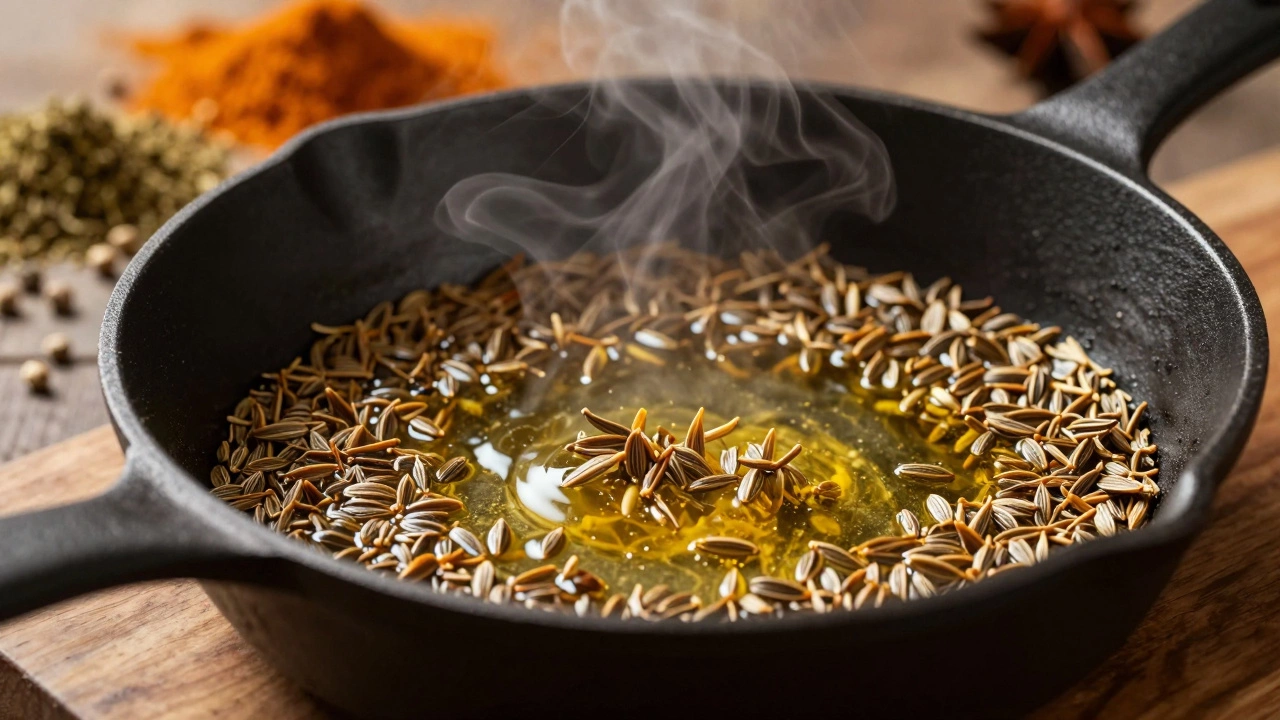
Cumin isn’t flashy. It doesn’t turn your food red like chili or make your nose tingle like cardamom. But it’s the quiet anchor that holds everything together. In a chicken curry recipe, cumin seeds toasted in hot oil release a warm, earthy, slightly smoky aroma that becomes the foundation for every other flavor. Without it, your curry tastes flat - like a song missing its bassline.
Indian home cooks don’t just add cumin. They build around it. The first step in almost every traditional curry? Heat oil or ghee, then throw in cumin seeds. Listen for the faint pop - that’s the sound of flavor unlocking. That’s when you know you’re on the right track.
It’s not just India. In Iran, cumin is rubbed into lamb before roasting. In Mexico, it’s the star of chili powder blends. In Thailand, ground cumin shows up in massaman curry paste. The spice travels. But in chicken curry, it’s non-negotiable.
The Myth of Curry Powder
You’ll see bottles labeled “curry powder” on supermarket shelves. They promise convenience. But here’s the truth: curry powder is a colonial invention - a British attempt to simplify Indian flavors into one jar. It often contains cumin, coriander, turmeric, fenugreek, and chili, but the proportions are generic. It’s like using a pre-mixed cake flour and expecting to bake a perfect loaf every time.
Real chicken curry recipes don’t use curry powder. They use whole spices, toasted and ground fresh. And among those, cumin is almost always the first and most dominant. Even in recipes that call for a spice blend, cumin makes up 20-30% of the mix. That’s not an accident. That’s intention.
Try this: make two batches of chicken curry. One with cumin. One without. You’ll taste the difference immediately. The one without cumin tastes like spiced chicken soup. The one with it? Deep, complex, and unmistakably curry.
How to Use Cumin Right
Using cumin wrong is easier than you think. Here’s how to get it right:
- Start with whole seeds. Ground cumin loses its oil and aroma fast. Whole seeds keep their punch for months.
- Toast them first. Heat a dry pan over medium. Add cumin seeds. Stir constantly for 30-45 seconds until they smell nutty and start to pop. Don’t burn them.
- Add them to hot oil or ghee. This releases the essential oils. The oil becomes infused. That’s your flavor carrier.
- Don’t skip the step. Adding ground cumin raw at the end? It’ll taste dusty and bitter. Toasting is non-negotiable.
Some cooks add cumin twice - once toasted at the start, and again as a light dusting at the end. That’s advanced technique. For beginners, just nail the first step.

What Other Spices Play Along?
Cumin doesn’t work alone. It’s the lead singer, but it needs a band.
- Coriander - Earthy and citrusy. Balances cumin’s heat. Often used in equal parts.
- Turmeric - Gives color and mild bitterness. Used for visual appeal and anti-inflammatory benefits.
- Fenugreek - Slightly bitter, maple-like. A pinch deepens the complexity.
- Chili powder or fresh chilies - For heat. Adjust to taste, but don’t let it overpower cumin.
- Garam masala - Added at the end. A finishing blend. Not a substitute for cumin.
Here’s a simple ratio that works for most chicken curry recipes: 2 parts cumin, 2 parts coriander, 1 part turmeric, ½ part fenugreek. That’s your base. Everything else is seasoning.
What Happens If You Skip Cumin?
You can make chicken with onions, tomatoes, garlic, ginger, and spices - and call it curry. But without cumin, it’s not curry. It’s just another stew.
Try it yourself. Make a batch with cumin. Make another without. Taste them side by side. The one with cumin has depth. It lingers. It makes you want another bite. The one without? It’s forgettable.
Even in Thai or Jamaican curries - where turmeric and allspice dominate - cumin still shows up in the background. It’s the spice that connects cultures. It’s the one that doesn’t shout, but makes sure you hear everything else.

Real-World Test: What Do Professional Chefs Say?
In Wellington, where I live, a lot of Indian restaurants source their spices from local importers who work directly with farmers in Gujarat and Rajasthan. I’ve asked three head chefs here what they’d never compromise on. Two said “fresh turmeric.” One said “ginger.” But all three said the same thing about cumin: “If the cumin’s bad, we throw the whole batch out.”
One chef told me, “I can fix weak chili, I can fix soggy onions. But if the cumin doesn’t smell right when I toast it? I start over. Because if that step fails, nothing else matters.”
Buying and Storing Cumin
Not all cumin is equal. Look for:
- Whole seeds - darker brown, plump, and oily to the touch.
- Smell test - Crush a seed between your fingers. It should smell warm, not musty.
- Buy small quantities - Cumin loses potency after 6 months. Buy what you’ll use in 2-3 months.
- Store in a cool, dark place - Not above the stove. Not in the fridge. A sealed jar in a pantry works best.
Pre-ground cumin? Only use it if you’re in a pinch. It’s 60% less aromatic than whole seeds. And if it’s been sitting on a shelf for a year? It’s just dust.
Final Test: Your Curry, Your Rules
Is cumin the only spice that matters? No. But it’s the one that defines curry as curry. Without it, you’re making spiced chicken. With it? You’re making something that carries centuries of tradition in every bite.
Next time you make chicken curry, don’t just add cumin. Respect it. Toast it. Listen to it pop. Let it build the flavor before you add anything else. That’s the secret the best cooks never talk about - because they don’t need to. You’ll taste it.
Is cumin the same as curry powder?
No. Cumin is a single spice. Curry powder is a blend that usually includes cumin, coriander, turmeric, and other spices. But curry powder is a generic mix - it doesn’t replace the need to toast and use whole cumin seeds properly in a real curry recipe.
Can I use ground cumin instead of whole seeds?
You can, but you’ll lose a lot of flavor. Whole cumin seeds release their oils when toasted, which is key to building depth. Ground cumin is convenient but lacks the same aroma and complexity. If you must use ground, add it later in cooking and use 25% more to compensate.
What if I don’t like the taste of cumin?
Some people find cumin earthy or bitter at first. Try using less - start with half a teaspoon in your chicken curry and increase gradually. Toasting it well also softens the bitterness. If you still don’t like it, you’re not alone - but you’ll miss out on what makes curry taste like curry.
Is cumin used in all types of curry?
Almost all. From Indian chicken curry to Thai massaman or Caribbean curries, cumin is a common thread. Some regional versions use less, but it’s rarely absent. It’s the one spice that bridges different curry styles.
Does cumin make curry spicy?
No. Cumin adds warmth and earthiness, not heat. That comes from chilies or chili powder. Cumin gives depth. Chilies give fire. They work together, but they’re not the same thing.