Street Food India: Best Snacks, Stalls, and Secrets Behind India's Bold Street Eats
When you think of street food India, the bustling, aromatic, and wildly flavorful snacks sold on sidewalks, carts, and corner stalls across the country. Also known as Indian street eats, it’s not just about hunger—it’s about culture, speed, and taste packed into one bite. From Mumbai’s midnight vada pav to Delhi’s early morning chole bhature, street food in India isn’t a side note—it’s the main event. And no, it’s not just spicy. It’s layered. It’s sour, sweet, crunchy, creamy, and sometimes even fizzy—like pani puri, where a tiny hollow ball bursts with tamarind water, chili, and chickpeas the moment you bite into it.
What makes these snacks so special isn’t just the ingredients—it’s the technique. The oil for samosas is reused but never burned. The chutneys are made fresh daily, often with raw mango, mint, or tamarind. The spices? Toasted, ground, and blended by hand, not pre-packaged. You won’t find a single recipe for vada pav, a deep-fried potato fritter sandwiched in a soft bun, topped with chutney and sometimes chili. Also known as Mumbai’s burger, it’s a staple that’s been perfected over decades. And pani puri, a crispy shell filled with spiced water, potatoes, and chickpeas. Also known as golgappa, it’s eaten in one bite, and if you do it right, it’s pure magic. These aren’t just snacks—they’re experiences passed down through generations of vendors who know exactly how long to fry, how much spice to add, and when to serve it hot.
Street food in India doesn’t care about fancy plating or Michelin stars. It thrives on repetition, rhythm, and reliability. You go to the same stall every day because the person behind the counter remembers your name and how you like your chaat—extra spicy, no onions. And while some worry about hygiene, the truth is, the busiest stalls are often the cleanest—because turnover is high and ingredients never sit around. The best street food is made in front of you, served fast, and eaten standing up.
What you’ll find below is a curated collection of posts that dig into the real stories behind these dishes. You’ll learn why some Indian street snacks are fried in mustard oil, how to make pani puri water that doesn’t taste like plain spice, and what makes a perfect bhel puri. There are tips on where to find the best versions in different cities, and even how to recreate them at home without a street cart. No fluff. No filler. Just the facts, the flavors, and the people who make them.
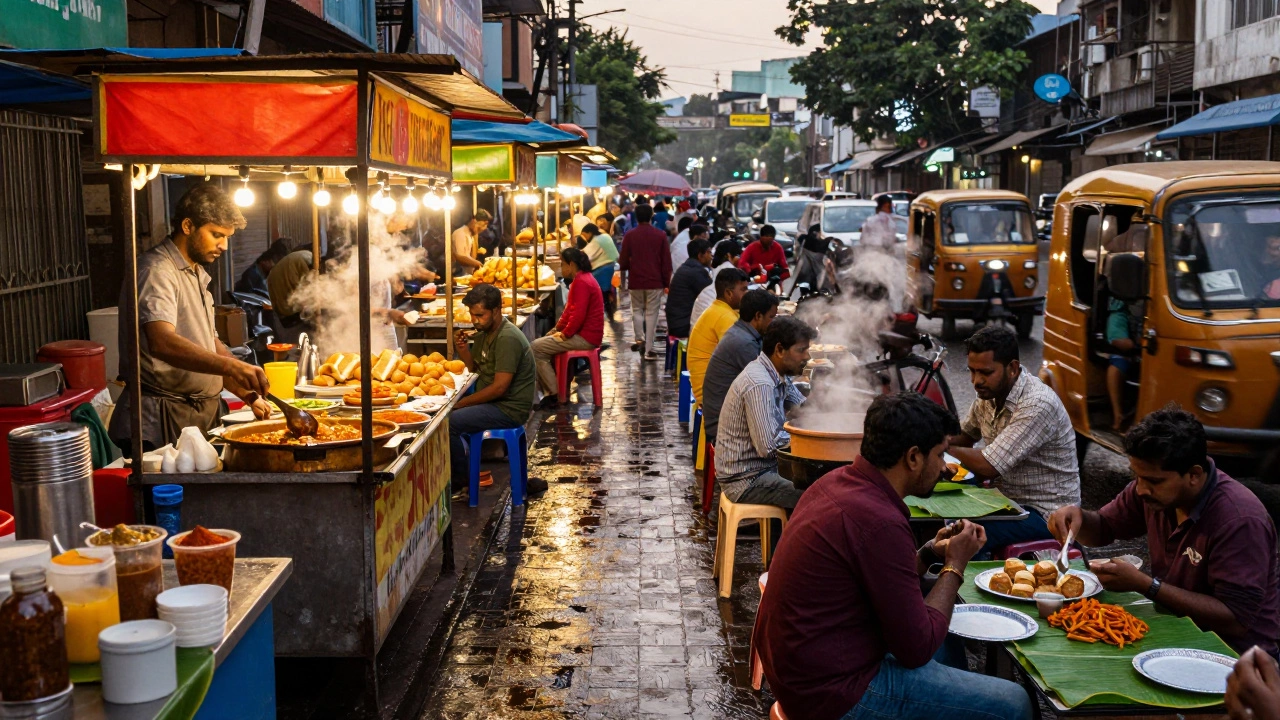
Which City Has the Most Street Food in India? Top Contenders and What Makes Them Stand Out
Mumbai has the most street food in India, with over 8,700 licensed vendors and 5,000+ daily dishes. Discover why it beats Delhi, Kolkata, and Hyderabad in variety, accessibility, and cultural depth.
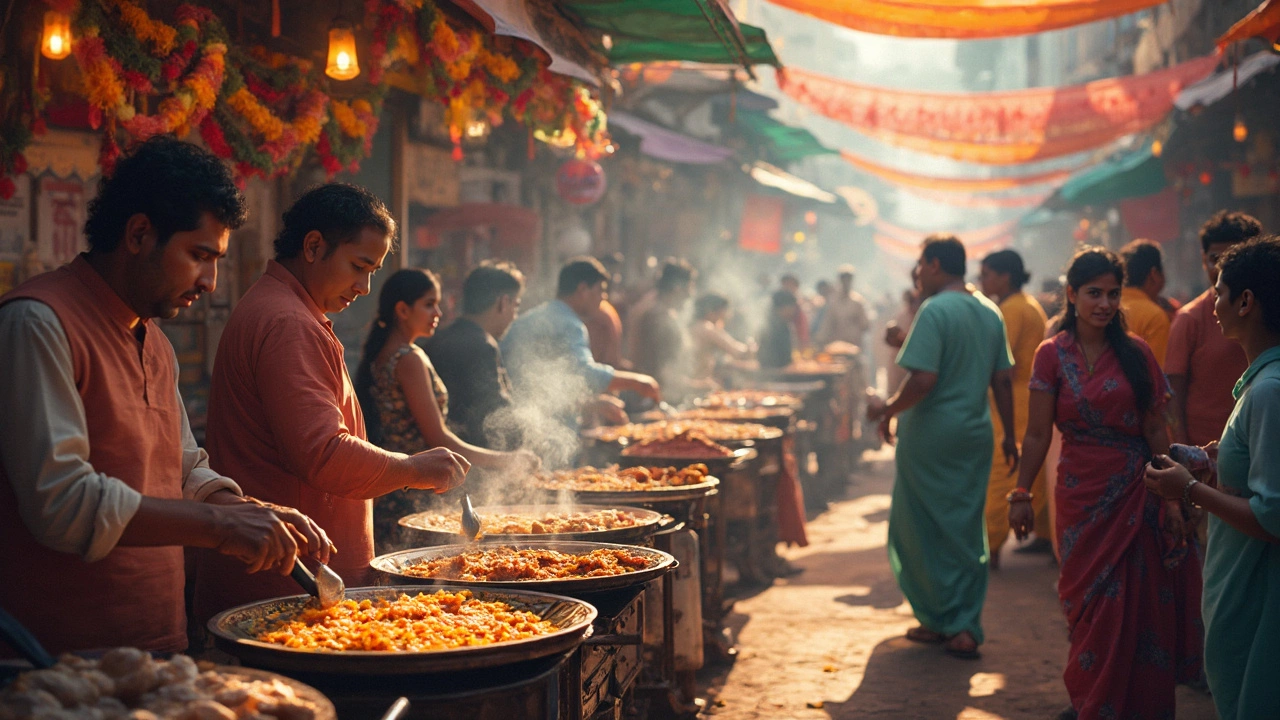
How to Avoid a Bad Stomach While Enjoying Indian Street Food
Avoiding a bad stomach while enjoying Indian street food is crucial for a pleasant culinary adventure. Learn smart strategies like picking busy stalls and opting for freshly cooked dishes. Understand what to watch out for and discover how to indulge safely in delicious local treats. With the right tips, you can savor the legendary flavors of Indian cuisine without any unwelcome surprises.