Difference in Indian Cooking: Why Small Changes Make Big Flavors
When you ask what makes Indian food taste the way it does, the answer isn’t one spice—it’s the difference, the subtle but powerful variations in technique, timing, and ingredient choice that turn ordinary meals into unforgettable experiences. That difference is why your roti puffs up or stays flat, why your biryani smells like a street market in Lucknow and not just curry powder, and why paneer holds its shape in a curry while most cheeses melt into a mess. It’s not magic. It’s details.
Take paneer, a fresh, non-melting Indian cheese made by curdling milk with lemon juice or vinegar. The difference, between paneer and Western cheese isn’t just in how it’s made—it’s in how it behaves. Paneer doesn’t melt because it’s acid-set, not rennet-set. That’s why you can fry it, grill it, or toss it into a hot curry without losing form. Cheese? It turns gooey. That’s not a substitute—it’s a different ingredient entirely. And that same difference shows up in chutney. The chutney substitute, whether it’s mango salsa or spiced apple butter works because it mimics the sweet-sour-spicy balance, not because it’s identical. Indian cooking thrives on these smart swaps, not rigid rules.
Even the smell of biryani comes down to difference. It’s not just cumin or coriander. It’s the slow steam trapped under dough, the kewra water brushed on the lid, the saffron soaked in milk and drizzled just before sealing. One extra minute in the oven, and your rice turns dry. One less drop of kewra, and the aroma vanishes. The difference between good and great isn’t measured in teaspoons—it’s measured in awareness. You’ll find posts here that explain why lemon juice curdles milk to make paneer, why tandoori chicken turns red without artificial dye, and what really goes into that green garnish on biryani. These aren’t random tips. They’re the hidden rules of Indian kitchens, passed down not in books, but in practice. What you’ll see below isn’t just a list of recipes—it’s a map of the small, powerful differences that define flavor in Indian cooking. Learn them, and you’re not just following steps. You’re cooking with intention.
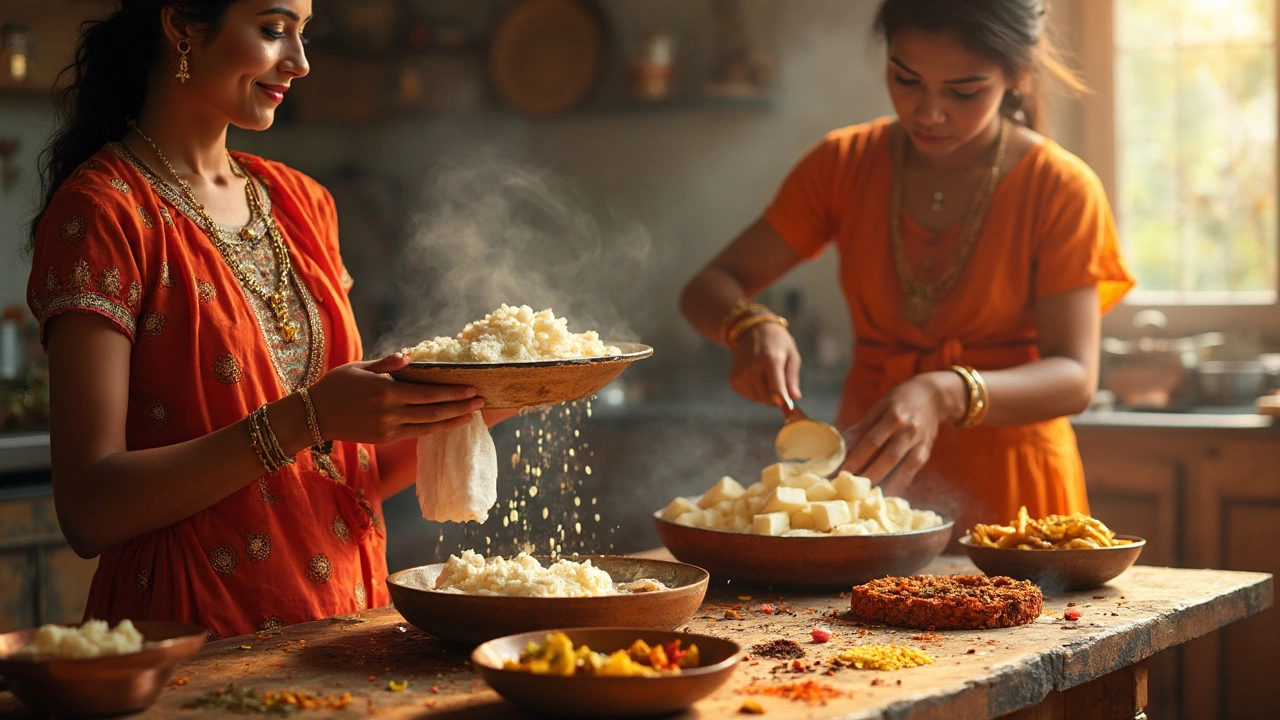
Paneer vs Chena: What Sets Them Apart for Homemade Cheese Lovers
Wondering why your rasgulla and paneer never turn out the same? Although paneer and chena are both fresh cheeses made from curdling milk, they're not identical twins. Their texture, use, and even how you drain them can totally change your dish. This article breaks down what really sets paneer and chena apart, gives simple tips for making each at home, and helps you get perfect results whether you're after fluffy chena for sweets or firmer paneer for savory dishes.