Depth Flavor in Indian Cooking: How Spices, Technique, and Time Create Unforgettable Taste
When we talk about depth flavor, the rich, layered taste that lingers long after the first bite, built through slow cooking, spice blending, and careful technique. It’s not just about adding more spices—it’s about how they’re used, when they’re added, and how long they have to speak to each other. This is the soul of Indian cooking. You can’t fake it with a powder blend from a jar. Real depth flavor comes from toasting cumin seeds until they snap, letting onions caramelize into sweetness, or simmering yogurt into a curry until it thickens and transforms. It’s why your grandma’s chicken curry tastes different from the restaurant’s—even if they use the same spices.
It’s no accident that biryani gets its unforgettable smell from kewra water, a fragrant floral essence distilled from pandan flowers, used sparingly to lift the entire dish, or that saffron threads are soaked before being sprinkled over rice. These aren’t garnishes—they’re flavor architects. The same goes for paneer, a fresh, non-melting Indian cheese that holds its shape in spicy gravies, absorbing flavor without dissolving. It doesn’t just sit in the curry—it becomes part of the flavor story. And when you cook it right, that tender bite carries the warmth of ginger, the earthiness of coriander, and the slow burn of chili—all layered over hours.
Depth flavor isn’t loud. It doesn’t shout. It whispers through the steam rising off a pot of dal tadka, where mustard seeds pop in hot oil just before they hit the lentils. It’s in the way a potato in biryani soaks up the broth, becoming soft and sweet, not starchy and dull. It’s why you don’t just taste the spices—you taste the time they spent together. You can’t rush it. You can’t skip the step where you let the garlic fry just until golden, not burnt. That’s where the magic hides.
What you’ll find below isn’t a list of recipes. It’s a map to how flavor is built in Indian kitchens—from the science behind why lemon juice turns milk into paneer, to why roti won’t puff if your dough isn’t rested long enough. You’ll learn how the red in tandoori chicken comes from Kashmiri chili, not food dye, and how a simple chutney substitute can still deliver that sweet-spicy punch. Every post here is a piece of the puzzle. Put them together, and you’ll start cooking not just with instructions—but with understanding.
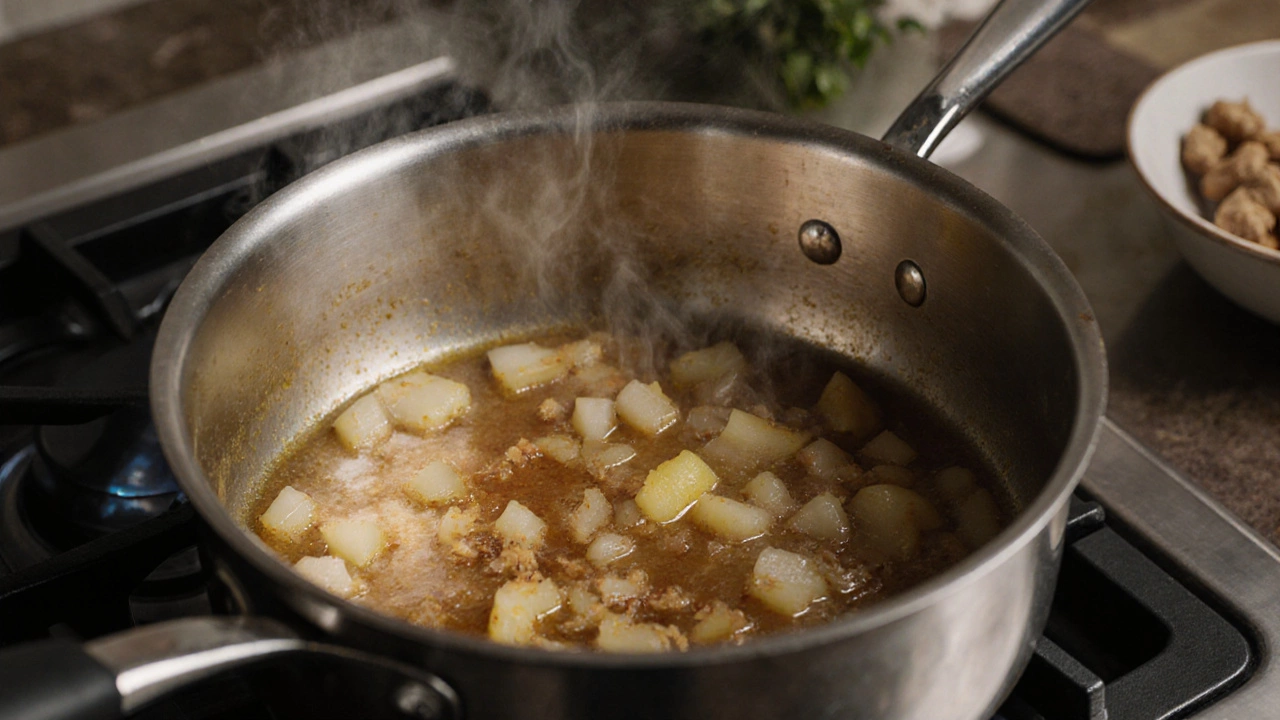
How to Add Depth to Chicken Curry - Essential Tips & Techniques
Learn how to add real depth to chicken curry with aromatic spices, umami boosters, acids, and technique tips for a restaurant‑level flavor.