Curry Chicken Temperature: Perfect Cooking Heat for Tender, Safe Chicken
When you cook curry chicken, a dish where chicken simmers in spiced sauce until tender and flavorful. It's not just about taste—it's about hitting the right internal temperature to make sure it's safe and juicy. Too low, and you risk undercooking. Too high, and your chicken turns dry and rubbery. The sweet spot? 165°F (74°C). That’s the temperature the USDA says chicken must reach to kill harmful bacteria like Salmonella and Campylobacter. No guessing. No cutting into it to check. Just use a simple meat thermometer.
This isn’t just about safety—it’s about texture. Chicken cooked to 165°F stays moist, especially when it’s been slow-simmered in a rich curry. If you’re using bone-in pieces, the temperature should be measured at the thickest part, away from the bone. Boneless chicken breasts cook faster, so keep an eye on them after 15 minutes. The sauce doesn’t need to boil hard; a gentle simmer lets the spices infuse without toughening the meat. You’ll find this in many of the posts below—like how to build depth in chicken curry or how to make it restaurant-perfect—because temperature is the silent rule behind every great dish.
Some people think if the chicken looks white and the sauce is bubbling, it’s done. But appearance lies. A chicken thigh might look cooked at 155°F, but it’s not safe yet. And if you’re using leftover chicken in curry, make sure it’s reheated to 165°F too. This is the same standard used in Indian restaurants where chicken curry is made in large batches. They don’t wing it. Neither should you.
Related to this is the chicken curry, a broad category of Indian dishes where chicken is cooked with spices, tomatoes, onions, and often yogurt or coconut milk. The temperature rule applies whether you’re making a North Indian butter chicken or a South Indian coconut-based curry. Even if you’re using a pressure cooker or slow cooker, the final internal temp still needs to hit 165°F. No shortcuts.
And don’t forget the meat thermometer, a small, affordable tool that takes the guesswork out of cooking meat. It’s not fancy. It doesn’t need Wi-Fi or an app. Just stick it in, wait two seconds, and you’ll know. No more cutting into your curry, spilling the sauce, or wasting perfectly good chicken because you were unsure.
What you’ll find below are real posts from home cooks and chefs who’ve tested this over and over—how to get tender chicken in curry, why some recipes fail, and how to avoid common mistakes like overcooking or under-seasoning. These aren’t theories. They’re results. You’ll learn how to time your curry so the chicken stays juicy, how to adjust heat based on your stove or pot, and why temperature matters more than the number of spices you use. This isn’t about following a recipe blindly. It’s about understanding the science behind the flavor—and making sure your chicken is safe, succulent, and always right.
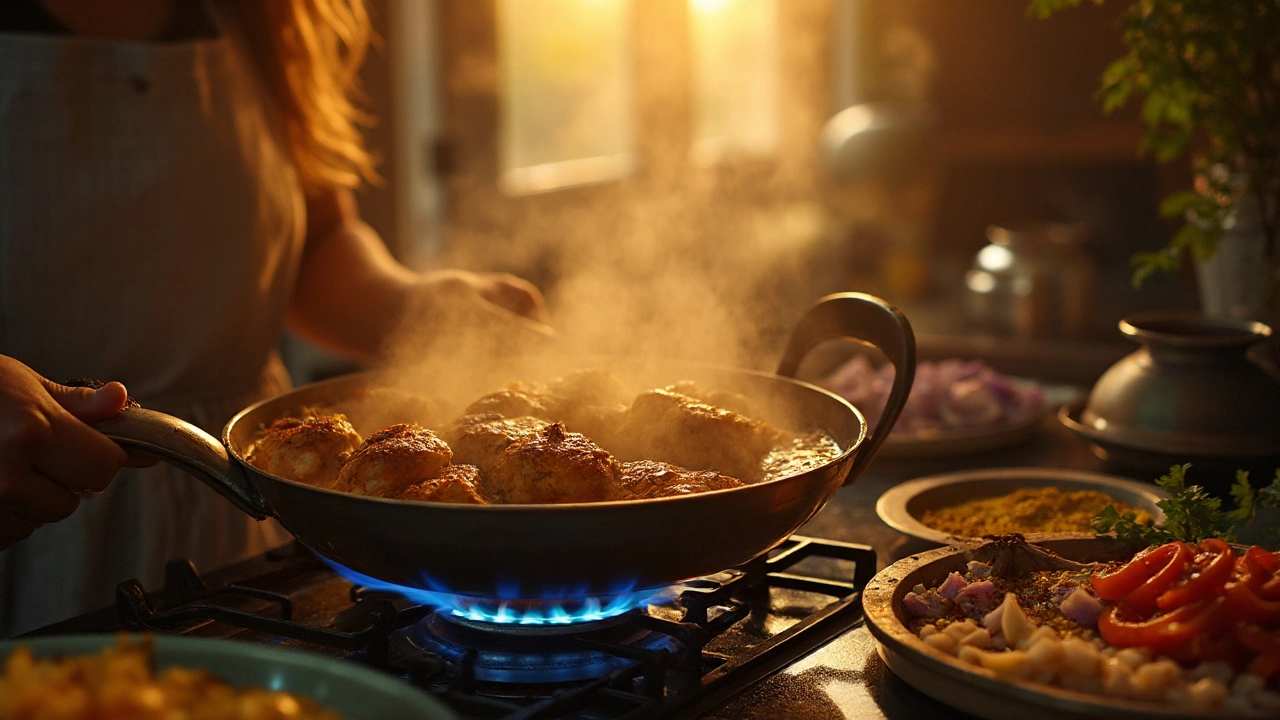
Should You Cook Chicken Before Adding to Curry? Best Methods, Times, and Safety Tips
Wondering if chicken should be cooked before adding to curry? Learn when to sear, simmer raw, or pre-cook, plus safe temps, times, and easy methods.