Cook Chicken Before Curry: Essential Steps for Maximum Flavor
When you're making chicken curry, a spiced, slow-simmered dish where chicken is the star, often layered with onions, tomatoes, and aromatic spices. Also known as chicken masala, it's one of the most popular Indian home-cooked meals. But here’s the thing—most people skip the most important step: cooking chicken before curry. If you toss raw chicken straight into the spice mix, you’re not just risking uneven cooking—you’re missing out on deep, rich flavor that comes from browning, searing, and locking in juices.
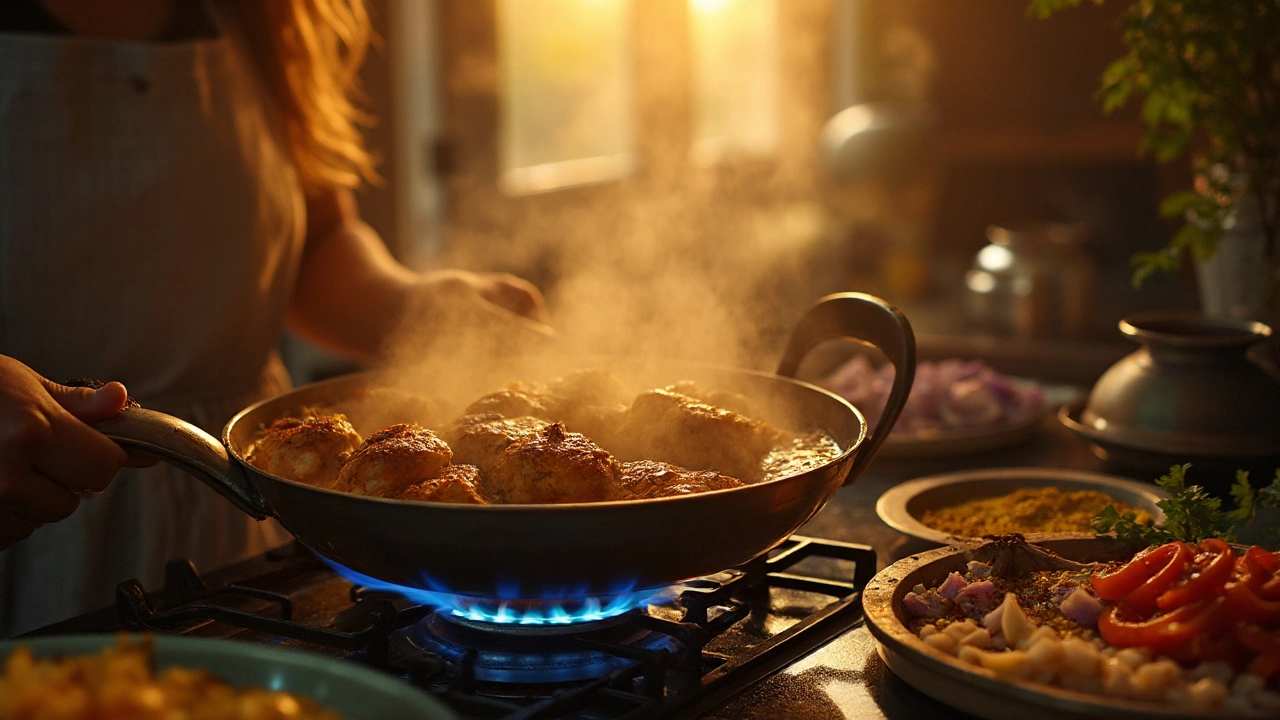
Chicken needs to be treated like a protein, not just an ingredient. Searing it in hot oil with a pinch of salt and turmeric creates a caramelized crust that adds umami. That’s not just taste—it’s texture. The Maillard reaction, which happens when proteins and sugars brown under heat, gives your curry a backbone. Skip it, and your chicken stays bland, watery, and mushy. Even if you’re using bone-in pieces, you still need to sear them first. The fat renders, the skin crisps, and the meat absorbs the oil and spices better later. This isn’t optional—it’s how every professional Indian cook starts their curry.
And it’s not just about the chicken. The oil you use to cook it becomes the flavor base. When you fry garlic, ginger, and whole spices like cumin and cardamom in that same oil after removing the chicken, they bloom perfectly. That’s how you get layered depth—not just from the spice blend, but from the entire cooking process. Some recipes say to add chicken raw and simmer it for 40 minutes. That’s a myth. By then, the chicken is overcooked, the sauce is thin, and the spices taste flat. Real flavor comes from control: brown first, then simmer.
You’ll find this technique in every region—from Punjabi tandoori-style curries to Bengali mustard-based ones. Even in slow-cooked dishes like Rogan Josh, the meat is browned before the gravy builds. The same logic applies whether you’re using thighs, breasts, or drumsticks. Bone-in gives more flavor, but boneless needs even more care—don’t overcook it after browning. Let it rest off the heat for five minutes before adding it back to the curry. That’s how you keep it juicy.
And don’t forget the salt. Adding it early, when you sear the chicken, helps it retain moisture. Wait until the end, and you’ll end up with dry meat and a salty sauce. It’s a balance. The spices, the oil, the timing—they all connect. This is why some chicken curries taste like they came from a restaurant, and others taste like boiled chicken in sauce. It’s not the recipe. It’s the prep.
Below, you’ll find real posts from home cooks and chefs who’ve cracked this step. From how long to brown chicken before adding tomatoes, to why some skip it and end up with watery curry, to the exact temperature that locks in flavor without burning spices. You’ll see what works, what doesn’t, and why the simplest trick—cooking chicken before curry—is the one that makes all the difference.
Should You Cook Chicken Before Adding to Curry? Best Methods, Times, and Safety Tips
Wondering if chicken should be cooked before adding to curry? Learn when to sear, simmer raw, or pre-cook, plus safe temps, times, and easy methods.