Ever stared at a jar of chutney and a jar of relish on the grocery shelf and wondered why they look so similar but taste so different? You’re not alone. Even in kitchens that cook Indian food regularly, people mix them up. But chutney and relish aren’t just two names for the same thing-they’re from different worlds, with different histories, textures, and uses. If you’ve ever tried to substitute one for the other in a recipe and ended up with something that just didn’t click, this is why.
Chutney: The Ancient Condiment with Depth
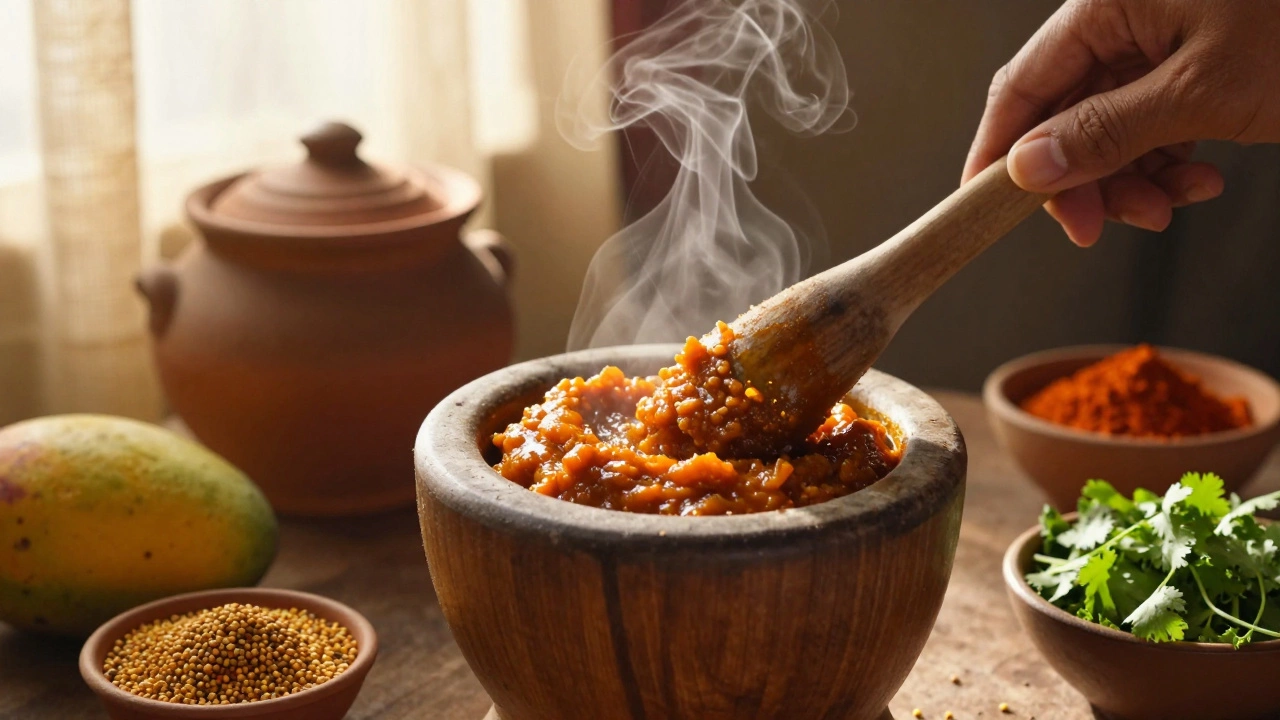
Chutney comes from India, where it’s been made for thousands of years. The word itself comes from the Sanskrit word chatni, meaning "to lick"-a hint that it’s meant to be flavorful, almost addictive. Traditional Indian chutneys are made fresh daily, often with just three to five ingredients: fruit or vegetables, vinegar or tamarind, sugar or jaggery, spices like mustard seeds or cumin, and sometimes fresh herbs like cilantro or mint.
Think of mango chutney. It’s sweet, tangy, and a little spicy, with soft chunks of ripe mango simmered down into a thick, jam-like paste. Mint chutney? Bright, green, and punchy, made with cilantro, green chilies, yogurt, and lime. These aren’t just toppings-they’re flavor engines. In Indian meals, chutney isn’t an afterthought. It’s served alongside dosas, samosas, or even eaten with plain rice to lift the whole dish.
What makes chutney unique is its balance. It’s not just sweet or sour-it’s all of it at once. A good chutney has layers. You taste the fruit, then the spice, then the tang, then the sweetness that lingers. It’s designed to awaken your palate, not just coat your tongue.
Relish: The American Pickle Cousin
Relish, on the other hand, is a product of American and European pickling traditions. It’s usually made from chopped vegetables-most commonly cucumbers, but also bell peppers, onions, or even corn. These are pickled in vinegar, salt, and sugar, then cooked down into a chunky, crunchy condiment. Unlike chutney, relish doesn’t rely on fruit or complex spice blends. Its job is simple: add sharpness and texture to hot dogs, burgers, or sandwiches.
Think of the bright green pickle relish you find in every American grocery store. It’s sweet, tangy, and crunchy, but there’s no depth beyond that. No cardamom, no cumin, no fresh herbs. Just vinegar, sugar, and chopped pickles. Even the fancy varieties, like sweet onion relish or spicy tomato relish, stick to the same formula: chopped, pickled, and cooked.
Relish is about crunch. It’s meant to be heard as much as tasted. That’s why it’s rarely cooked down to a smooth paste. Even when it’s cooked, it keeps its texture. It’s a garnish, not a flavor base. You don’t eat relish with rice. You put it on a hot dog.
Texture: Jam vs. Chunky Pickle
One of the easiest ways to tell them apart? Touch.
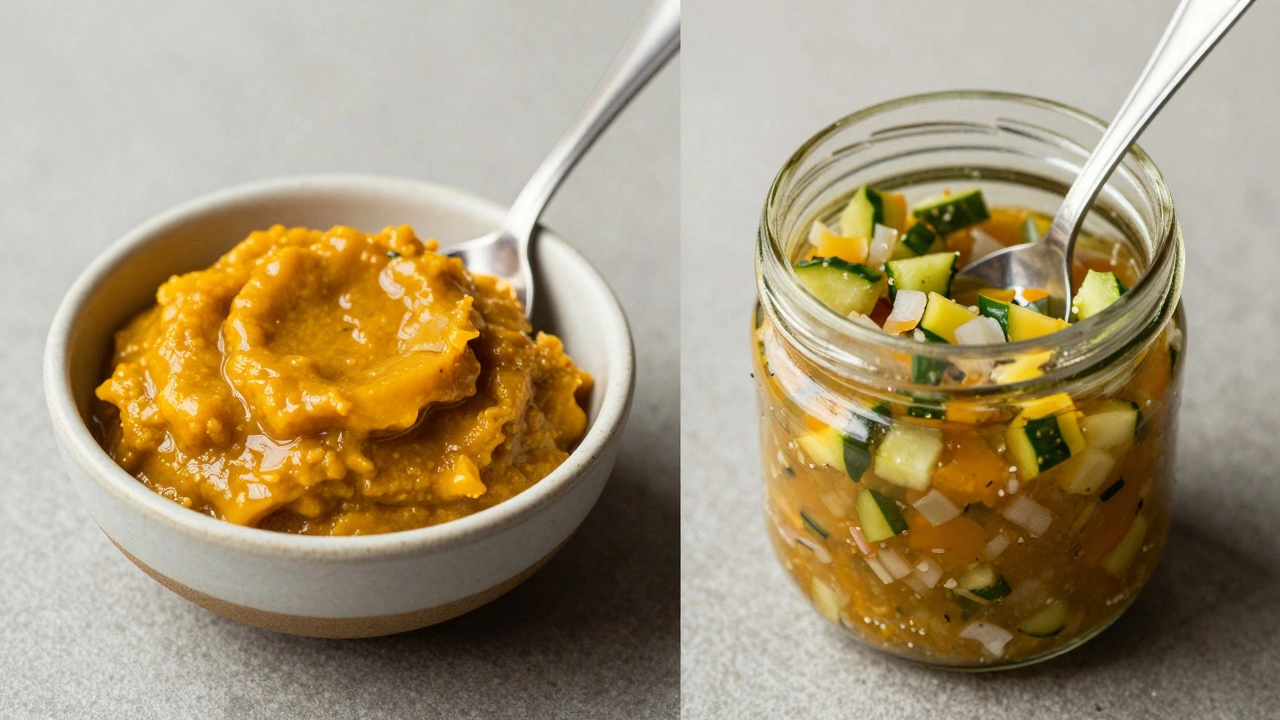
Chutney is thick, smooth, and often spreadable-like a fruit preserve. Even the chunkier versions, like coconut chutney, are still soft enough to melt into the food they’re served with. It clings to a spoon. It doesn’t fall off.
Relish? It’s got bite. Literally. You can see the pieces. You can feel them between your teeth. It’s designed to hold its shape, even after sitting in a sandwich for five minutes. That’s why you can’t use relish as a dip for samosas-it’ll slide right off.
There are exceptions, of course. Some Indian chutneys, like tomato chutney, can be a little chunky. And some American relishes, like sweet pickle relish, can be almost paste-like. But even then, the flavor profile gives it away. Chutney has warmth. Relish has bite.

Flavor Profiles: Spice vs. Vinegar
Chutney leans into complexity. It’s built on spices you won’t find in a standard American pantry: mustard seeds, fenugreek, asafoetida, curry leaves. It often includes fresh ingredients like ginger, garlic, or cilantro. The sweetness comes from jaggery or raw sugar, not refined white sugar. The sourness? Tamarind, lime, or unripe mango.
Relish? It’s vinegar-driven. Sugar balances the acid, but the star is the pickle brine. It’s clean, sharp, and one-dimensional in the best way. It doesn’t need complexity. It’s meant to cut through fatty meats, not complement them.
Try this: spread a spoonful of mango chutney on a piece of toast. Now do the same with pickle relish. The chutney wraps around your tongue-sweet, spicy, fruity. The relish? It hits you with vinegar, then sugar, then a faint hint of dill. No depth. No lingering warmth. Just a punch.
Uses in Cooking: Companion vs. Garnish
Chutney is a cooking ingredient. It’s stirred into curries, used as a marinade, or blended into sauces. In Indian households, it’s not just served on the side-it’s folded into dal, mixed into rice, or used as a glaze for grilled vegetables. A good chutney can transform a bland dish.
Relish? It’s almost always served cold, on top. It’s a finishing touch. You don’t bake with it. You don’t simmer it into a stew. You spoon it on a burger, a hot dog, or a plate of fries. It’s not meant to change the dish. It’s meant to contrast it.
That’s why you can’t swap them in recipes. If you use relish in place of mango chutney in a chicken curry, you’ll get vinegar and dill instead of caramelized fruit and warm spices. The dish will taste off. And if you try to use chutney on a hot dog, you’ll get a sweet, sticky mess that doesn’t cut through the fat the way relish does.
Storage and Shelf Life
Traditional Indian chutneys are made fresh and last a few days in the fridge. Some versions, like tamarind or mango chutney sold in jars, are cooked longer and can last months. But even those rely on sugar and acid for preservation, not pasteurization.
Relish is shelf-stable. Most commercial brands are canned and pasteurized. They sit on grocery shelves for a year or more. That’s because they’re designed for mass distribution, not daily freshness.
That’s another clue: if it’s in a glass jar with a metal lid and a best-by date two years out, it’s probably relish. If it’s in a small plastic tub with no expiration date and says "made fresh daily," it’s chutney.
Can You Substitute One for the Other?
Technically? Yes. Practically? No.
If you’re out of mango chutney and need something sweet and tangy for a curry, you could use a sweet relish-but you’ll lose the spice, the fruit, the warmth. It’ll work in a pinch, but it won’t be the same.
And if you’re making a classic American hot dog and only have coconut chutney? You’ll get a weirdly sweet, coconutty mess. It won’t taste wrong-it’ll just taste like the wrong thing.
Think of it like this: chutney is a symphony. Relish is a single note. You can play a single note in a symphony, but it won’t carry the piece.
Try This: Make Your Own
If you want to taste the difference for yourself, make both in one afternoon.
For chutney: Simmer 2 cups of chopped mango with 1/4 cup sugar, 2 tablespoons tamarind paste, 1 teaspoon mustard seeds, and a pinch of chili powder. Let it cool. It’ll be thick, fragrant, and sweet with a kick.
For relish: Chop 1 cup of pickled cucumbers, 1/2 cup onion, and 1/2 cup bell pepper. Mix with 1/4 cup vinegar, 2 tablespoons sugar, and 1 teaspoon salt. Let it sit for an hour. It’ll stay crunchy and sharp.
Try them side by side. You’ll know right away.