Craving something crunchy without the guilt? You’re not alone. Many people think crispy snacks mean fried, greasy, and loaded with salt - but that’s not true, especially in Indian cuisine. The truth is, India has a rich tradition of crispy snacks that are naturally healthy, made with whole ingredients, and cooked in smart ways. The question isn’t whether you can find a healthy crispy snack - it’s which one is the healthiest.
Why Most Store-Bought Crisps Fail
Walk into any grocery store and you’ll see bags of branded namkeen, chips, and puffed snacks. They’re cheap, convenient, and taste great - but they’re also loaded with refined flour, hydrogenated oils, artificial flavors, and sodium. A single 30-gram pack of regular bhujia can contain over 200 calories, 12 grams of fat, and 400 mg of sodium. That’s nearly a quarter of your daily sodium limit in one small bag.
These snacks are designed to trigger cravings, not nourish you. They’re stripped of fiber, vitamins, and protein. Even snacks labeled as "Indian" or "traditional" often use palm oil or refined sunflower oil - both high in saturated fat and linked to inflammation.
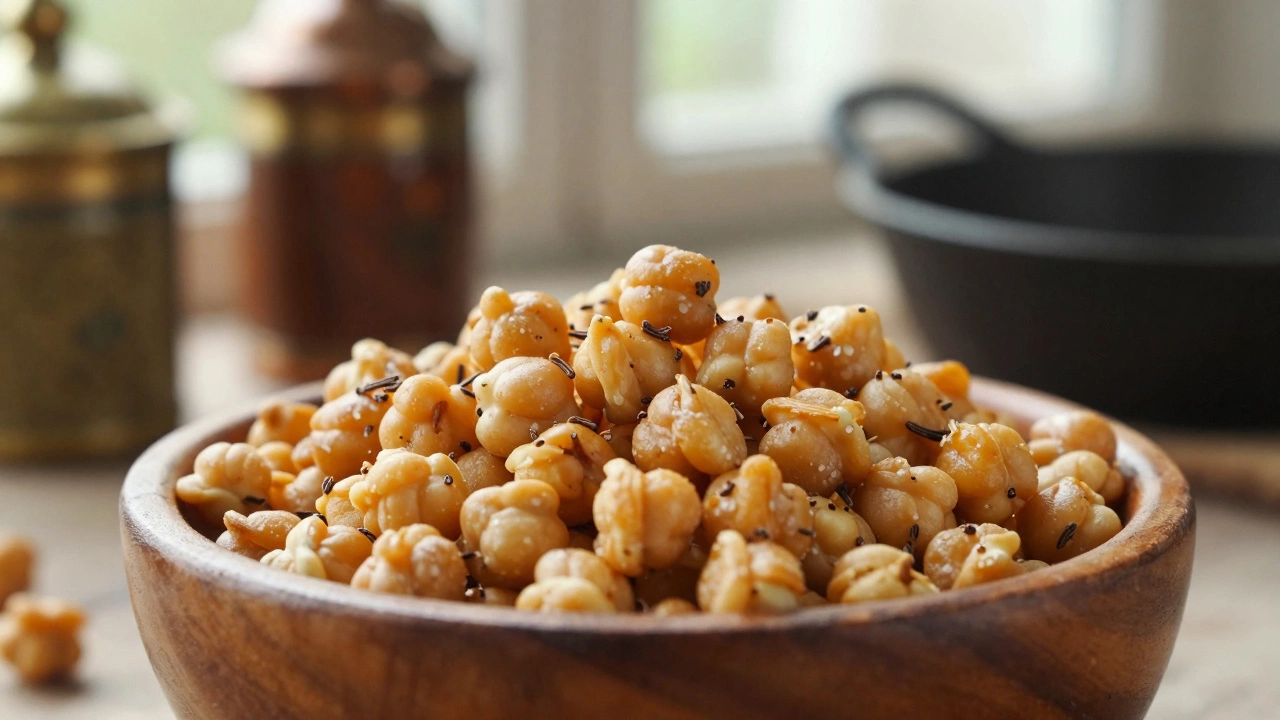
The Real Healthiest Crispy Snack: Roasted Chana
When you look at nutrient density, calorie-to-satiety ratio, and ingredient simplicity, roasted chana (roasted chickpeas) wins by a wide margin. It’s not flashy. It doesn’t come in bright packaging. But it’s packed with 14 grams of protein and 10 grams of fiber per 100 grams. That’s more protein than an egg and more fiber than a slice of whole wheat bread.
Roasted chana is naturally gluten-free, low in fat (under 5 grams per 100g), and has a low glycemic index. It keeps you full longer, stabilizes blood sugar, and doesn’t spike insulin. You can buy it plain or lightly seasoned with cumin, black salt, or chili powder - all natural spices with anti-inflammatory benefits.
Studies from the Indian Journal of Clinical Biochemistry show that regular consumption of roasted chana improves lipid profiles and reduces visceral fat in adults. It’s not just a snack - it’s a metabolic support tool.
Other Top Healthy Crispy Snacks From India
Roasted chana is the top choice, but it’s not the only one. Here are five other crispy snacks that are genuinely healthy - if prepared right:
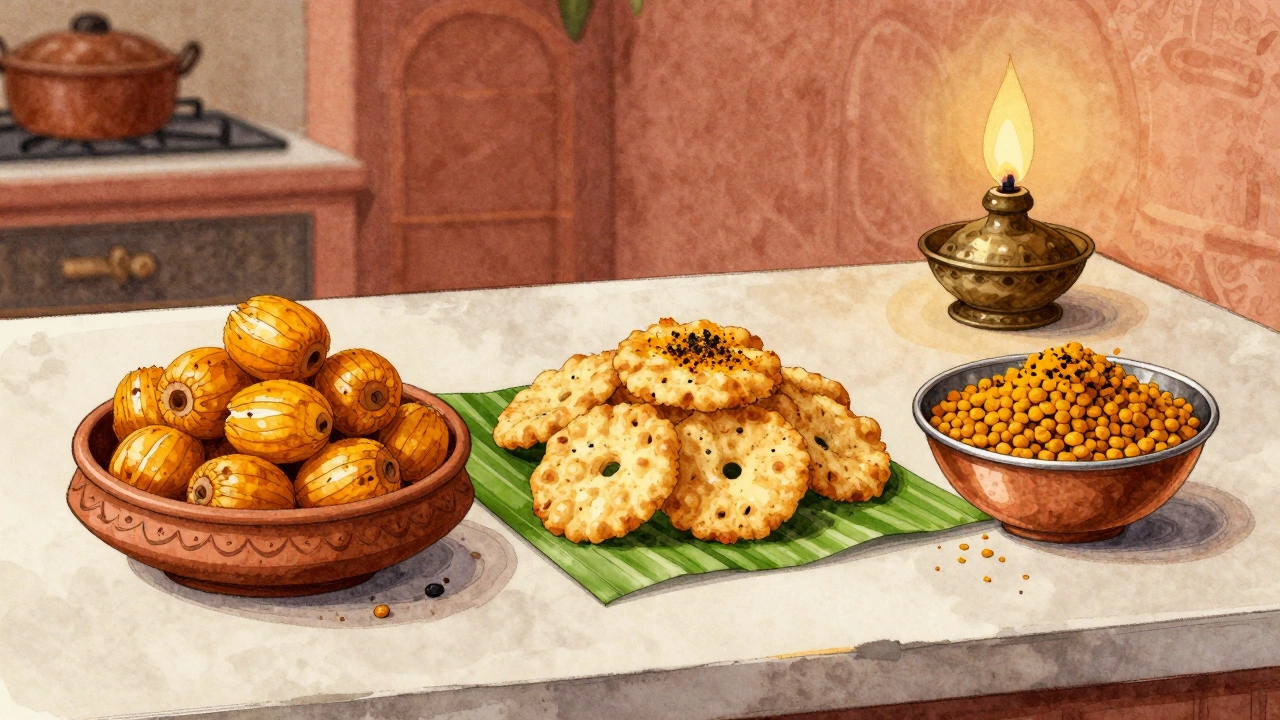
- Roasted Makhana (Fox Nuts): These are the puffed lotus seeds used in temple offerings and festive snacks. Naturally low in sodium and fat, they’re rich in magnesium and potassium. Air-popped or lightly roasted with turmeric and black pepper, they’re a great alternative to popcorn.
- Baked Sev: Traditional sev is fried in oil, but baked versions use gram flour (besan), water, and spices, then oven-baked until crisp. One serving has 70% less fat than fried sev and retains the same savory crunch.
- Chickpea Flour Crackers: Made from besan, water, olive oil, and herbs, these crackers are baked, not fried. They’re high in plant protein and contain no refined flour. You can make them at home in under 20 minutes.
- Spiced Roasted Lentils: Masoor dal (red lentils) or moong dal (yellow lentils) roasted with ajwain and cumin become crunchy, protein-rich snacks. They’re easy to digest and great for gut health.
- Crispy Vegetable Chips: Thinly sliced sweet potato, beetroot, or zucchini, tossed in a little olive oil and salt, then baked until crisp. These deliver vitamins A and C, antioxidants, and fiber - without the deep fryer.
What to Avoid (Even If It’s "Traditional")
Not every crispy snack from India is healthy. Watch out for these:
- Fried Samosas: The pastry is made with refined flour and hydrogenated oil. The filling is often starchy and low in protein. Even if filled with peas or potatoes, they’re calorie-dense and low in nutrients.
- Fried Bhujia and Sev: Unless labeled "baked," assume it’s fried in reused oil. Repeated heating creates trans fats, which raise bad cholesterol and lower good cholesterol.
- Extruded Puffed Snacks: Brands like "PepsiCo’s Kurkure" or "Haldiram’s Bhel Puri Mix" are made from refined corn or rice flour, then extruded and deep-fried. They’re mostly air and additives.
- Flavored Namkeen Mixes: These often contain MSG, artificial colors, and high-fructose corn syrup. Read the label - if you can’t pronounce half the ingredients, skip it.
How to Make Healthy Crispy Snacks at Home
Homemade is always better. Here’s how to make three simple, healthy crispy snacks in under 30 minutes:
- Roasted Chana: Rinse 1 cup dried chickpeas, soak overnight, drain, and pat dry. Toss with 1 tsp olive oil, 1/2 tsp cumin powder, 1/4 tsp black salt, and a pinch of chili. Spread on a baking sheet and roast at 200°C for 40 minutes, shaking halfway. Let cool - they’ll crisp up as they sit.
- Baked Makhana: Heat 1 tsp ghee or coconut oil in a pan. Add 1 cup makhana and stir on low heat for 5 minutes until puffed and golden. Sprinkle with a pinch of turmeric and rock salt. Cool and store in an airtight jar.
- Besan Crackers: Mix 1 cup besan, 1/4 tsp ajwain, 1/4 tsp black pepper, 1 tbsp olive oil, and enough water to form a stiff dough. Roll thin, cut into squares, and bake at 180°C for 15-20 minutes until golden. Break apart while warm.
Why Texture Matters - And How to Keep It Healthy
Crispiness isn’t just about taste - it’s about satisfaction. Crunch triggers dopamine release, which makes us feel rewarded. But you don’t need deep frying to get that crunch. Roasting, baking, and air-drying preserve texture while removing unhealthy fats.
Studies from the University of California show that people who eat crunchy, high-fiber snacks feel more satisfied than those who eat soft or mushy snacks - even when calories are equal. That’s why roasted chana works: it gives you the crunch you crave, with the nutrition your body needs.
Who Should Eat These Snacks?
These snacks aren’t just for weight watchers. They’re ideal for:
- Students who need steady energy between classes
- Office workers avoiding afternoon sugar crashes
- Diabetics looking for low-glycemic options
- Parents wanting clean snacks for kids
- Athletes needing plant-based protein between meals
They’re also great for fasting days, post-workout recovery, or as a mid-morning pick-me-up. Swap out your usual chips for roasted chana, and you’ll notice less bloating, fewer cravings, and better focus by afternoon.
Final Verdict: The Healthiest Crispy Snack Is Simple, Whole, and Homemade
There’s no magic ingredient. No secret superfood. The healthiest crispy snack is the one made from whole, unprocessed ingredients, cooked without deep frying, and eaten in moderation. Roasted chana checks every box: it’s affordable, shelf-stable, nutrient-rich, and satisfying.
Don’t fall for fancy labels or colorful packaging. Real health doesn’t come in a bag with a 20-ingredient list. It comes from the kitchen - with a baking sheet, a spice jar, and a little patience.
Try one of these snacks for a week. Swap your afternoon chips for roasted chana. Notice how your energy holds steady. Notice how you don’t reach for a second bag. That’s the real benefit - not just health, but control.
Is roasted chana really healthier than popcorn?
Yes, roasted chana is healthier than plain popcorn. While popcorn is low in fat, it’s mostly carbs with little protein or fiber. Roasted chana has double the protein and triple the fiber per serving. It also has more magnesium, iron, and folate. Popcorn is fine as an occasional snack, but roasted chana is a nutrient-dense meal extender.
Can I eat crispy snacks if I have diabetes?
Yes - but only the right kinds. Avoid fried or sugary snacks. Roasted chana, baked makhana, and lentil crackers have a low glycemic index and high fiber, which help control blood sugar spikes. Always check portion sizes - even healthy snacks can add up in calories. Stick to 1/4 cup per serving.
Are store-bought "healthy" Indian snacks really good for you?
Most aren’t. Brands often use the word "healthy" to market fried snacks with added sugar, preservatives, or palm oil. Always read the ingredient list. If it contains hydrogenated oil, refined flour, or artificial flavors, it’s not healthy - no matter what the front says. Look for snacks with 5 ingredients or fewer.
How long do homemade crispy snacks last?
When stored in an airtight container away from moisture, roasted chana and baked makhana last 2-3 weeks. Baked crackers last about 10-14 days. If they lose their crunch, pop them in a 160°C oven for 5-10 minutes to revive them.
Can kids eat roasted chana?
Yes, but with caution. Whole roasted chana can be a choking hazard for children under 4. For toddlers, crush or grind them into a powder and mix into dals or porridge. Older kids can eat them whole - just supervise the first few times to ensure they chew well.
Next Steps: Start Small, Stay Consistent
You don’t need to overhaul your snack routine overnight. Start by replacing just one unhealthy snack per day - say, your afternoon chips - with roasted chana. Keep a small jar on your desk, in your bag, or by the TV. After a week, you’ll notice you’re less hungry between meals and more energized.
Then try one more: maybe baked makhana instead of popcorn. Or homemade besan crackers instead of store-bought namkeen. Each swap adds up. You’re not just eating better - you’re retraining your taste buds to crave real food.
Crunch doesn’t have to cost you your health. In fact, the best Indian crispy snacks were never meant to be fried. They were meant to be roasted, baked, and shared - with flavor, not guilt.