Water to Dal Ratio: Perfect Ratios for Soft, Creamy Lentils Every Time
When you cook dal, a staple Indian dish made from split lentils or pulses. It’s not about guesswork—it’s about the water to dal ratio. Get it wrong, and you end up with mushy sludge or hard, undercooked beans. Get it right, and you get creamy, comforting dal that clings to rice just right. The truth? Not all dals need the same amount of water. Toor dal, chana dal, moong dal—they all behave differently. That’s why a single ratio doesn’t work for everything.
The water to dal ratio, the proportion of liquid to lentils used during cooking changes based on the type of dal, whether it’s soaked, and how you want the final texture. For most everyday dals like yellow moong or toor dal, a 3:1 ratio (three parts water to one part dal) works best for stovetop cooking. If you’re using a pressure cooker, drop it to 2:1. Why? Pressure builds steam, so you need less water. If you’re making dal tadka, you might even go with 2.5:1 to keep it thick and rich. But if you’re cooking masoor dal or red lentils, which break down easily, stick to 3:1 and stir gently—you don’t want it turning into soup.
Here’s what trips people up: they treat all lentils like they’re the same. Chana dal? That’s dense. It needs more water and longer cooking—even 4:1 if you’re not soaking it overnight. Urad dal? It swells a lot. Use 3.5:1 and expect it to turn creamy, not grainy. And don’t forget rinsing. Skipping that step means extra starch in the water, which makes dal sticky and cloudy. Rinse until the water runs clear, then measure your water precisely. No eyeballing.
The cooking method, how you heat and simmer your dal matters just as much as the ratio. Boiling hard? You’ll break the lentils too soon. Simmering low and slow? That’s how you get flavor and texture. And don’t salt early—salt tightens the skins. Add it in the last five minutes. Same with acid—lemon juice or tomatoes. Add those at the end too, or your dal will stay hard.
You’ll find these same principles in posts about dal tadka, chana masala, and even how to make perfect idli batter—because the science of legumes doesn’t change. Whether you’re making a simple home meal or a festive dish, getting the water right is the quiet hero behind every great bowl of dal. Below, you’ll find real recipes and fixes from cooks who’ve been there—flat dal, watery dal, undercooked dal. No fluff. Just what works.
Water to Dal Ratio: The Simple Trick for Perfect Dal Every Time
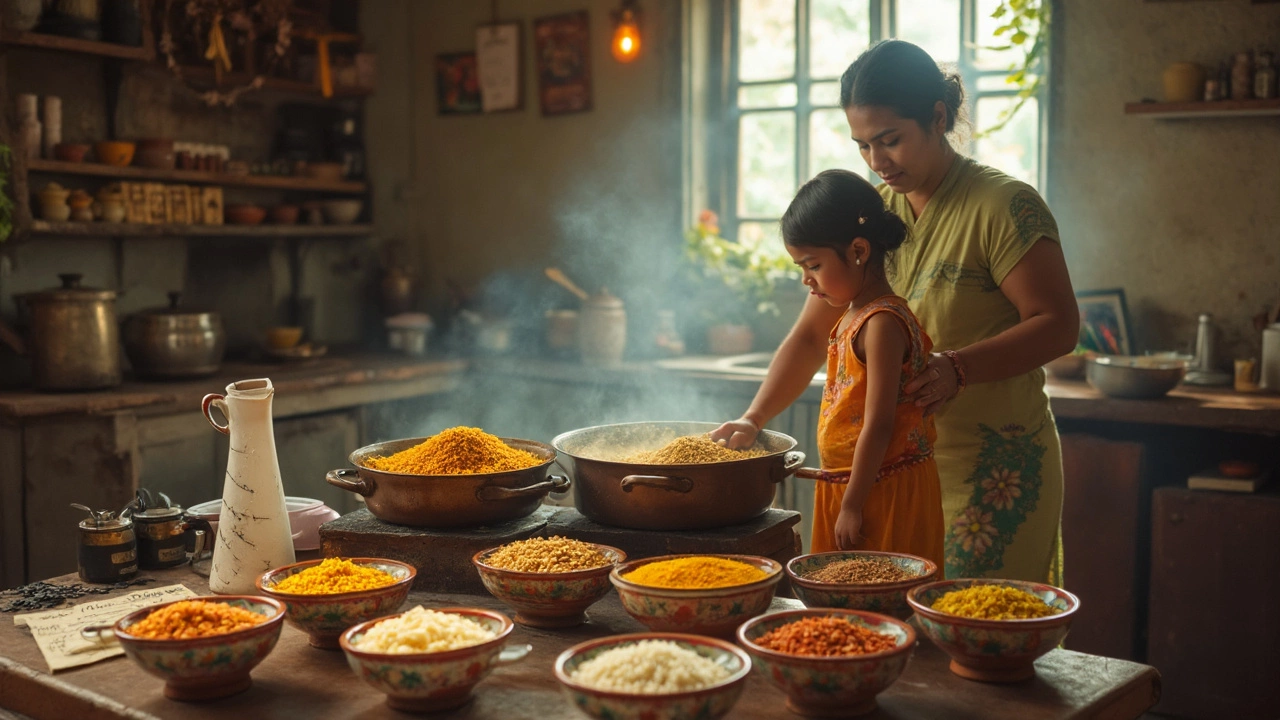
Getting the water to dal ratio right can mean the difference between a creamy, luscious dal or a pot of mushy disappointment. This article explains how much water you actually need for different types of dals – because not all lentils are created equal. You'll get hands-on tips that make dal recipes much easier and taste way better. No guesswork, just straightforward answers. Plus, discover tweaks that suit pressure cookers, stovetops, and even picky kids at the table.