Spice Blends: The Heart of Indian Cooking and How to Use Them
When you think of Indian food, you’re really thinking of spice blends, mixtures of ground spices tailored to specific dishes, regions, and flavors. Also known as masalas, these aren’t just seasonings—they’re the foundation of flavor, the secret behind that deep, complex taste you can’t replicate with a single spice. A spice blend isn’t random. It’s a carefully balanced formula passed down through generations, where cumin wakes up the palate, coriander smooths it out, turmeric adds earthiness, and chili brings the heat. In biryani, it’s whole spices toasted in ghee before grinding; in chicken curry, it’s a wet paste of ground spices fried until fragrant. The difference between good and great Indian food often comes down to how well you understand and use these blends.
Spice blends don’t work in isolation—they connect to other key elements in Indian cooking. biryani spices, a specific blend of cardamom, cloves, cinnamon, and saffron used to infuse rice with aroma, are useless without the right technique: layering, steaming, and sealing the pot. curry spice blend, a base mix of coriander, cumin, turmeric, and fenugreek used in most curries needs to be fried in oil first—raw, it tastes flat. And masala, a broad term for any spice mixture, from garam masala to chaat masala, changes completely depending on whether it’s used before, during, or after cooking. You can’t just toss it in at the end and expect magic. Timing matters. Heat matters. Order matters.
What you’ll find in the posts below isn’t just a list of recipes. It’s a deep dive into how these blends actually work. You’ll learn why biryani smells like heaven (it’s not just curry powder), how to fix a bland curry by adjusting your spice mix, and which spices make the difference between a good dish and one that makes people ask for the recipe. You’ll see how chutney, paneer, and even tandoori chicken’s red color all tie back to the same core idea: spice blends aren’t optional—they’re the reason Indian food tastes like nothing else. Whether you’re new to this or you’ve been cooking for years, understanding these blends will change how you cook. No more guessing. No more copying blindly. Just real flavor, built from the ground up.
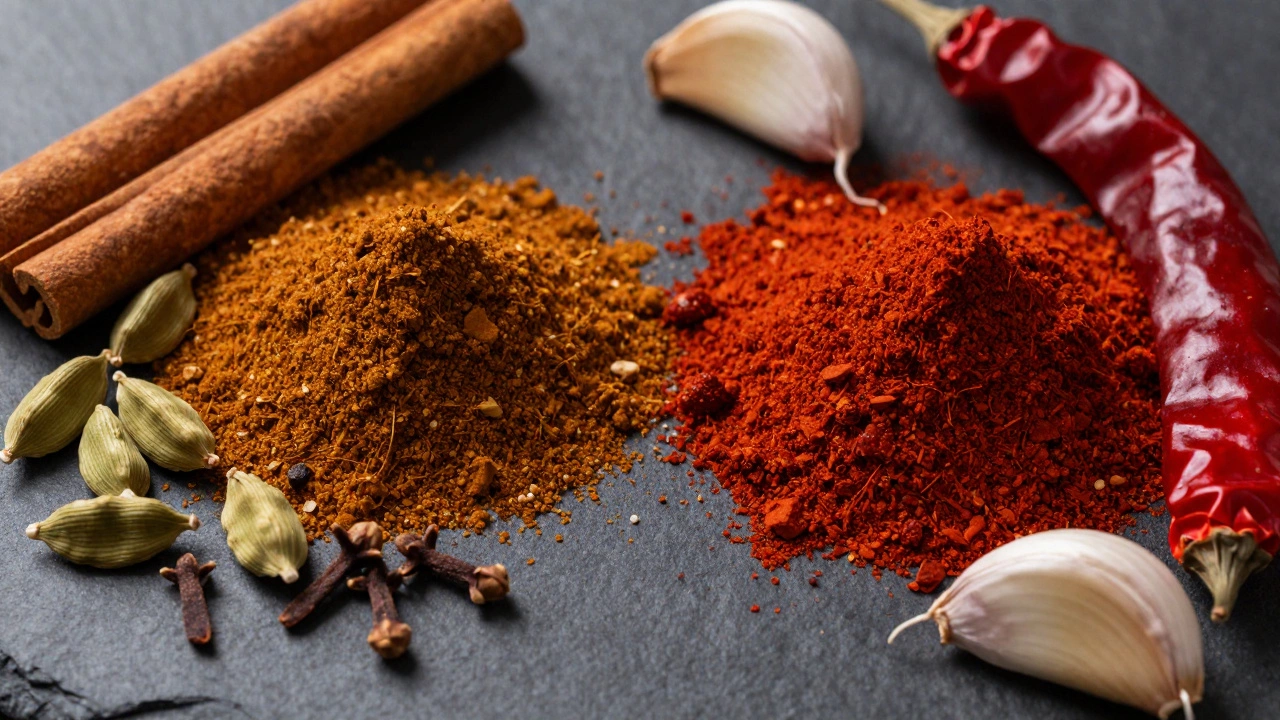
Garam Masala vs Tandoori Masala: What Is the Difference?
Discover the key differences between garam masala and tandoori masala. Learn which one to use for your tandoori chicken recipe to get authentic flavor and color.
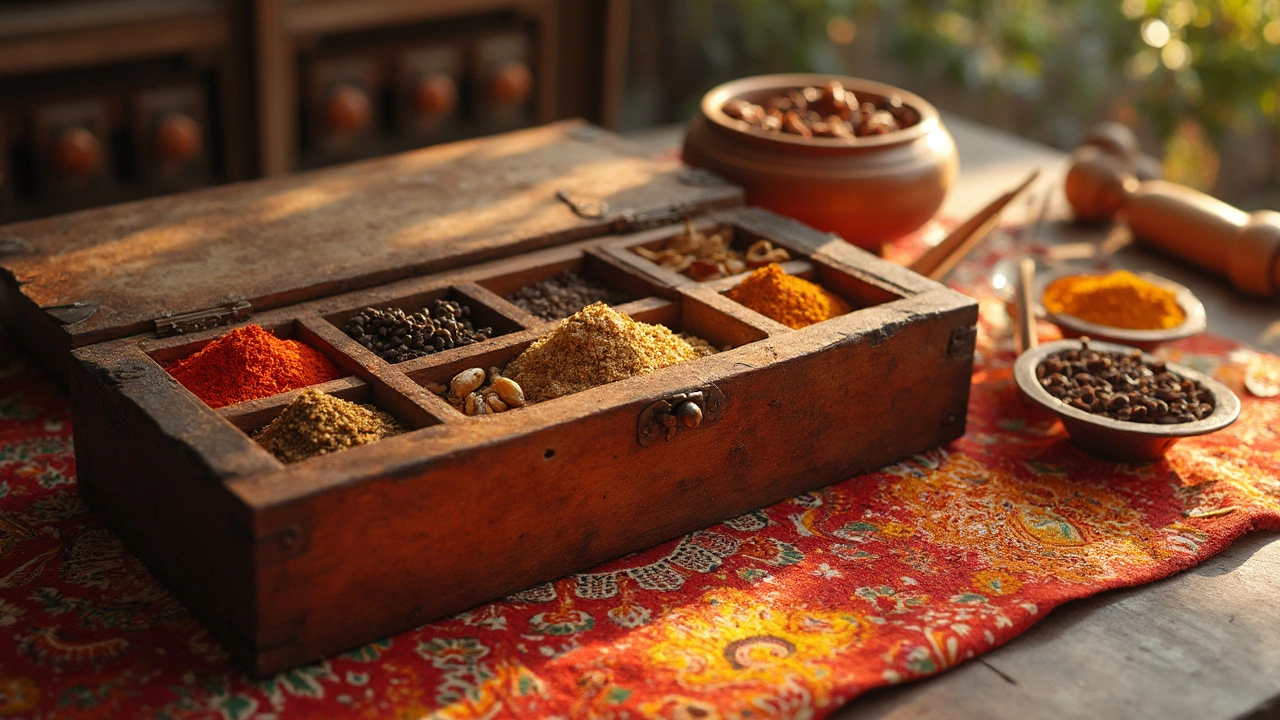
Which Spices Is Not Used in Garam Masala? Get Your Biryani Blend Right
Ever wondered which spices just don't belong in garam masala? Knowing what to skip can make or break your homemade biryani. This article breaks down common mix-ups, explains the key ingredients, and reveals why a few popular spices are always left out. Get the confidence to blend a perfect masala without second guessing. No more bland biryani or spice overkill!