Preparing Lentils: How to Cook Them Right, Avoid Common Mistakes, and Get the Most Nutrition
When you're preparing lentils, a small, nutrient-packed legume that's a staple in Indian homes. Also known as dal, it's not just food—it's the backbone of daily meals across India, from simple weekday dinners to festive spreads. Many people think lentils are just boiled beans, but there's a science to getting them tender without turning them to mush, and a rhythm to unlocking their full flavor.
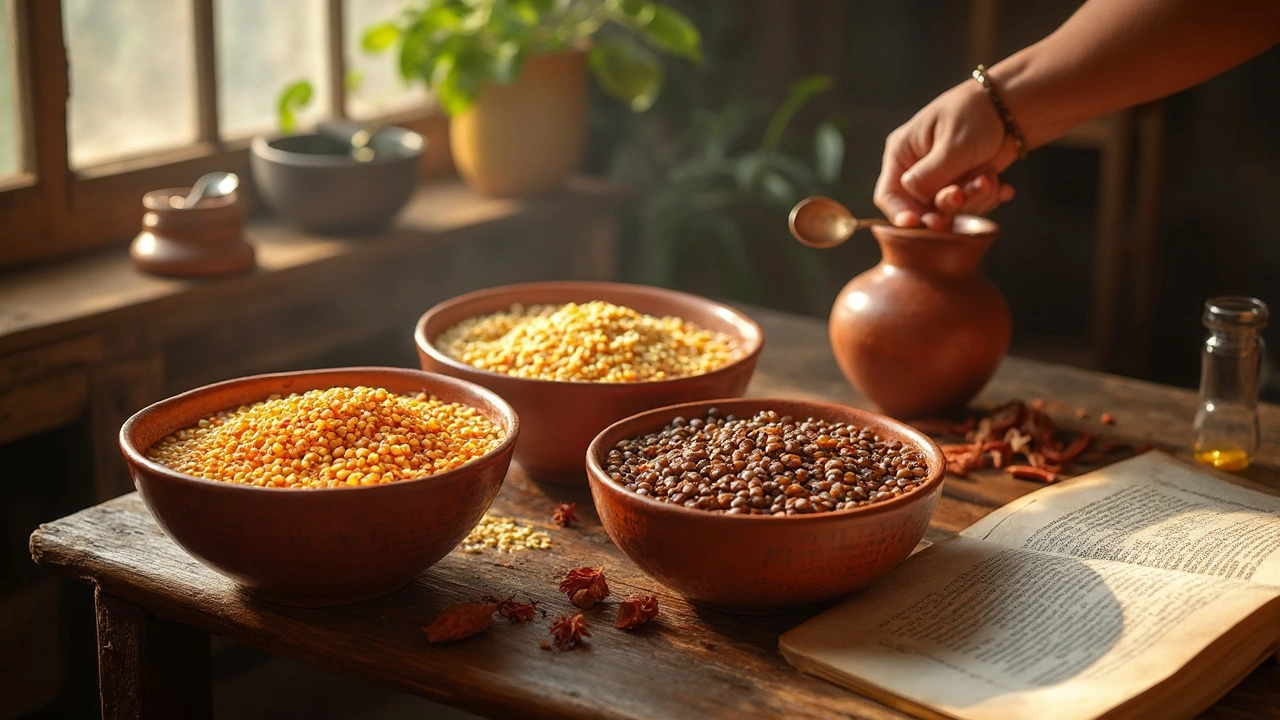
Not all lentils behave the same. red lentils, a quick-cooking variety that breaks down into creamy texture work best in soups and dals where you want richness. green or brown lentils, hold their shape and are perfect for salads or side dishes, while black lentils, often called urad dal in India, are the secret behind fluffy idlis and crispy dosas. The key? Always rinse them. A quick rinse removes dust and the natural coating that can make them taste earthy. Skip this, and you’ll wonder why your dal tastes off—even if you used the best spices.
Another mistake? Adding salt or acid too early. Salt tightens the lentil skin, and lemon juice or tomatoes can make them take forever to soften. Wait until they’re nearly done. Then, stir in a splash of lemon, a pinch of salt, and a spoon of ghee. That’s when the flavor pops. And don’t forget tempering—heat oil, toss in mustard seeds, cumin, dried red chilies, and curry leaves. Pour it hot over the cooked lentils. It’s not optional. It’s what turns plain dal into something you can’t stop eating.
People ask why their lentils never taste like their grandma’s. It’s not magic. It’s technique. The right water-to-lentil ratio, the slow simmer, the patience to let the spices bloom. You don’t need fancy tools. Just a pot, time, and attention. That’s why preparing lentils isn’t about following a recipe—it’s about learning how they speak when they’re ready.
What you’ll find in the posts below isn’t just a list of recipes. It’s the real talk from Indian kitchens—how to fix watery dal, why some lentils stay hard even after hours, what spices pair best with each type, and how to turn a simple bowl into a meal that feels like home. Whether you’re new to cooking or just tired of bland lentils, this collection gives you the tools to get it right—every time.
How Long Should I Soak Dal Before Cooking?
Soaking dal is crucial for reducing cooking time and enhancing flavor. With varying types of dal like chana, urad, and toor, each requires different soaking durations to achieve the best texture and taste. Learn how to correctly soak dal, save cooking time, and discover useful kitchen tips to bring out maximum flavor. This guide provides practical advice for making your dal recipes more delightful while maintaining nutritional value. Simplify your cooking process and enjoy the perfect bowl of dal.