Paneer Making: How to Make Fresh Indian Cheese at Home
When you think of paneer, a fresh, non-melting Indian cheese made by curdling milk with acid. Also known as Indian cottage cheese, it's the backbone of dozens of home-cooked meals—from creamy palak paneer to spicy paneer tikka. Unlike Western cheeses, paneer doesn’t age, melt, or need cultures. You make it in under an hour with just milk and something sour—lemon juice, vinegar, or yogurt. That’s it. No rennet, no special equipment, no waiting. And yet, most people still buy it in plastic packs, wondering why their curry tastes flat.
Here’s the truth: store-bought paneer is often dry, rubbery, or bland because it’s made in bulk and stored for days. Homemade paneer? Soft, moist, and milky sweet. It soaks up spices like a sponge and holds its shape when grilled or fried. The difference isn’t subtle—it’s the reason your mom’s paneer masala tastes better than any restaurant’s. And if you’ve ever tried to substitute paneer with mozzarella or feta, you know it doesn’t work. Those melt. Paneer doesn’t. That’s why milk, the base ingredient for all paneer matters. Full-fat cow or buffalo milk gives you the richest yield. Skim milk? You’ll get less, and it’ll crumble. Then there’s the acid, the agent that separates curds from whey. Lemon juice is common, but vinegar gives a cleaner taste. Some even use yogurt whey, which adds a slight tang. The key? Don’t overdo it. Add acid slowly, stir gently, and stop when the milk fully separates.
Once the curds form, you drain them in a cloth, press them under a weight for 30 minutes, and you’ve got paneer. No oven. No fridge. No fancy tools. Just a colander, a bowl, and a heavy pan. It’s the kind of cooking that feels like a secret passed down—not taught in a class. And once you make it once, you’ll never go back. You’ll start seeing paneer everywhere: in your dal, your stir-fries, even your sandwiches. You’ll realize why recipes ask for it by name. It’s not just cheese. It’s texture. It’s structure. It’s flavor anchor.
In the posts below, you’ll find everything you need to nail paneer making—plus what to do with it once it’s done. Learn why some paneer turns out crumbly, how to press it right, and which substitutes actually work when you’re out. You’ll also see how it pairs with spices, how to grill it without drying it out, and why it’s the only cheese that belongs in an Indian kitchen.
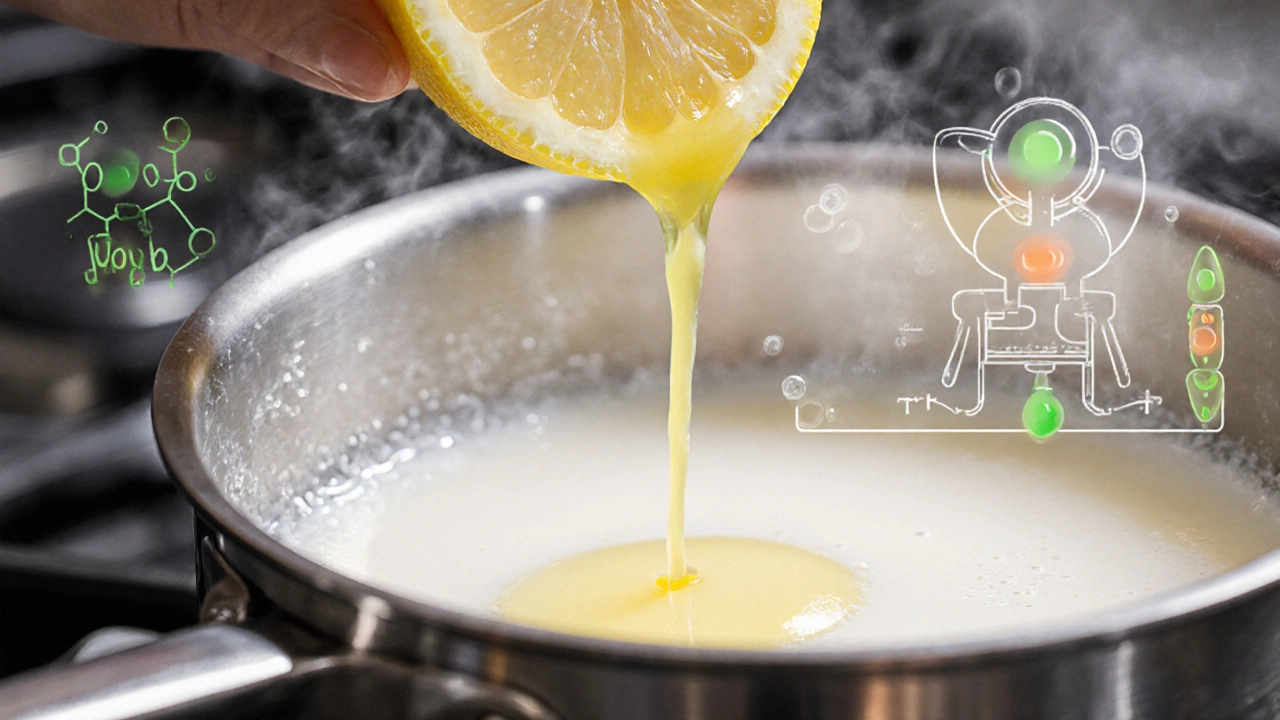
Why Lemon Juice Curds Milk: The Science Behind Homemade Paneer
Learn why lemon juice makes milk curdle, the science behind paneer, step‑by‑step instructions, common pitfalls, and FAQs for perfect homemade cheese.