Moti Chur Laddoo: The Classic Indian Sweet Made Simple
When you think of moti chur laddoo, a traditional Indian sweet made from fried gram flour balls soaked in warm sugar syrup. Also known as besan laddoo, it’s the kind of treat you find at weddings, festivals, and grandmothers’ kitchens across India. It’s not just sugar and flour—it’s texture, timing, and tradition rolled into one bite. The name itself tells the story: moti means pearl, for the small, round fried balls, and chur means crushed, referring to how they’re lightly broken apart before soaking. This isn’t a fancy dessert—it’s comfort food with soul.
What makes moti chur laddoo different from other laddoos? Most laddoos are shaped by hand from a dough, but moti chur starts as tiny fried pearls. These are then tossed in syrup and pressed into molds, giving them a unique, slightly crumbly texture that melts on your tongue. The syrup? It’s not just sugar water—it’s flavored with cardamom, sometimes saffron, and always cooked to the perfect thread stage. Too thin, and the laddoos fall apart. Too thick, and they turn hard. It’s a delicate balance, passed down through generations. You’ll find this sweet in Punjab, Uttar Pradesh, and Gujarat, but every household has their own twist—some add chopped nuts, others a pinch of rosewater, and a few even use jaggery instead of sugar.
The magic of moti chur laddoo lies in its simplicity. No fancy equipment. No long prep. Just gram flour, sugar, ghee, and patience. It’s the kind of recipe that doesn’t need a recipe—just a good eye and a steady hand. If you’ve ever wondered why Indian sweets taste so different from Western desserts, this is why: it’s not about sweetness alone. It’s about how the syrup clings to the fried pearls, how the ghee carries the cardamom, and how the texture holds just enough structure to feel substantial without being heavy. This isn’t dessert as an afterthought—it’s dessert as an experience.
Below, you’ll find real recipes, common mistakes, and tips from people who’ve made hundreds of these laddoos. Whether you’re trying to recreate your aunt’s version or make your first batch from scratch, you’ll find what you need here—no fluff, no guesswork, just the facts that actually matter.
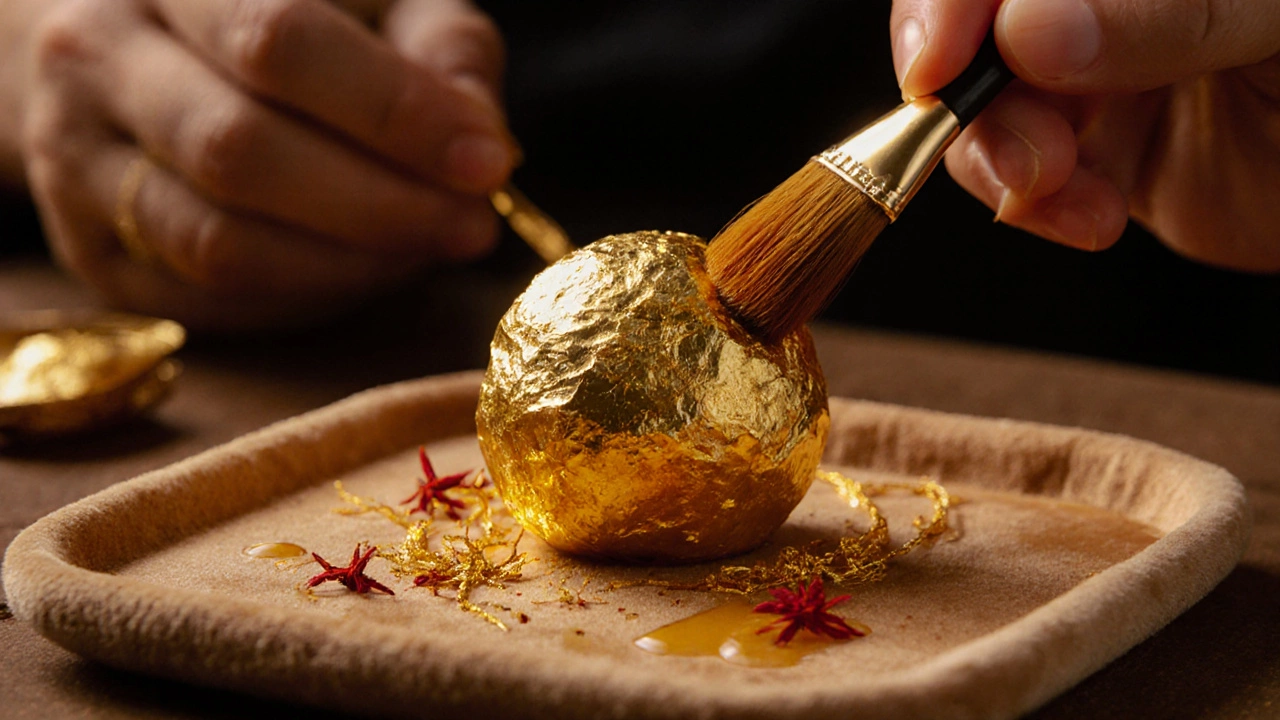
Which Indian Sweet Is the Most Expensive and Why?
The most expensive Indian sweet is a gold-leaf Moti Chur Laddoo costing ₹2.5 lakh, made with edible gold, premium saffron, and handcrafted over three days. Discover why it's priced like jewelry-and who actually buys it.