Main Curry Spices: The Core Flavors Behind Every Indian Curry
When you think of Indian curry, you’re not thinking of one spice—you’re thinking of a main curry spices, a blend of aromatic seeds, roots, and powders that form the foundation of countless Indian dishes. Also known as curry powder base, these spices are the heartbeat of every pot of chicken curry, chana masala, or dal tadka. They don’t just add heat; they build layers—earthy, warm, citrusy, smoky—all working together like instruments in an orchestra.
Take turmeric, a bright yellow root powder that gives curry its signature color and mild earthiness. It’s not just for looks—it’s a flavor anchor. Then there’s cumin, toasted seeds or ground powder that bring a nutty, slightly bitter depth. Without it, your curry tastes flat. coriander, the ground seed of the cilantro plant, adds a citrusy sweetness that balances the heat. These three are the holy trinity—used in almost every curry across India, from the south’s coconut-based stews to the north’s creamy tomato gravies.
But the magic doesn’t stop there. garam masala, a warm, complex blend usually including cinnamon, cardamom, cloves, and black pepper, is added toward the end of cooking to preserve its fragrance. It’s the final spark that turns good curry into unforgettable curry. And while many assume curry powder is a single spice, it’s actually a British invention—a simplified version of these regional blends. Real Indian cooking doesn’t rely on pre-mixed powders; it builds flavor step by step, roasting and grinding spices fresh.
These spices aren’t just for taste—they’re tied to tradition, climate, and health. Turmeric fights inflammation. Cumin aids digestion. Coriander cools the body. That’s why you’ll find them in breakfast dals, lunch curries, and even evening snacks. Whether you’re making tandoori chicken or potato biryani, the same core spices show up—just in different ratios. You don’t need 20 ingredients to make a great curry. You need the right three, used right.
Below, you’ll find real recipes and tips from home cooks who know exactly how these spices behave in the pan—when to toast them, how long to fry them, and which ones to save for the finish. No fluff. No guesswork. Just the truths behind the spice rack that makes Indian food so deeply satisfying.
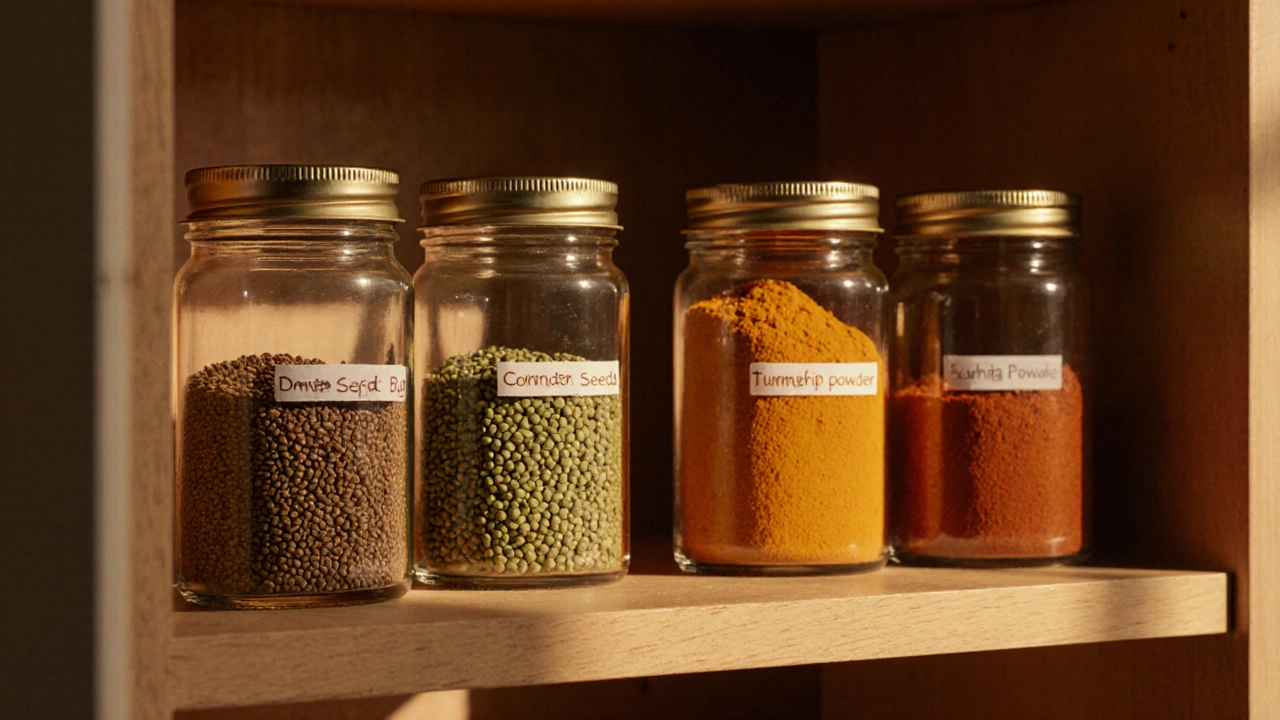
Four Key Spices in Curry - What They Are and How to Use Them
Learn the four essential spices that form the backbone of a classic chicken curry, how each works, and step‑by‑step tips for perfecting the dish.