Indian Recipes: Bold Flavors, Regional Traditions, and Everyday Cooking Secrets
When you think of Indian recipes, a vibrant, spice-driven cuisine rooted in centuries of regional diversity and home-cooked tradition. Also known as South Asian cooking, it’s not just about curry—it’s about layered flavors, smart techniques, and ingredients that turn simple meals into something unforgettable. Whether you’re making roti on a stovetop or slow-cooking biryani in the oven, Indian food rewards patience and understanding—not just following a list of steps.
At the heart of many Indian meals is paneer, a fresh, non-melting cheese made by curdling milk with lemon juice or vinegar. It’s the star in dishes like palak paneer and paneer tikka, and while it doesn’t have a direct English name, it’s often called Indian cottage cheese—but that’s not quite right. Unlike Western cheeses, paneer holds its shape when cooked, making it perfect for grilling, frying, or simmering in gravy. If you’re out of paneer, halloumi or queso blanco can step in, but they’re not the same. And then there’s chutney, a tangy, spicy condiment that balances rich dishes. The word itself came into English from India, and no, ketchup isn’t a substitute. Real chutney has fresh herbs, fruit, or tamarind, and it’s what makes tandoori chicken or samosas feel complete.
Indian recipes aren’t one-size-fits-all. A breakfast in Kerala is steamed idlis with coconut chutney, while in Punjab, it’s buttery parathas with yogurt. The red color on tandoori chicken? That’s Kashmiri chili powder, not food dye. The secret smell of biryani? Not just cumin or cardamom—it’s kewra water and saffron, layered and steamed, not stirred. Even something as simple as a roti that won’t puff has a reason: dough temperature, rolling pressure, or pan heat. These aren’t mysteries—they’re details you can learn and use.
What you’ll find below isn’t just a list of recipes. It’s a guide to the real stuff—the why behind the how. Why lemon juice curdles milk to make paneer. Why potato chips are unhealthy compared to Indian snacks like roasted chana. Which oil gives the crispiest dosa. What makes chicken curry taste like it came from a restaurant kitchen. You’ll learn how to fix flat roti, pick the healthiest dish at an Indian restaurant, and even why the most expensive sweet in India costs over ₹2 lakh. This isn’t about fancy ingredients or hard-to-find tools. It’s about understanding the food you’re making, so you can cook it better, every time.
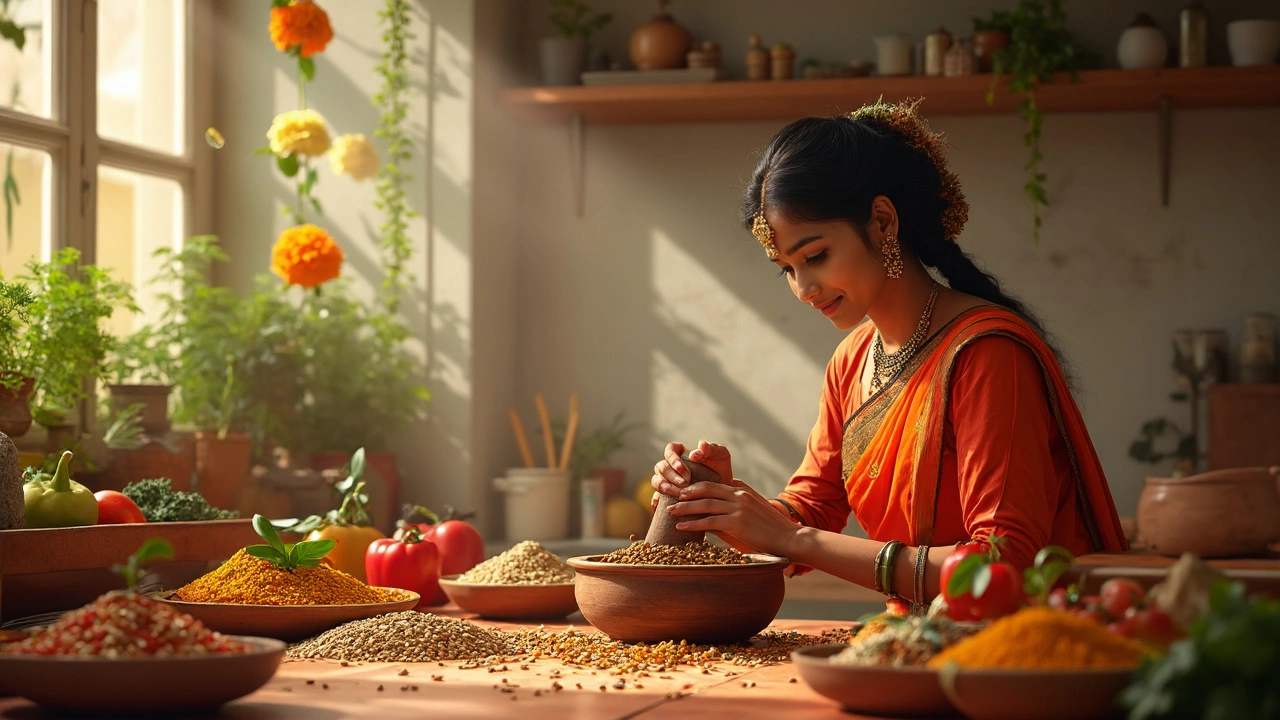
Vegetarian Indian Meal: A Flavorful Adventure
Discover the vibrant world of vegetarian Indian meals, where flavors, spices, and textures come together for a unique culinary experience. Unlock the secret of India's diverse vegetarian dishes, which have been perfected over centuries. Learn about staple ingredients like lentils, spices, and grains, and how they shape each dish. Explore tips for creating authentic flavors in your kitchen and delve into the cultural significance of vegetarianism in India.