Dosa Preparation: How to Make Crispy, Authentic South Indian Dosa at Home
When you think of dosa, a thin, fermented rice and lentil crepe from South India, often served with coconut chutney and sambar. Also known as dose, it's one of India's most beloved breakfast foods—and one of the most misunderstood. It’s not just a pancake. It’s a science. The crispness, the slight sour tang, the way it lifts off the pan without tearing—none of that happens by accident. It’s all in the batter, the wait, and the heat.
Good dosa batter, a mixture of soaked rice and urad dal, fermented overnight to develop flavor and lift is the heart of it. You can’t rush it. If your batter doesn’t rise, your dosa won’t crisp. And if you skip the fermentation? You’re just making flat rice pancakes. The right batter bubbles like soda water, smells faintly sweet and sour, and flows like heavy cream. That’s when you know it’s ready. Then comes the pan—traditionally cast iron, but any good non-stick works. Heat it right, wipe it with oil, and pour just enough batter to spread into a thin circle. The magic happens in seconds: the edges curl, the surface pales, and the bottom turns golden-brown. A drizzle of oil, used to cook dosa for crispness and flavor, with coconut oil, ghee, or sesame oil being top choices along the edges seals the deal.
People think dosa preparation is complicated because they’ve been told to use special stones, exact ratios, or imported rice. But it’s simpler than that. You need rice, urad dal, salt, water, time, and patience. The rest? Just practice. The posts below cover everything you actually need: which oil gives the crispiest result, how to fix runny or thick batter, why your dosa sticks, and what to serve with it. You’ll find tips from people who’ve made hundreds of dosas—not just recipes, but real fixes for real problems. Whether you’re making it for the first time or trying to nail that perfect crisp edge, you’ll find your answer here.
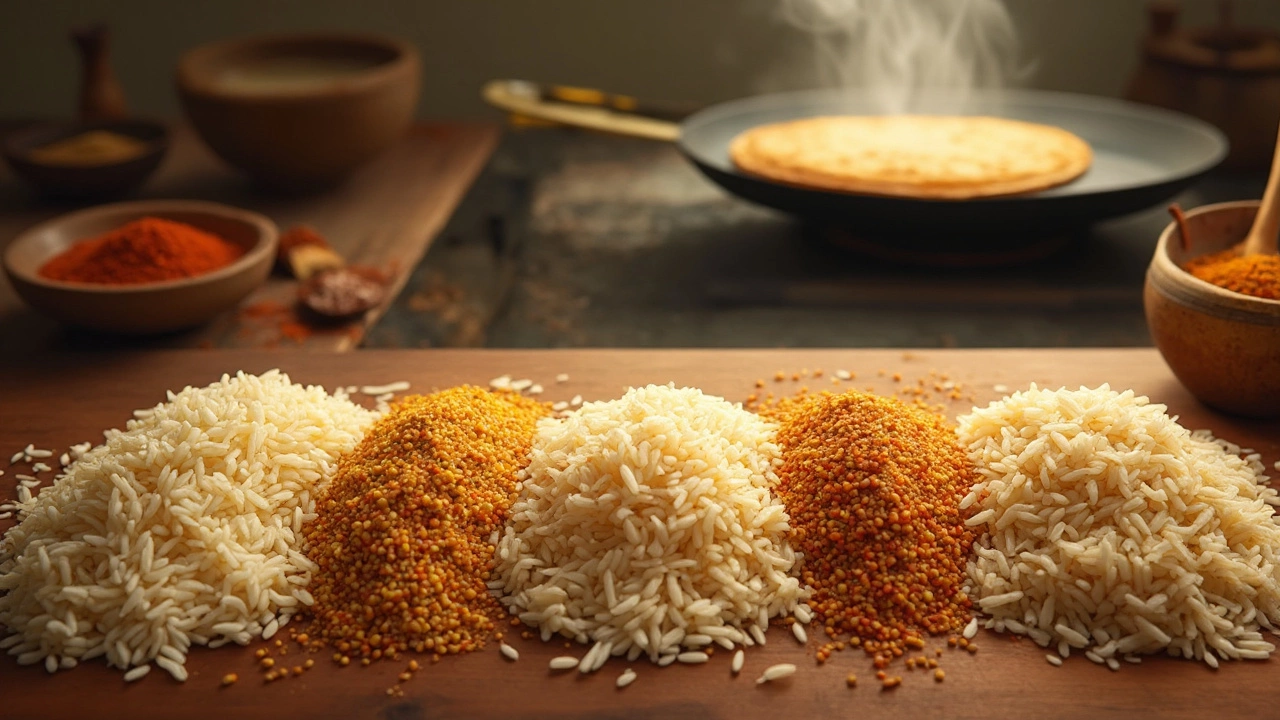
Best Rice Choices for Making the Perfect Dosa
A perfectly crispy dosa depends largely on the type of rice used in the batter. This article explores the best rice varieties for dosa-making, providing tips to achieve the ideal texture and flavor. From traditional to modern twists, discover key factors that influence dosa quality. Learn how choosing the right rice can elevate your dosa game and impress at your next meal.