Curry Seasoning: The Real Spices Behind Flavorful Indian Curries
When you hear curry seasoning, a blend of ground spices used to build deep, complex flavor in Indian dishes. Also known as curry powder, it’s not a single ingredient—it’s a signature mix that varies by region, family, and cook. Most store-bought curry powders are dull, pre-mixed, and far from what you’ll find in a home kitchen in Kerala or Punjab. Real curry seasoning starts with toasted cumin, coriander, and mustard seeds, then adds turmeric for color, fenugreek for bitterness, and chili for heat. It’s not a shortcut—it’s the foundation.
What makes a curry taste like it came from a tandoor or a grandmother’s pot isn’t just the meat or veggies—it’s how the Indian spices, a diverse set of aromatic seeds, roots, and pods used in traditional cooking are layered. You don’t throw them all in at once. You bloom them in hot oil first—that’s when the magic happens. The smell changes. The oil turns golden. That’s when you know you’re on the right track. This technique is what separates a flat, one-note dish from one that makes you close your eyes and sigh. And it’s not just about heat. chicken curry, a staple dish built on slow-simmered spices, onions, tomatoes, and protein gets its soul from the balance: sweet from onion, tang from tomato, earthy from cumin, and warmth from ginger and garlic. Even a simple curry needs this rhythm.
People think curry seasoning is just for chicken or lentils. But it’s the same base that makes chana masala pop, that gives aloo gobi its depth, and that turns yogurt into a spiced raita. It’s the silent backbone of dozens of dishes you’ve eaten without realizing it. If your curry tastes bland, it’s not the recipe—it’s the spice. You might be using old powder that lost its punch, or skipping the bloom step. Or worse—you’re using one-size-fits-all curry powder that doesn’t match the dish.
What you’ll find below are real, tested ways to fix that. From how to make your own blend from scratch to why some cooks add asafoetida and others don’t. You’ll see how the same spices behave differently in a slow-cooked lamb curry versus a quick chicken stir-fry. There are posts on why lemon juice changes the flavor profile, how to fix a too-spicy curry, and what makes biryani smell so good even though it’s not called a curry. Every recipe here is built on the same truth: great curry starts with smart seasoning. No magic. No mystery. Just the right spices, at the right time, in the right way.
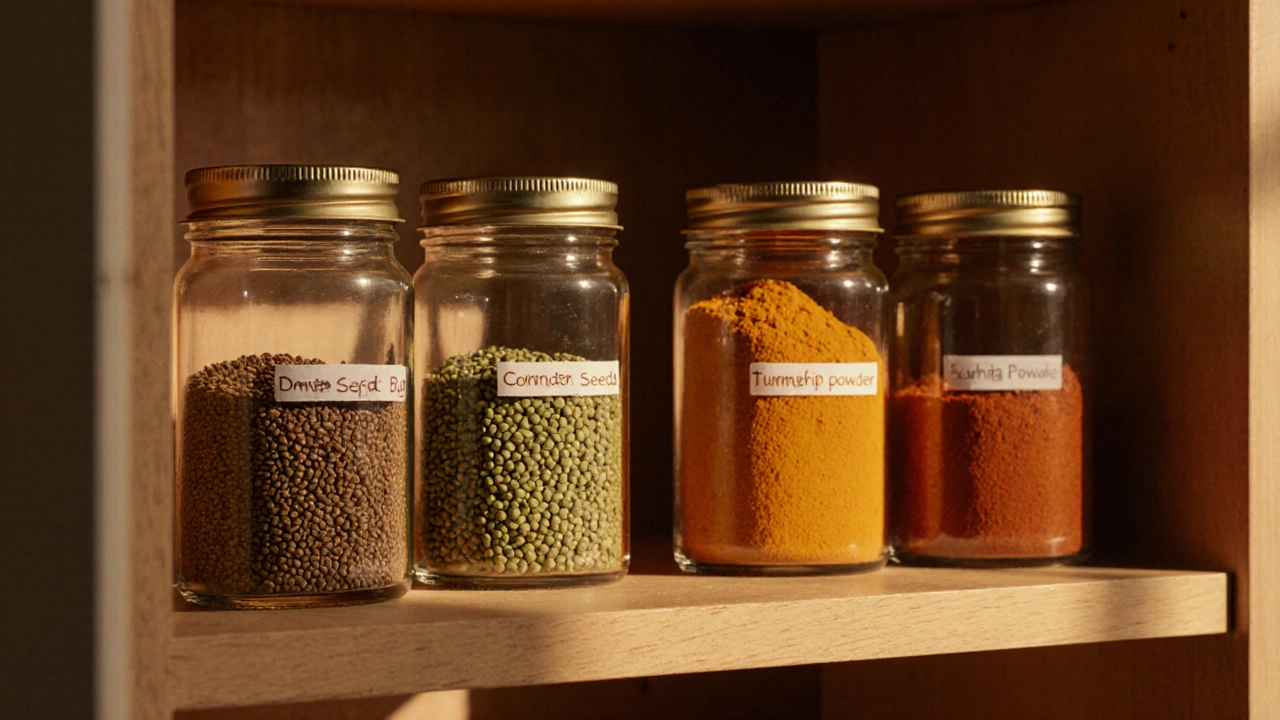
Four Key Spices in Curry - What They Are and How to Use Them
Learn the four essential spices that form the backbone of a classic chicken curry, how each works, and step‑by‑step tips for perfecting the dish.