Chicken Curry Tips: Master Flavor, Spice, and Technique
When you’re making chicken curry, a rich, spiced dish built on layered aromatics and slow-cooked tenderness. Also known as chicken masala, it’s not just about tossing ingredients into a pot—it’s about timing, balance, and knowing which spices wake up at the right moment. Too many people skip the real work and end up with flat, one-note curry. The difference between good and great isn’t the recipe—it’s the chicken curry tips you follow.
The backbone of any great chicken curry is the spice blend, a combination of whole and ground spices toasted to unlock their oils and depth. Also known as curry masala, it’s not just cumin and coriander. It’s the quiet players: fenugreek for bitterness that balances sweetness, asafoetida for that umami punch, and Kashmiri chili for color without overwhelming heat. These aren’t optional—they’re the reason your curry smells like it came from a street stall in Lucknow, not your kitchen. Then there’s the base, the onion-tomato-garlic-ginger foundation that gives curry its body and richness. Also known as curry base, it’s not just sautéed—it’s cooked down slowly until the oil separates. That’s not a mistake. That’s the signal you’re ready for the next step. Skip this and your curry will taste watery, no matter how much spice you add.
Depth doesn’t come from more spices. It comes from technique. A splash of tamarind or lemon juice at the end wakes up the whole dish. A spoonful of yogurt or coconut milk tames the heat and adds silkiness. Even a pinch of sugar—yes, sugar—can tie everything together without making it sweet. And don’t forget the chicken itself. Brown it well before adding liquid. Don’t overcrowd the pan. Let it sear. That caramelization? That’s flavor gold.
What you’ll find below isn’t just another list of recipes. These are real fixes from real cooks who’ve burned curry, ruined texture, and then figured out why. You’ll learn how to fix a curry that’s too spicy, how to make chicken tender without overcooking it, and which spices to add when—because timing matters more than quantity. Whether you’re new to Indian cooking or you’ve been making curry for years, there’s something here that’ll change how you think about the dish.
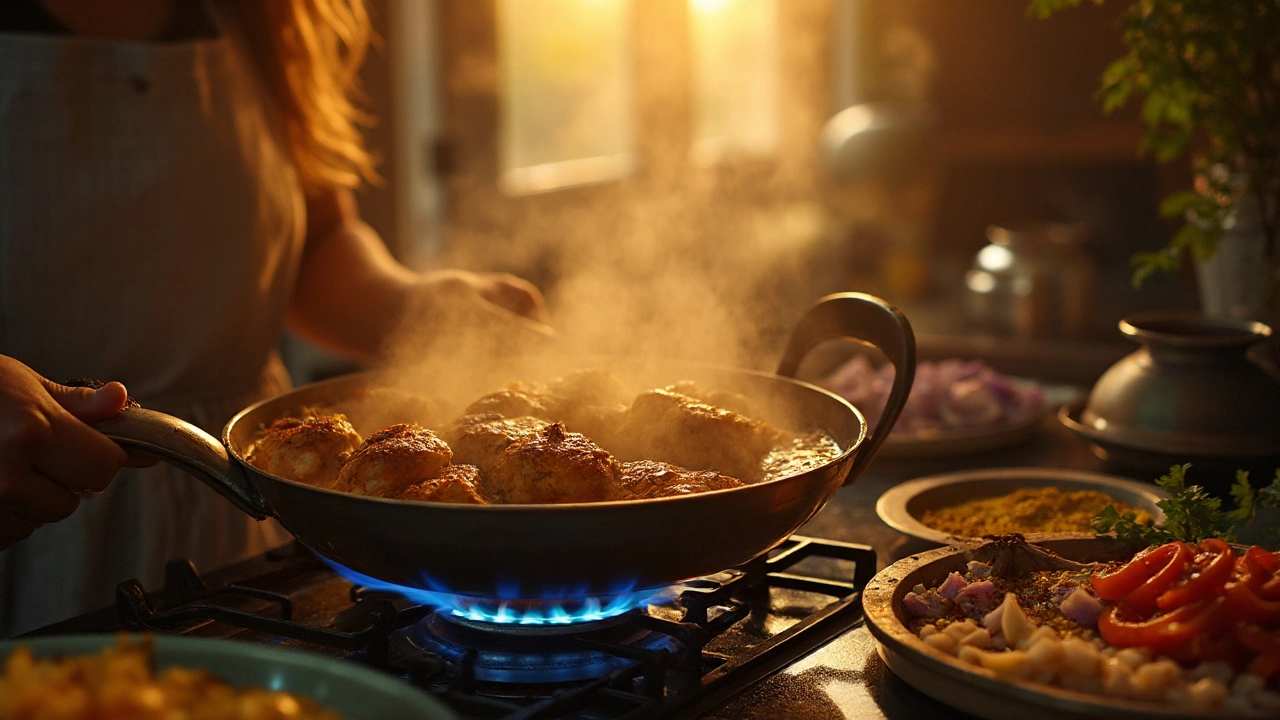
Should You Cook Chicken Before Adding to Curry? Best Methods, Times, and Safety Tips
Wondering if chicken should be cooked before adding to curry? Learn when to sear, simmer raw, or pre-cook, plus safe temps, times, and easy methods.